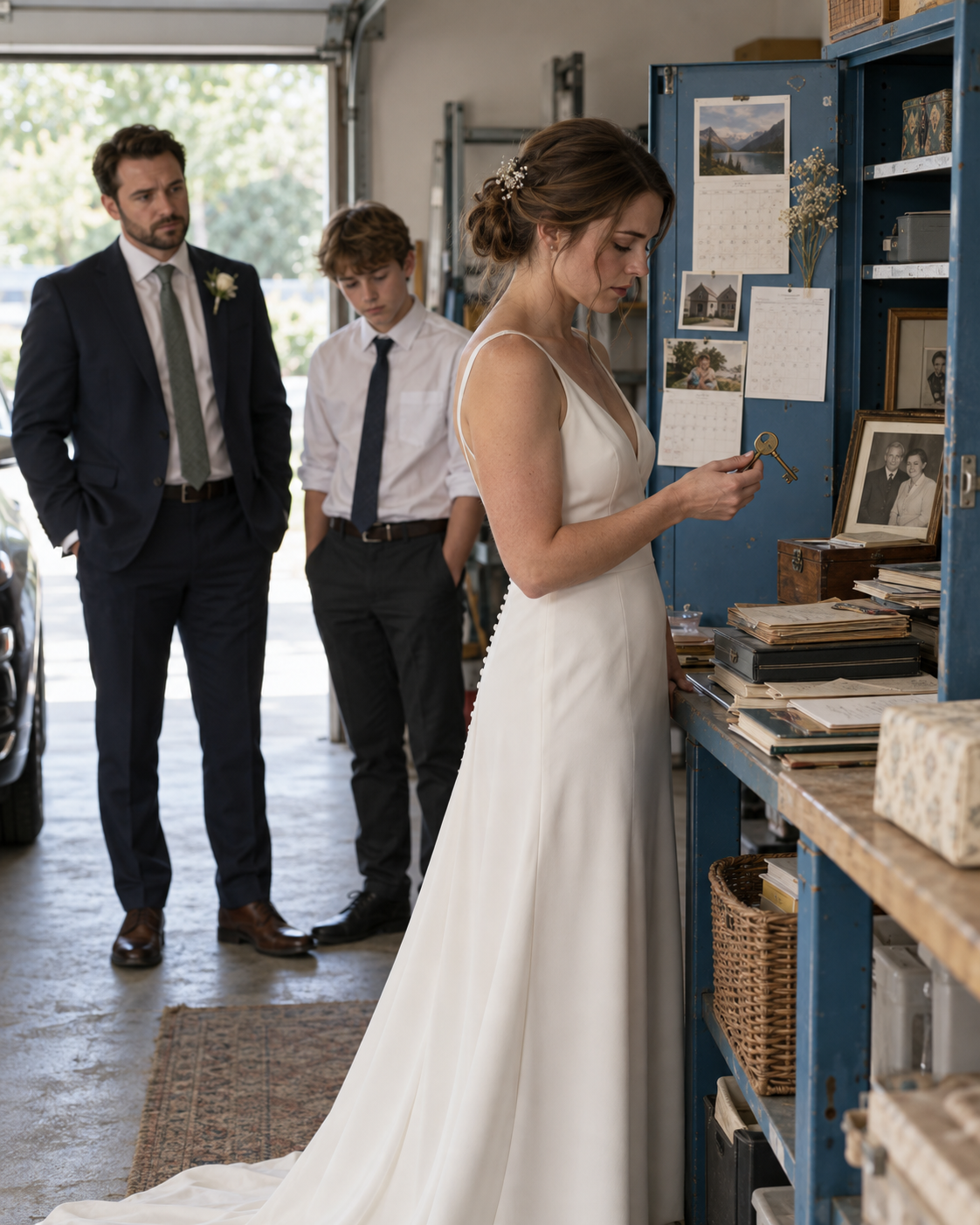
An hour before my wedding, a courier delivered a brass key from my fiancé’s ex-wife.
The note said: **Before you marry Daniel, open the blue cabinet.**
Daniel had told me his divorce was painful but finished. He and Ava shared custody of their twelve-year-old son, Micah. I assumed the key opened proof of an affair or debt.
The blue cabinet stood in Daniel’s garage. Inside were school records, birthday cards, and a calendar covering three years. Entire weekends with Micah were marked “canceled,” though Daniel had told me Ava often kept the boy from him.
Then Micah found me.
“Mom sent the key because Dad won’t show you the agreement,” he said.
The cabinet also held a parenting plan created after Daniel’s drinking led to missed pickups. Contact was supposed to increase after counseling and six months of sobriety. Daniel had completed both, but he still described every restriction as Ava’s punishment.
I asked him before the ceremony. He admitted the facts and defended the story.
“I’m different now,” he said. “Why should the worst year get to introduce me?”
“Because you used Ava as the villain in the introduction.”
I postponed the wedding. Guests were angry; vendors were paid; flowers wilted in the heat. I did not cancel our relationship that afternoon, but I refused to sign a legal promise while discovering that his recovery depended on edited history.
Ava met me the next day with Daniel present. She apologized for involving me through a dramatic delivery instead of asking for a conversation. Daniel apologized for making her carry blame for boundaries he had agreed to. Micah was not asked to referee either apology.
Over the next four months, Daniel worked with his counselor to make a written accountability timeline. Ava and he used a co-parenting app so schedule changes had records. I attended sessions about what support could and could not mean. Sobriety did not entitle Daniel to instant trust; suspicion did not entitle anyone to permanent control.
We eventually married at the courthouse. Ava did not attend. She did not become my friend, and no one required that ending.
The brass key now hangs inside the blue cabinet. Daniel keeps the records, not as punishment, but because recovery without memory becomes reputation management.
On our wedding morning, Micah carried no rings and delivered no speeches. His only job was choosing lunch.
He chose noodles.
It was the first family decision that day no adult had hidden inside a cabinet.