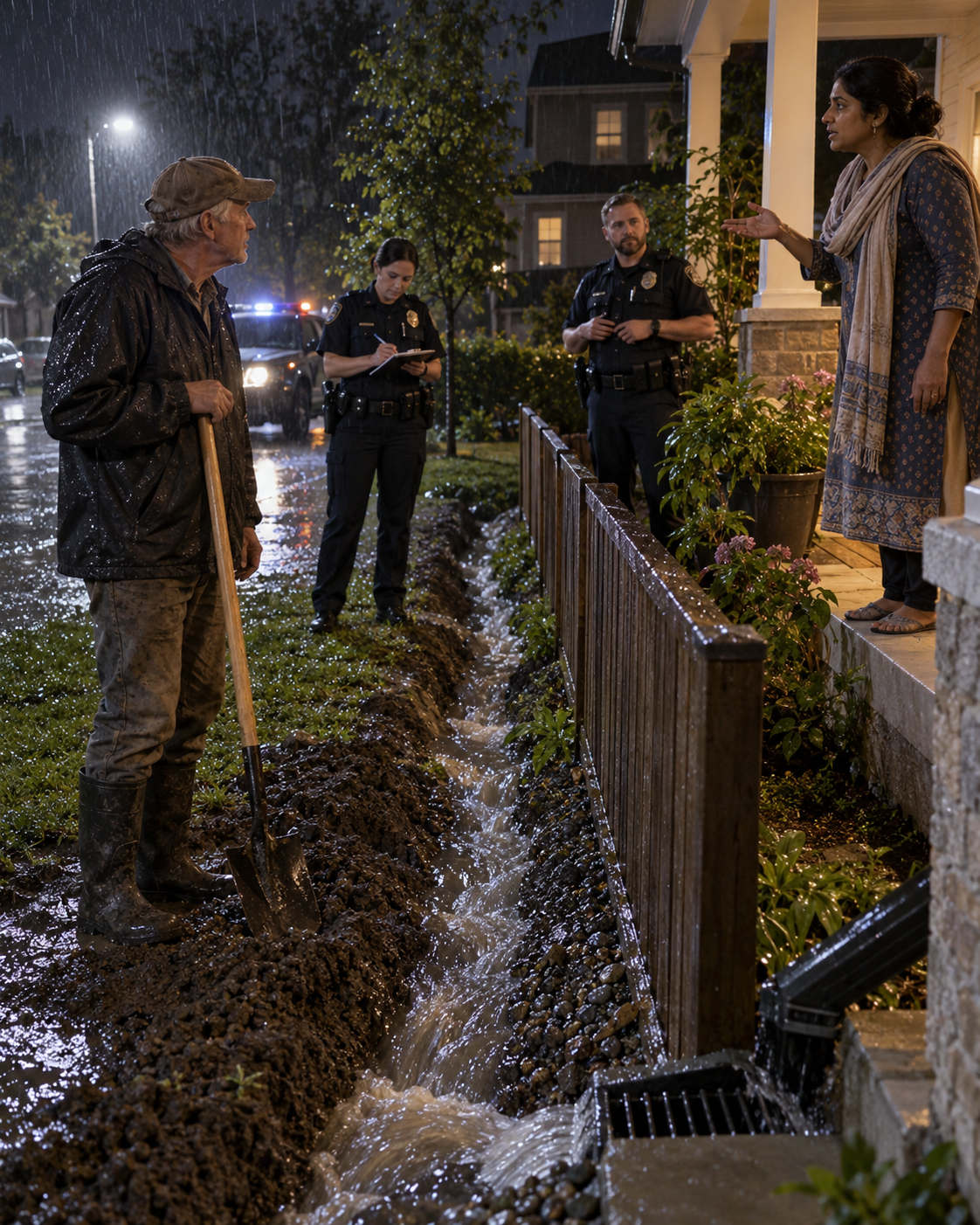
At midnight, my seventy-year-old father was digging a trench across my neighbor’s lawn.
She called the police. I could not blame her.
Dad had been watching storm forecasts all evening. Our street had flooded twice, and city crews had recently paved over a shallow drainage channel between the two properties. When rain began pooling near the neighbor’s basement window, Dad took a shovel and reopened the old path without asking.
He believed he was saving her house. She saw a stranger destroying her yard in darkness.
The officers stopped him and photographed the trench. Then water reached the cut and rushed toward the street instead of the basement. Dad looked vindicated.
He still received a citation for property damage.
“But I was right,” he told me.
Our neighbor, Ms. Patel, answered from her porch. “You were right about the water. You were wrong about my permission.”
The next morning, a city engineer confirmed the new curb had blocked a historic drainage route. Dad’s trench reduced immediate flooding, but its steep edge could collapse and direct water onto another property.
The city installed temporary barriers and pumps. Ms. Patel agreed not to seek restitution if Dad helped restore the lawn after a permitted drain was built. Dad wanted the citation dismissed. She refused to make her cooperation conditional on pretending the trespass had not happened.
At the council meeting, Dad presented old survey maps and rain measurements. Ms. Patel presented doorbell footage of a man digging outside her bedroom at midnight. Both records became part of the case.
The city approved a shared bioswale along the public easement and reimbursed residents for damaged landscaping. A neighborhood alert protocol now allowed volunteers to report pooling and deploy city-provided barriers—but not enter private property without consent unless emergency services directed them.
Dad planted the last grass patch in Ms. Patel’s yard. She brought him tea and asked why he had not knocked.
“I was afraid you’d say no before the rain said yes,” he admitted.
“Then you were afraid of my answer, not the flood.”
They are friendly now, but she has never called him a hero. He no longer tells the story as one.
When storms arrive, Dad watches the new bioswale fill from our side of the fence. Before he touches anything beyond it, he calls.