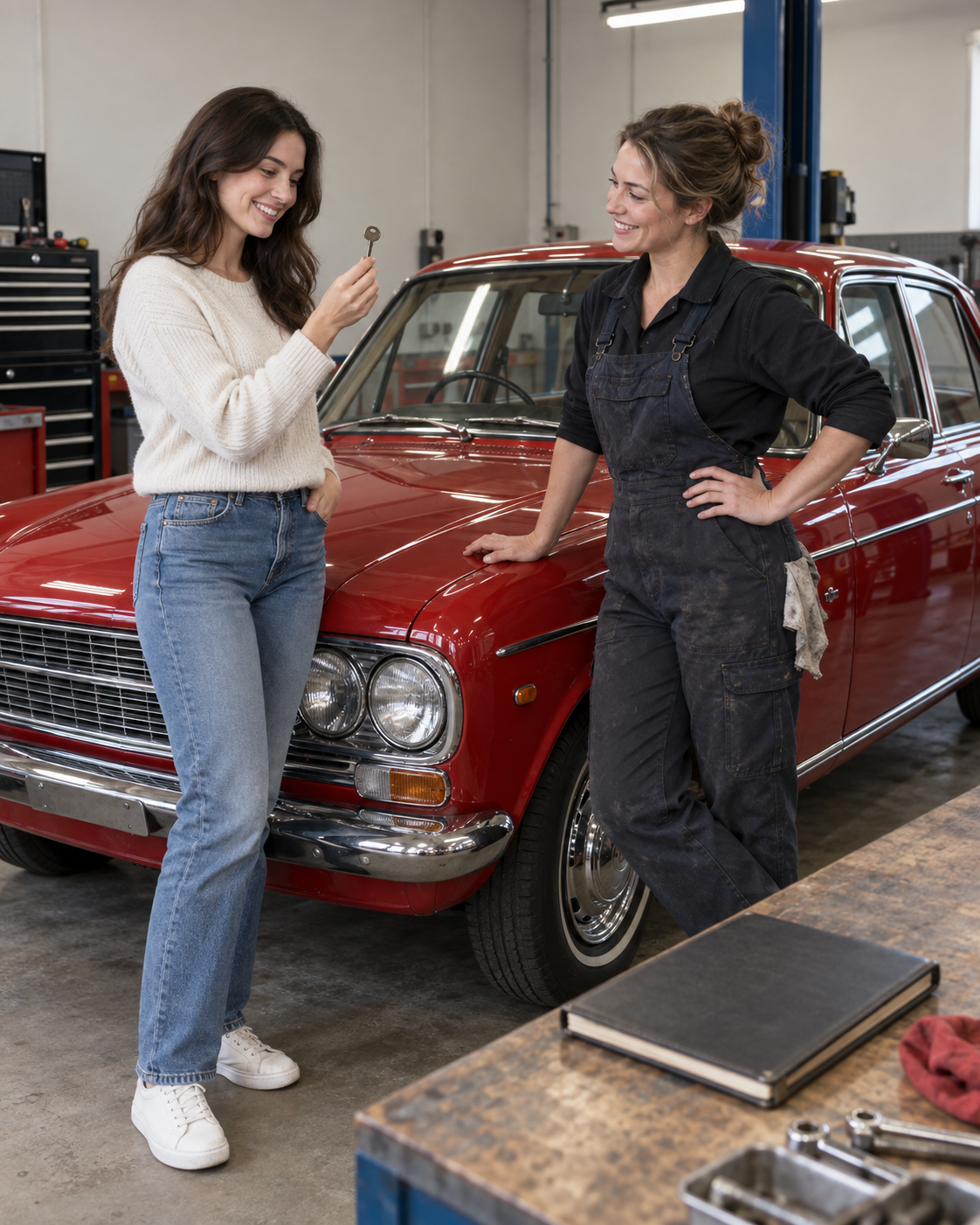
Ten years after my father died, a mechanic called and said his car was ready.
Dad’s red sedan had vanished after the funeral. I assumed my uncle sold it to pay debts. The mechanic, Jo Alvarez, said it had been stored behind her shop under a tarp, with fees marked “paid in labor.”
Dad had brought the car in days before his death. The engine block was cracked. Restoring it would cost more than the vehicle was worth, so he made an agreement: he would do bookkeeping for Jo’s new shop, and she would repair the car slowly for me to decide about when I turned thirty.
I was furious. I did not want a machine selected by a dead parent to arrive as an obligation.
Jo agreed.
“He paid for an option,” she said. “Not a command.”
She showed me the ledger. Dad’s hours covered storage and parts but not the final labor. I could pay the balance, sell the restored car, donate it, or decline it. If I walked away, Jo would auction it and return any amount above her costs to Dad’s estate.
I drove it once around the block. The steering was heavy. The seat smelled like vinyl and the pine soap Dad used on Saturdays. Grief arrived, but so did an honest fact: I hated driving it.
My cousin Lina did not. Dad had taught her to drive in that car after her own parents refused. She had kept the spare key all these years, unaware the car still existed.
I offered it to her. She refused a gift that came with unpaid labor, so we split the final bill. She bought my share at the independent valuation Jo arranged. The transaction was written down; nostalgia did not set the price.
Lina restored one detail Dad had never finished: the broken radio. On the first drive, she picked me up and let me choose the station.
At a red light, she asked whether giving it away felt like losing him again.
“No,” I said. “Keeping it would have been pretending his choice had to become mine.”
Jo framed a copy of Dad’s ledger page in her office. The car itself leaves the garage every morning.
It did not wait ten years for me to own it.
It waited for me to decide.