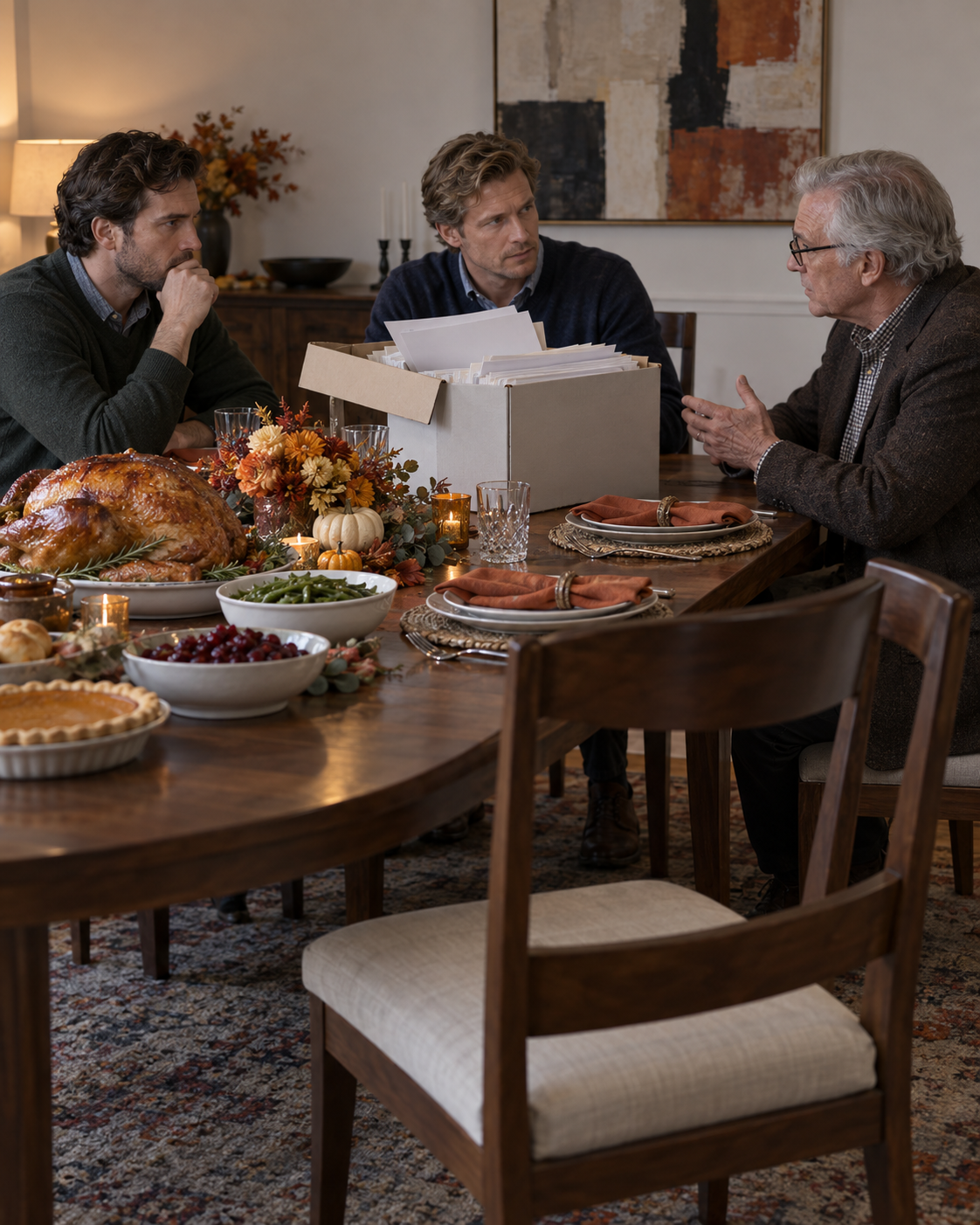
My brother invited the man who testified against our father to Thanksgiving dinner.
Because of Omar Bell’s testimony, Dad lost his city maintenance job and served six months for falsifying safety inspections. Our family blamed Omar for twenty years.
Then Dad died, and my brother Daniel found a sealed envelope in his desk: **Invite Omar. Let him bring the reports.**
I refused. Daniel invited him anyway.
Omar arrived carrying a banker’s box, not a casserole. Inside were copies of inspection reports showing corroded playground supports Dad had certified as safe. Omar, a junior inspector, reported them after a child was injured.
Dad had always told us the paperwork mistake was harmless and politically exaggerated. The reports showed repeated warnings.
I accused Omar of coming to win an old argument. He placed another envelope on the table. Dad had written to him during his sentence, admitting he signed the forms under pressure to meet a repair backlog. He never mailed the letter.
That did not make Dad innocent. It did explain why he later spent years quietly repairing equipment at community centers without accepting pay.
Omar had known none of that. He had also paid a price: coworkers isolated him, his marriage strained, and he left public service. He did not claim equal suffering with the injured child or our family. He simply refused the label of traitor.
We did not eat together immediately. We spent an hour verifying documents and calling the retired union representative whose number appeared in the file. Then Daniel reheated dinner.
Omar stayed for one plate. No one offered a toast. My mother asked him why he had accepted the invitation.
“Because your husband finally asked me to bring the part of the story he hid from you.”
Afterward, we donated the records to the municipal archive with privacy restrictions for the injured child. Daniel and I added Dad’s letter and an account of his later volunteer work. The archive would hold both accountability and change.
Omar did not become family. He did return the next year for coffee, without the box.
Dad’s empty chair remained empty.
For the first time, it was not filled by the version of him we had needed to defend.