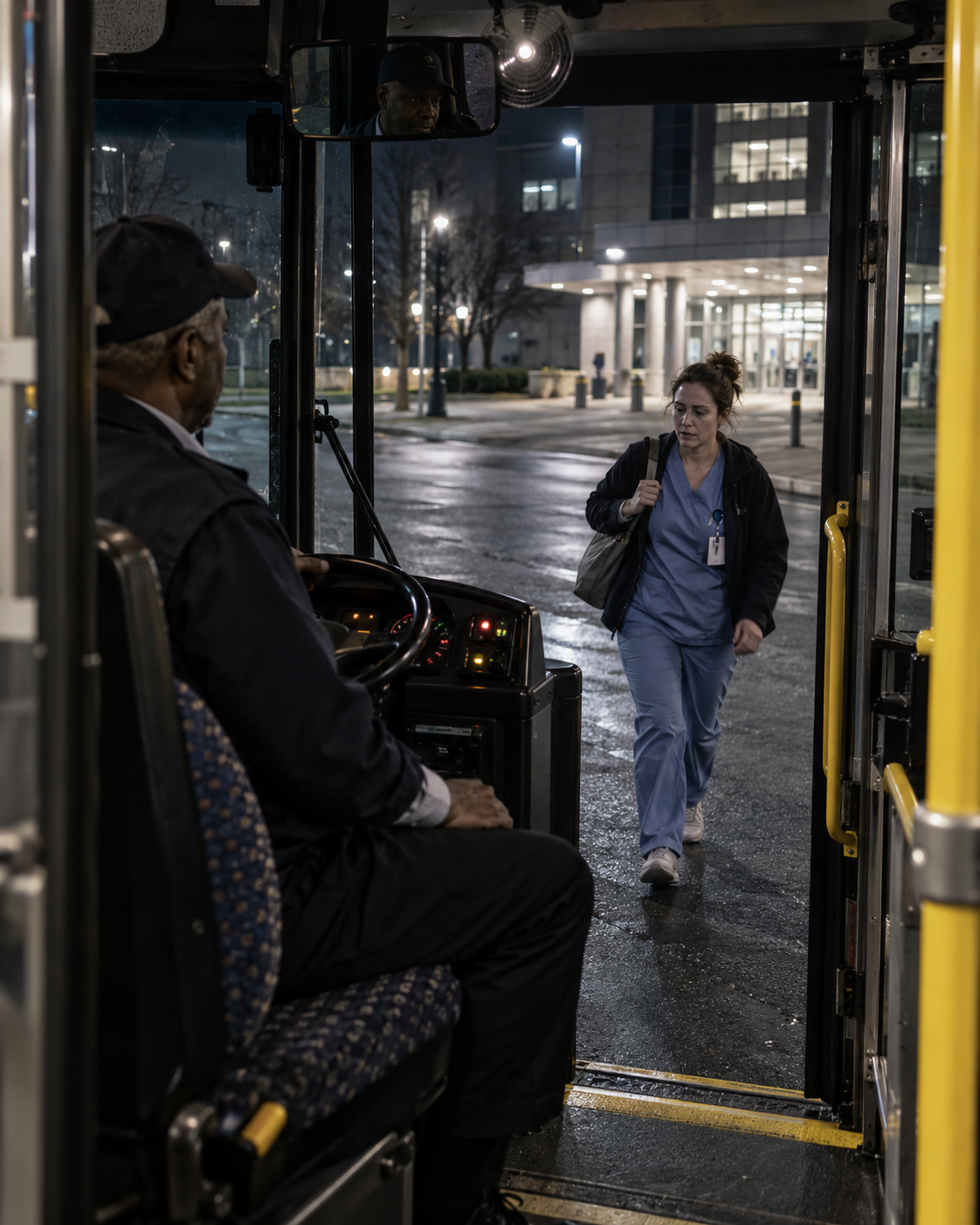
Every evening, the final bus waited twenty minutes at an empty stop after the route officially ended.
Passengers complained that the driver, Mr. Hayes, was padding overtime. Transit management prepared a warning.
The stop was not empty. A hospital laundry worker named Jo finished at 11:03, three minutes after the published last departure. Years earlier, a dispatcher had informally told drivers to wait when staffing allowed. The promise never entered the timetable.
Mr. Hayes had continued it alone. On nights another driver covered, Jo walked two miles beside an unlit road.
His kindness was real and unreliable.
Transit planners reviewed swipe data and found eleven late-shift workers facing the same gap. They extended the final trip by ten minutes on weekdays and aligned it with the hospital shift. Overtime became scheduled work, not a favor hidden in one driver’s timesheet.
Mr. Hayes’s warning was withdrawn, though he received coaching for failing to document the repeated deviation. Jo was invited to test the new schedule, not used in publicity.
On the first official late run, the bus arrived at 11:08. Mr. Hayes closed the doors at the printed time.
Waiting had finally stopped being a secret.