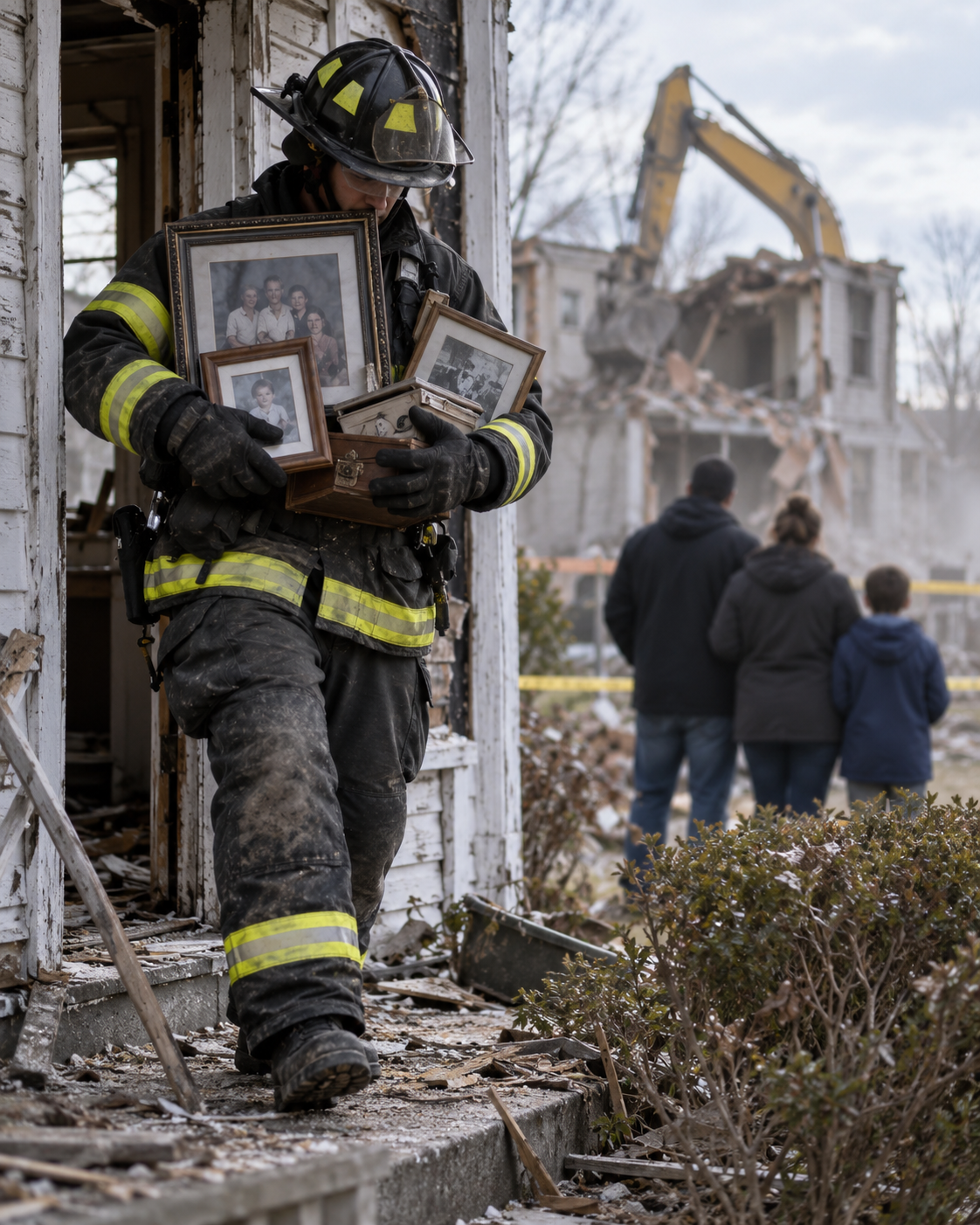
After the apartment fire, a firefighter entered our condemned building and carried out a box of family photographs.
I should have felt grateful. Instead, I demanded to know why he had risked entering when residents were forbidden inside.
Captain Brooks explained that he had not reentered for the photos. An engineering team authorized a brief evidence retrieval before demolition, and the box sat beside the electrical panel they needed to examine. He moved it out of the work zone.
Then he saw names on the albums and chose to secure them rather than leave them for machinery.
The department posted a social-media image calling it a heroic rescue. It revealed our surname and the faces of children in foster placement.
I asked them to remove it. They did, but screenshots had spread.
The review separated the good decision from the harmful publicity. Evidence-entry rules remained strict; personal items encountered during authorized work could be safeguarded when practical. Nothing justified publishing them without consent.
The department adopted a privacy check before sharing incident photographs and apologized to the affected families. The captain delivered the box privately.
Several photos were smoke-damaged. A local archive taught us how to dry and scan them, but we declined a public restoration campaign.
The pictures were saved from demolition.
They did not become public property because a uniform carried them out.