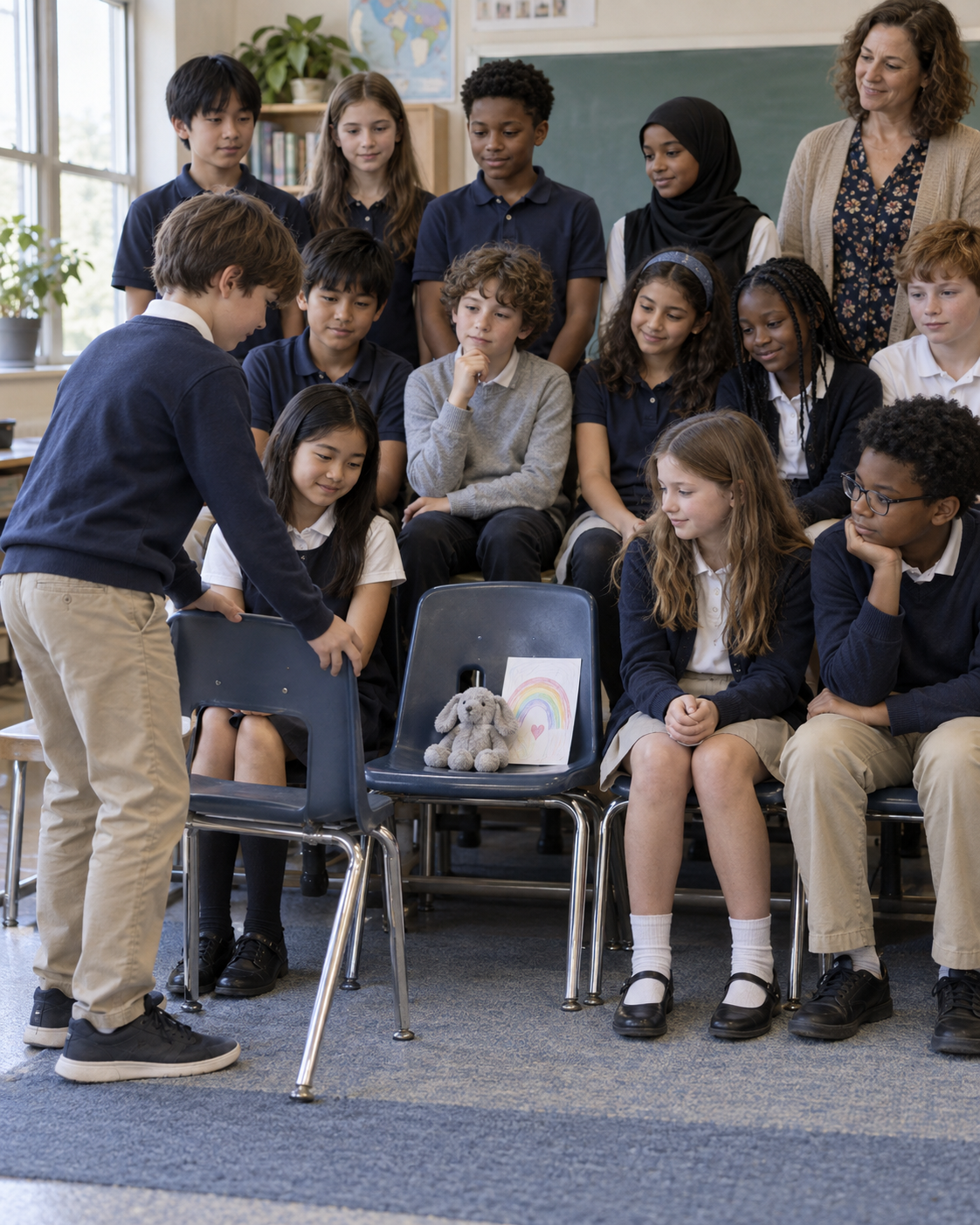
For three years, Noah dragged an empty chair into every class photograph.
Teachers moved it away. He brought it back.
Parents assumed it honored a classmate who had died. The truth was less dramatic and more uncomfortable.
Noah’s friend Zuri received instruction at home during cancer treatment. The school listed her in the class but repeatedly scheduled photographs on days she could not attend. Noah placed the chair where she should have been.
Zuri liked the gesture at first. By the third year, she wanted something different.
“I don’t want to be represented by furniture forever,” she said on a video call.
The photographer offered to insert her portrait digitally. Zuri declined; she wanted a real choice of date.
The school scheduled a second session during her planned campus visit and offered the same option to other students absent for medical reasons. Noah removed the chair himself.
Zuri stood beside him in the photograph wearing a mask. No one asked her to remove it.
The empty chair had made absence visible. Listening to the person absent told us when the symbol had outlived its purpose.