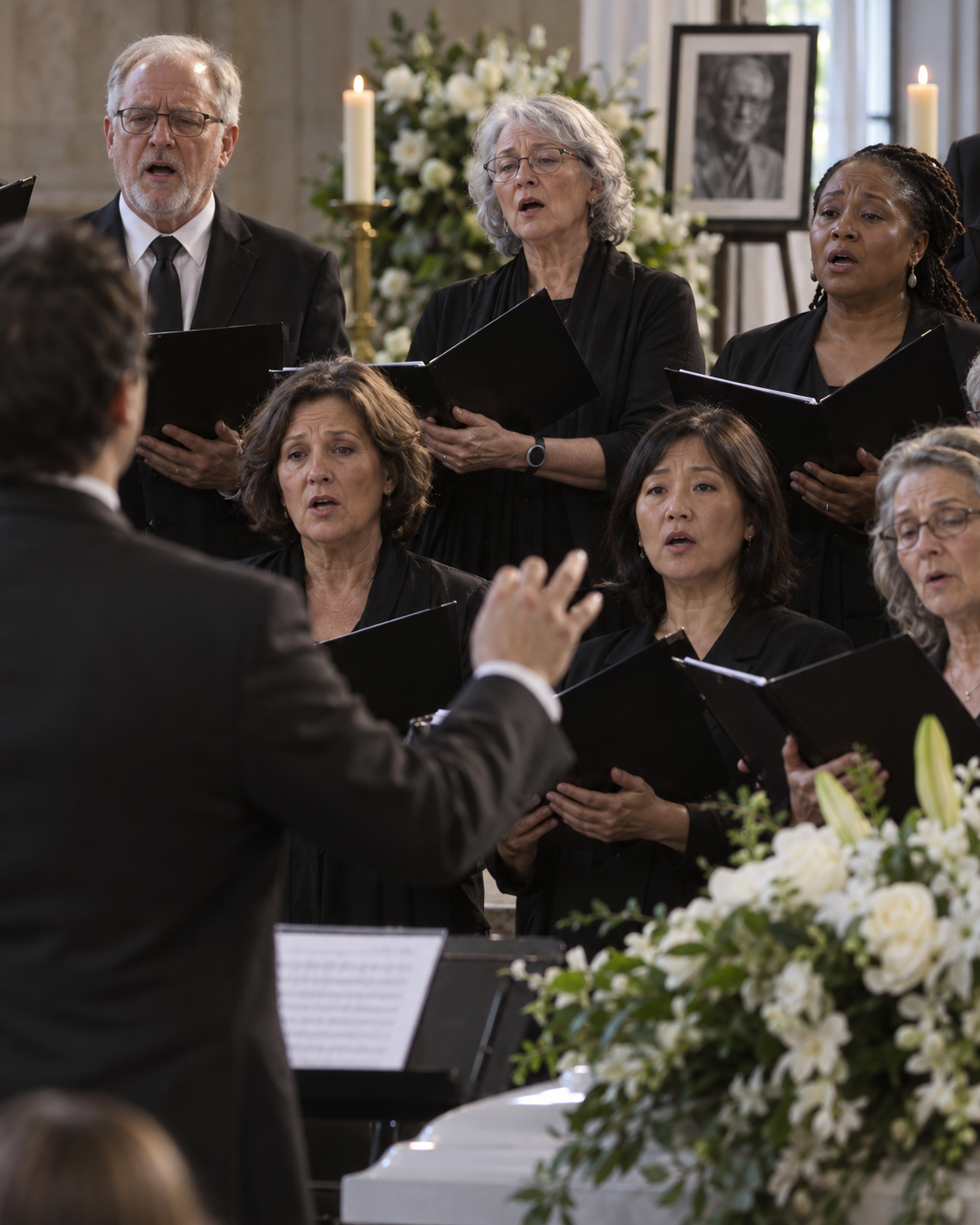
At my mother’s memorial, the choir held the final note painfully flat.
Mom had directed them for twenty-two years. I thought grief had broken their voices until every singer stopped at the same instant and turned toward the back row.
There, Mrs. Hale lowered a small vibration device from her wrist.
She had lost much of her hearing after chemotherapy. Mom wanted her to keep singing, so the choir created a tactile cue for cutoffs. During rehearsals, the device pulsed in time with the conductor. At the memorial, its battery weakened and delayed the final signal.
The singers could have followed the conductor and left Mrs. Hale alone on the note. Instead, they stayed with her until she felt the visual cue.
I was moved—and then learned Mom had designed the system informally without asking the full choir whether they were comfortable depending on an untested device. Mrs. Hale had also worried that every accommodation became a public lesson about her body.
After the memorial, the choir bought two certified cue devices, added visual backup signals for everyone, and let each singer choose which cues to use. They did not name the system after Mom.
The recording kept the flat note. When an editor offered to correct it, Mrs. Hale declined.
“We were not perfectly tuned,” she said. “We were together.”
Months later, the choir performed the piece again. The final chord landed cleanly.
The memorial version remained the one I played most.