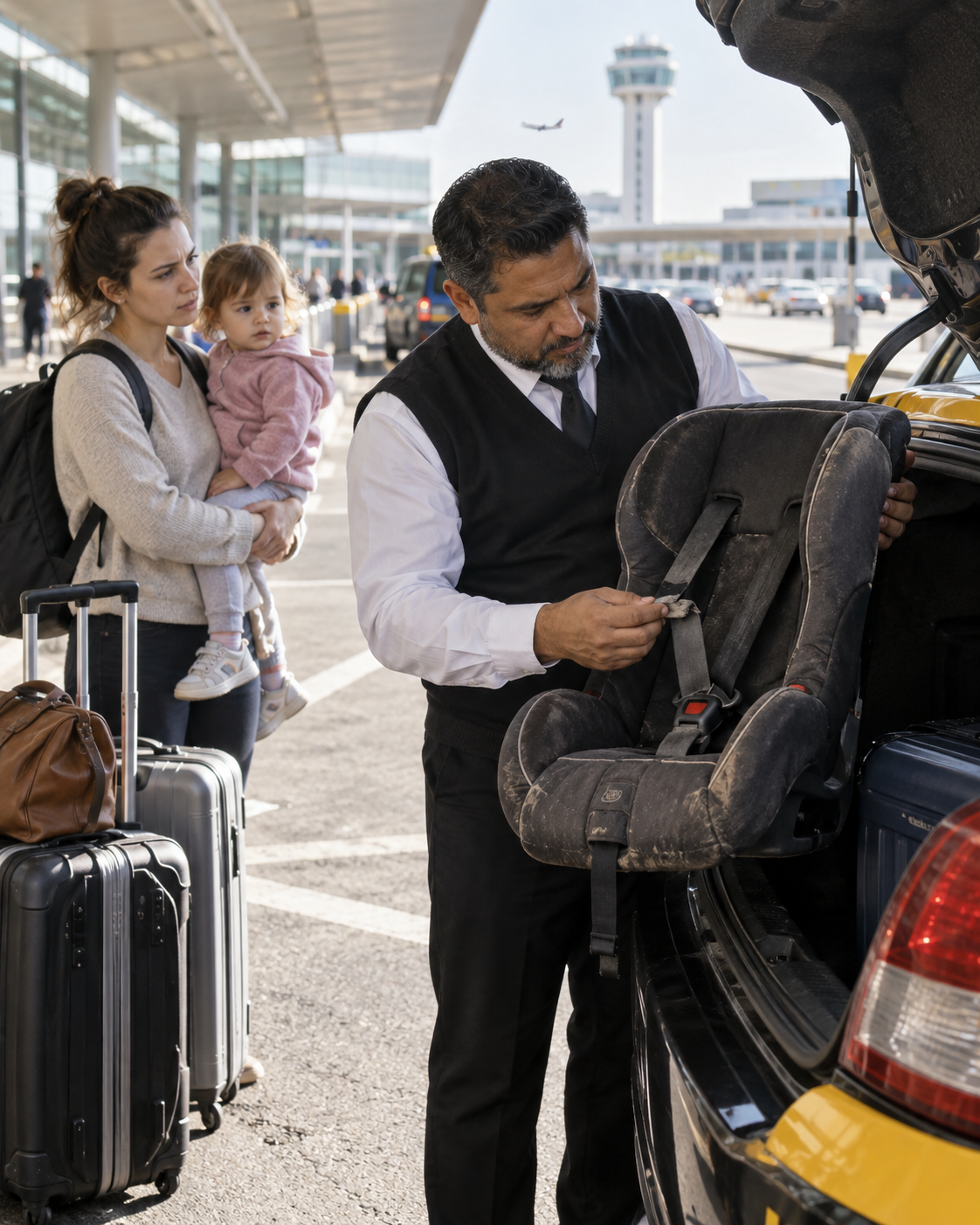
For ten years, taxi driver Omar Khan carried an unused child seat in his trunk.
Other drivers teased him because local rules exempted taxis from some child-restraint requirements. The seat reduced luggage space and expired before he ever used it in an emergency.
Then a mother with a toddler requested a ride from the airport. Omar installed the seat and discovered the harness no longer tightened smoothly. He canceled the trip rather than pretend the old seat was safer than no seat.
The mother was furious until another driver arrived with a current, correctly fitted model.
Omar took his expired seat to the taxi cooperative, not as proof of virtue but as evidence that individual preparedness had failed. Drivers could not reliably store every seat size, track expirations, clean equipment, and learn installation alone.
The cooperative created a bookable fleet of inspected seats at the airport and central station. Requests showed the child’s approximate age and size without storing unnecessary family details. Drivers were paid for installation training and extra pickup time. If the correct seat was unavailable, the booking system said so before accepting payment.
Omar’s old seat was cut apart for disposal so it could not be reused. He kept one buckle on his key ring.
Months later, he collected a family using the cooperative’s seat. The child slept through the whole ride.
Ten years of carrying equipment had looked responsible.
Building a system that checked whether it still worked was more responsible.