PART 1 OF 3
Part 1: The Summer My Family Left Me Behind
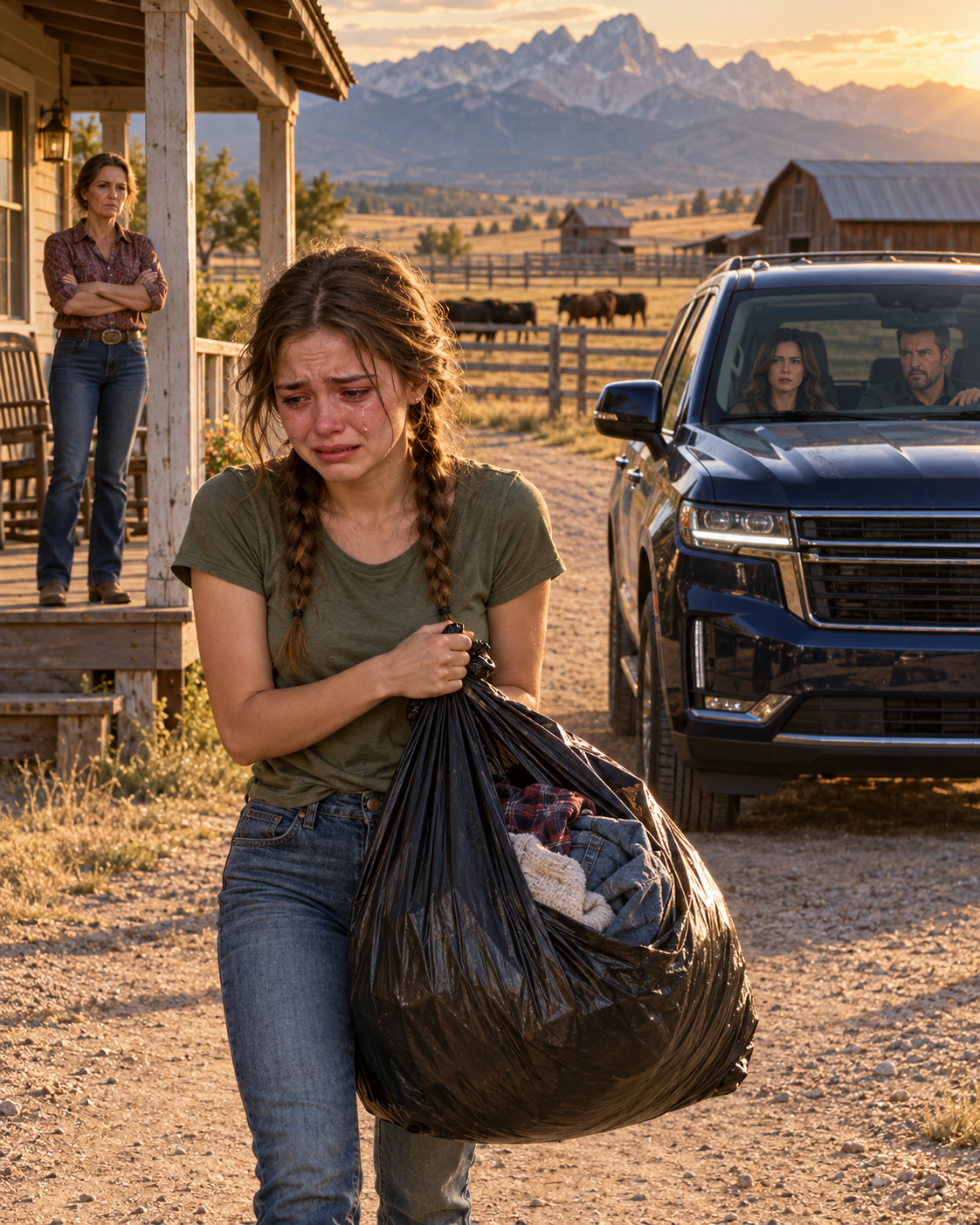
I was thirteen the summer my mother drove me to Aunt June’s cattle ranch. Every piece of clothing I owned had been pushed into one black garbage bag. There was no suitcase, no carefully packed toiletries, and no promise that I would be coming home after the family vacation.
Before we reached the ranch gate, I understood that I was not being sent there for a visit. I was being removed.
My younger sister was going on the family trip instead. Mom said my sister deserved a peaceful summer and that I had a way of ruining everything. She said it as if I had chosen to be difficult, as if my presence alone had become an inconvenience the family needed to solve.
I sat in the back seat holding the garbage bag on my lap and watched the road disappear behind us. Aunt June opened the front door before Mom finished explaining. She looked at the bag, then at my face, and did not ask questions in front of me.
She carried my clothes to a small room at the back of the house and told me I could stay as long as I needed. My mother hugged me only because Aunt June was watching. Then she got back into the car.
I stood by the fence and waited for the car to turn around. I believed she would change her mind once she reached the end of the road.
She never did.
My father never called that night. Neither of them came back the next day, or the day after that.
The first weeks were hard. Aunt June woke before sunrise, and soon I did too. I carried feed, cleaned stalls, checked the water troughs, and learned how to mend the fences that separated the pastures.
My hands became rough. My clothes smelled like dust and hay. At night, I listened to the wind push against the windows and checked my phone even though I already knew there would be no message from my parents.
Aunt June never pretended what happened was normal. She also never treated me like a burden. When I cried, she sat beside me without demanding an explanation.
When I was angry, she gave me work that allowed me to be quiet until the anger passed. She taught me how to drive the old truck across the property and how to tell when a sick animal needed help before it became an emergency.
Slowly, the ranch became the first place where I felt useful instead of unwanted.
PART 2 OF 3
Part 2: The Home I Built at Aunt June’s Ranch
My parents sent short birthday messages once in a while, but they never visited. My sister received photographs from family vacations, new clothes, and stories about places I had never seen. I received silence.
At first, I counted the days between their calls. Then I counted the months. Eventually, I stopped waiting for an apology and began building a life that did not depend on one.
Aunt June taught me every part of the business. She showed me the books, the land records, the cattle contracts, and the bills that kept the ranch alive through droughts and bad seasons.
She insisted that I finish school and helped me apply for classes in agricultural management. Whenever I said I wanted to leave, she told me that leaving was my choice, but staying could be one too.
By the time I was old enough to live on my own, the ranch no longer felt like the place where I had been abandoned. It felt like home.
I expanded the herd, repaired the barns, and learned how to sell cattle without letting anyone take advantage of me. I saved every dollar I could and reinvested it into the property.
The black garbage bag disappeared into the back of an old barn, but I never threw it away.
When Aunt June became ill, she called me into the kitchen one rainy afternoon. A folder was waiting on the table. Inside was a deed, a letter, and the legal papers transferring the ranch to me.
“I can’t accept this,” I told her.
She placed her hand over mine.
“This is not charity. It is the life we built together.”
After she passed away, I stayed. I repaired the fences, expanded the business, and turned the ranch into something strong enough to support itself.
I never told my parents that Aunt June had left it to me. They had not asked about my life in years, and I saw no reason to invite them back into it.
PART 3 OF 3
Part 3: The Buyer Who Knew My Name
Then, one afternoon, a realtor called. He said a buyer wanted to purchase the ranch and asked whether I would consider an offer.
The buyer’s name was my father.
He wanted the property for my sister. He had decided it would be the perfect investment and a beautiful place for her to begin a new life. He apparently assumed the ranch still belonged to Aunt June—or he simply never imagined that the child he had left beside a garbage bag could become the owner.
When the realtor told him my name, my father went silent. The next morning, my phone showed 88 missed calls.
First came my father. Then my mother. Then my sister. Their messages changed from confusion to anger and finally to pleading.
They said they had always loved me. They said the past had been misunderstood. They said the ranch should stay in the family. Not one of them asked what it felt like to be thirteen years old and watch their car disappear.
I listened to every message before calling my father back. He did not begin with an apology.
“Will you sell the ranch?” he asked.
I looked through the office window at the fields Aunt June had trusted me to protect.
“The ranch is not a prize you misplaced,” I said. “It is the place where I learned to survive after you left me behind.”
I gave him one chance to say what he should have said years earlier. He talked about money, appearances, and my sister’s future. He talked about how much the property would mean to the family.
He never asked how I had felt, whether I had been frightened, or whether I had believed they were coming back for me.
So I declined the offer. The ranch stayed mine. The family that had once treated me as an inconvenience finally understood that abandoning someone does not give you the right to return when they become valuable.
I still keep that old black garbage bag in the back of the barn. Not because I need it, but because it reminds me of the day I stopped waiting for my family to choose me—and began choosing myself.