The wind at five thousand feet doesn’t just blow; it screams, it rattles the bolted pine framing, and it tests the structural integrity of every iron cable anchoring Crag’s Edge tower to the cliffside.
For seven lonely seasons, I was the sole guardian of that remote outpost, surviving on freeze-dried rations, radio static, and the steady, rhythmic pulse of the weather radar.
My name is Talia, and my world was measured in barometric drops and lightning strikes.
Down in the valley, six miles away through winding logging roads, sat the regional forestry headquarters—a comfortable, heated complex where bureaucrats like Arthur Pendelton drank imported coffee and signed off on timber contracts.
Arthur owed me his life. Three summers ago, when a sudden crown fire trapped him halfway up the western ridge during an unauthorized inspection, I rappelled down the rocky slope with a breathing mask and dragged him through forty yards of choking smoke to my tower.
He had promised me eternal gratitude.
He had promised me that the state would finally fund the tower’s crumbling foundation repairs.
Instead, he sent armed deputies to evict me during a blizzard.
The crisis began two weeks before the snow set in.
I was finishing my midnight meteorological log when a frantic pounding rattled the heavy oak door of the cabin.
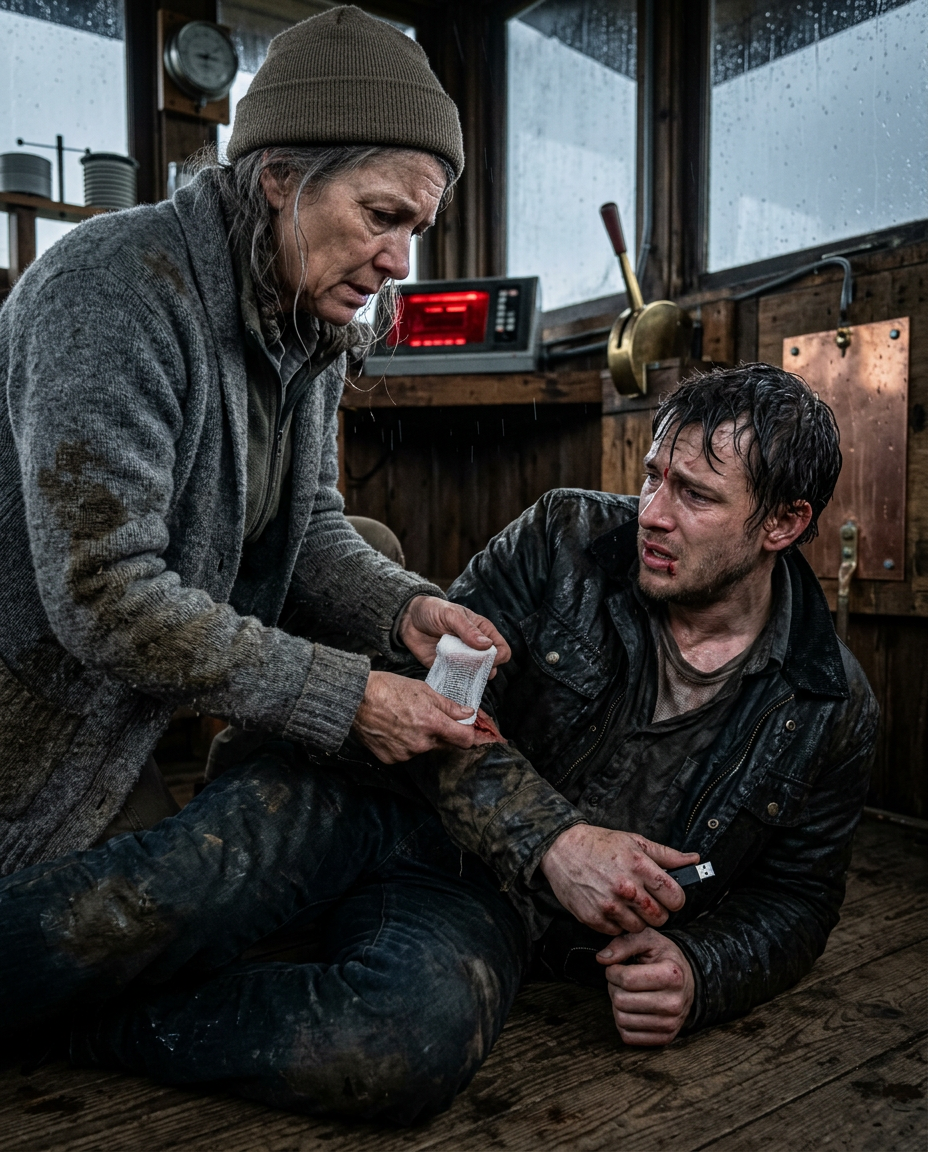
I unlatched the deadbolt to find a man collapsing onto the braided rug—Julian Vance, senior financial auditor for the state conservation fund, shivering, bleeding from a deep laceration on his temple, and clutching a ruggedized black thumb drive to his chest like a shield.
“They’re auditing the timber subsidies,” Julian gasped, his lips blue with hypothermia. “Arthur didn’t allocate the relief funds to the replanting program. He funneled seven million dollars into private shell companies before the winter freeze.”
I didn’t ask questions. I pulled him inside, stitched his temple with a needle from my first-aid kit, and hid him beneath the trapdoor of the radio room floor just as the distant hum of government snowcats echoed up the winding mountain pass.
By morning, the weather had turned into a blinding whiteout.
The heavy oak door rattled again, but this time it wasn’t a desperate auditor.
It was Commissioner Arthur Pendelton, flanked by two state troopers in tactical gear, their breath pluming white in the freezing mountain air.
Arthur stepped inside, shaking snow from his tailored wool overcoat, his eyes scanning the cozy cabin with cold detachment.
“Talia,” Arthur said, offering a tight, patronizing smile that didn’t reach his eyes. “We received an automated distress signal from your radio relay. It seems your isolation up here has finally affected your judgment.”
I stood beside the wood stove, my coffee mug warm between my palms. “There was no distress signal, Arthur. You’re trespassing on federal weather reserve land without a warrant.”
Arthur chuckled, shaking his head as if humoring an eccentric aunt. “Let’s not make this difficult. The state mental health board has already signed the emergency evaluation order. You’re coming down the mountain with us.”
He turned to the troopers. “Search the quarters. Check the radio desk. The auditor’s missing drive has to be within reach.”
One of the troopers kicked open the bottom cabinet of my weather desk and pulled out Julian’s black thumb drive, holding it up triumphantly.
Arthur took the drive from the trooper’s gloved hand, spinning it between his fingers while looking at me with undisguised contempt.
“Such a shame,” Arthur said, slipping the drive into his breast pocket. “All those years alone in the dark really do scramble the mind. You imagined the whole thing, Talia. Nobody will ever believe an old recluse over the regional commissioner.”
The two troopers stepped forward, grabbing my arms to haul me toward the freezing exit.
I didn’t resist.
I didn’t shout, and I didn’t beg for mercy.
Instead, as they dragged me past the master console, I simply hooked my right foot around the base of the control desk, reached out, and flipped the heavy red master-override switch mounted beside the barometer.
With a deafening hydraulic hiss, the four-inch steel blast shutters dropped simultaneously over every window and door in the tower, plunging the room into sudden, amber-lit shadow.
The heavy iron locks engaged with a deep, echoing *thwack*.
The two troopers stopped instantly, letting go of my arms and turning toward the doors in confusion.
“What is the meaning of this?” Arthur snapped, reaching for his radio. “Open these shutters immediately! I am ordering a state—”
“You can’t order anything, Arthur,” I interrupted, my voice cutting cleanly through the hum of the emergency generators. “Not without the master encryption key.”
Arthur stared at me, his face suddenly tightening with unease. “What key? Open the door, Talia, or I’ll have you charged with kidnapping and sedition.”
I walked slowly over to the western wall, where a massive, heavily etched copper grounding plate—installed when the tower was built in 1944—covered three feet of timber paneling.
I ran my hand across the deeply scored letters hammered directly into the heavy metal.
“When you were hiding up here during the Granite Creek fire, Arthur,” I said softly, “you were shaking so hard you dropped your personal ledger right on this floor.”
Arthur’s eyes widened. He took a half-step backward.
“I didn’t give it back to you,” I continued, pointing a single finger at the copper plate. “Instead, I spent the rest of that summer hand-hammering every single bank routing number, every offshore shell company name, and every forged signature from your ledger directly into the copper grounding grid of this tower.”
I tapped the metal plate twice.
“The thumb drive your deputies just confiscated? It’s a dead drop, Arthur. It doesn’t contain the files. It contains the wireless router password that broadcasts this entire copper wall directly to the federal inspector general’s satellite feed every sixty seconds.”
Arthur lunged forward, pressing his palm against the copper plate as if he could physically erase the engraved text glowing beneath the emergency red beacon lights.
“You didn’t,” he whispered, his voice cracking into a dry rattle. “You couldn’t have…”
The heavy steel door behind him chimed twice.
A synthesized automated voice echoed from the external speaker box mounted on the outer porch: *FEDERAL AIR PATROL RECON UNIT 4. SECURE TRANSMISSION RECEIVED. COORDINATES LOCKED.*
Arthur slowly turned around, staring at the solid steel door as the sound of rotor blades began to beat heavily against the roof above us.