For six exhausting years, I kept our county’s only large-animal veterinary clinic functioning on double shifts and donated medications.
I stitched torn ligaments and delivered calves through freezing midnight blizzards while the town council ran up tabs they never paid.
Last night, during a live-streamed emergency budget hearing, the very councilmen whose livestock I saved on credit stood up to condemn me.
They publicly accused me of medical malpractice to justify handing our county contract to a sleek corporate pharma conglomerate.
Council President Miller smirked as he read accusations of expired inventory straight off a glossy presentation deck.
The gallery packed with my neighbors murmured in shocked betrayal, looking at me as if I were a criminal.
I sat quietly in the third row, my veterinary clipboard resting heavy and cold on my lap.
I did not scream or interrupt their prepared political theater.
Instead, I simply waited for Miller to finish his final rehearsed slander about public safety and professional negligence.
When he asked if I had any defense before the final contract vote, I stood up.
I walked slowly down the center aisle, my muddy rubber boots squeaking against the polished town hall floor.
Miller scowled, waving his gavel and demanding I take my seat or be escorted out by the sheriff.
I ignored him entirely.
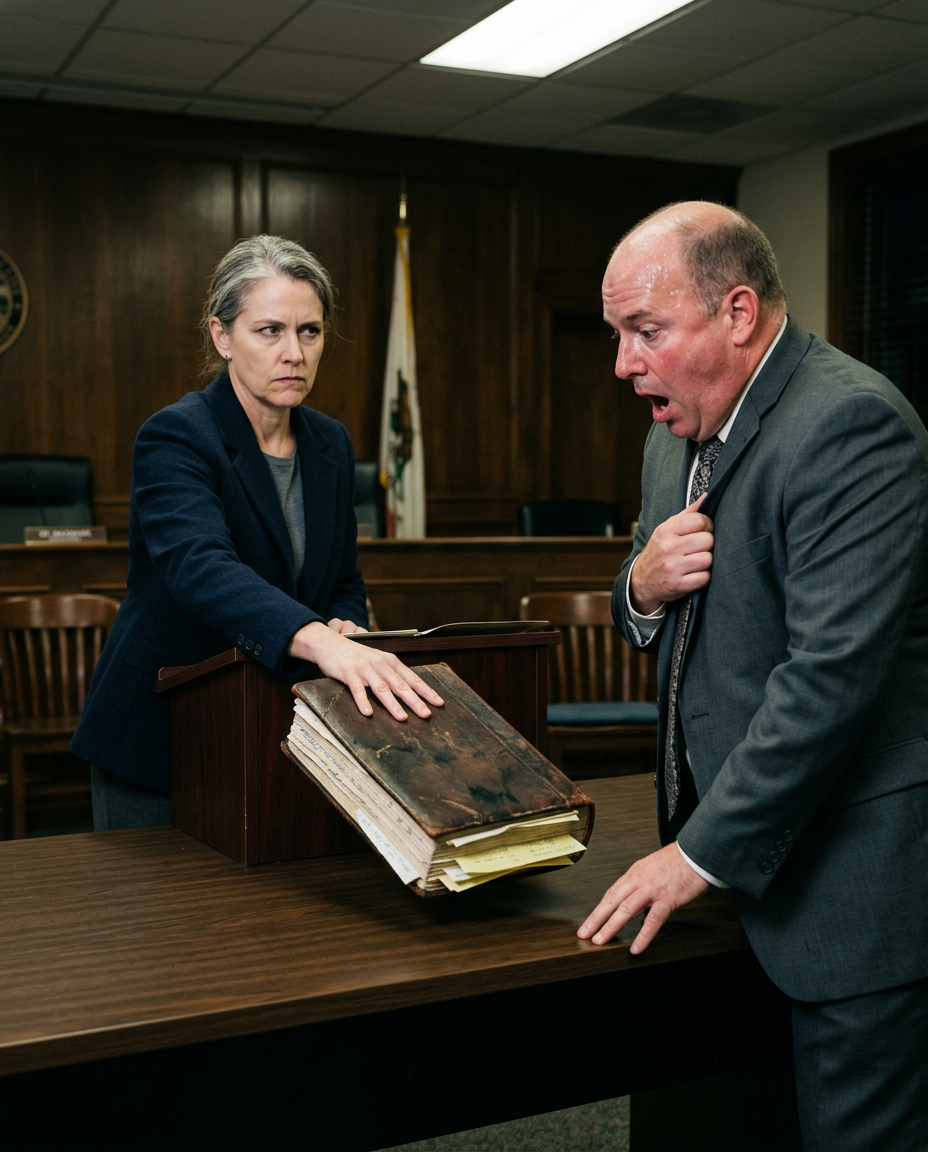
I reached the mahogany front table and calmly set down my stained aluminum clipboard.
Then I slid open the clinic’s master ledger, its leather binding cracked and stained with years of farm antibiotics and mud.
I tapped my finger on page four hundred and twelve, where every single councilman had signed their name next to illegal oxytetracycline residue cover-up logs.
Miller’s face drained of color in a single terrifying second, his mouth opening in a silent gasp.
Before he could slam his gavel, my phone vibrated in my palm with an incoming broadcast notification from the state environmental inspectors.
The live-streamed feed of the inspector’s office instantly synced to every single smartphone in the crowded municipal hall.
For years, Pine Creek County had operated on a quiet, corrupt understanding between agricultural subsidies and municipal greed.
While farmers struggled through drought years, the five members of the town council quietly bypassed federal veterinary drug limits to artificially fatten cattle destined for export.
Whenever livestock developed resistant bacterial strains from the unregulated feed, they called me in the dead of night.
I cleaned the infections, administered critical care, and absorbed the medical costs out of my own pocket to prevent a localized quarantine that would ruin our families.
In return, the council promised perpetual municipal support for the clinic’s modest operating lease.
That was before the pharmaceutical giant Oakridge Biohealth offered each councilman a fifty-thousand-dollar consulting retainer to secure exclusive regional distribution rights.
To justify terminating my contract overnight, they needed a scapegoat.
They chose the overworked country vet who had no family to defend her and no corporate lawyers on retainer.
As my phone continued to buzz with the state inspector’s emergency broadcast alert, Miller lunged across the mahogany table to grab the ledger.
I pulled it back an inch, my thumb resting firmly on the signature block bearing his personal banking stamp.
Behind him, Vice President Henderson dropped his pen, the clatter echoing loudly against the silent microphones.
I looked directly into the camera lens mounted at the back of the hall, knowing every family in the county was watching their screens at home.
I read the first forged inspection report aloud into my lapel microphone, my voice steady and cold in the quiet room.
The state inspectors did not need to drive out through the mountain passes anymore.
They had already downloaded the encrypted backup files I uploaded to the cloud server three hours before the hearing began.
Within minutes, the county sheriff’s department dispatch radio began squawking outside in the parking lot as federal compliance officers moved to secure the council chambers.
Miller slumped back into his leather chair, staring blankly at the glowing screen of his own smartphone as his political career evaporated in real time.
I closed the leather ledger with a sharp, definitive crack that echoed through the hall.
I picked up my clipboard, turned my back on the stunned dais, and walked out the heavy oak doors into the crisp midnight air without looking back once.