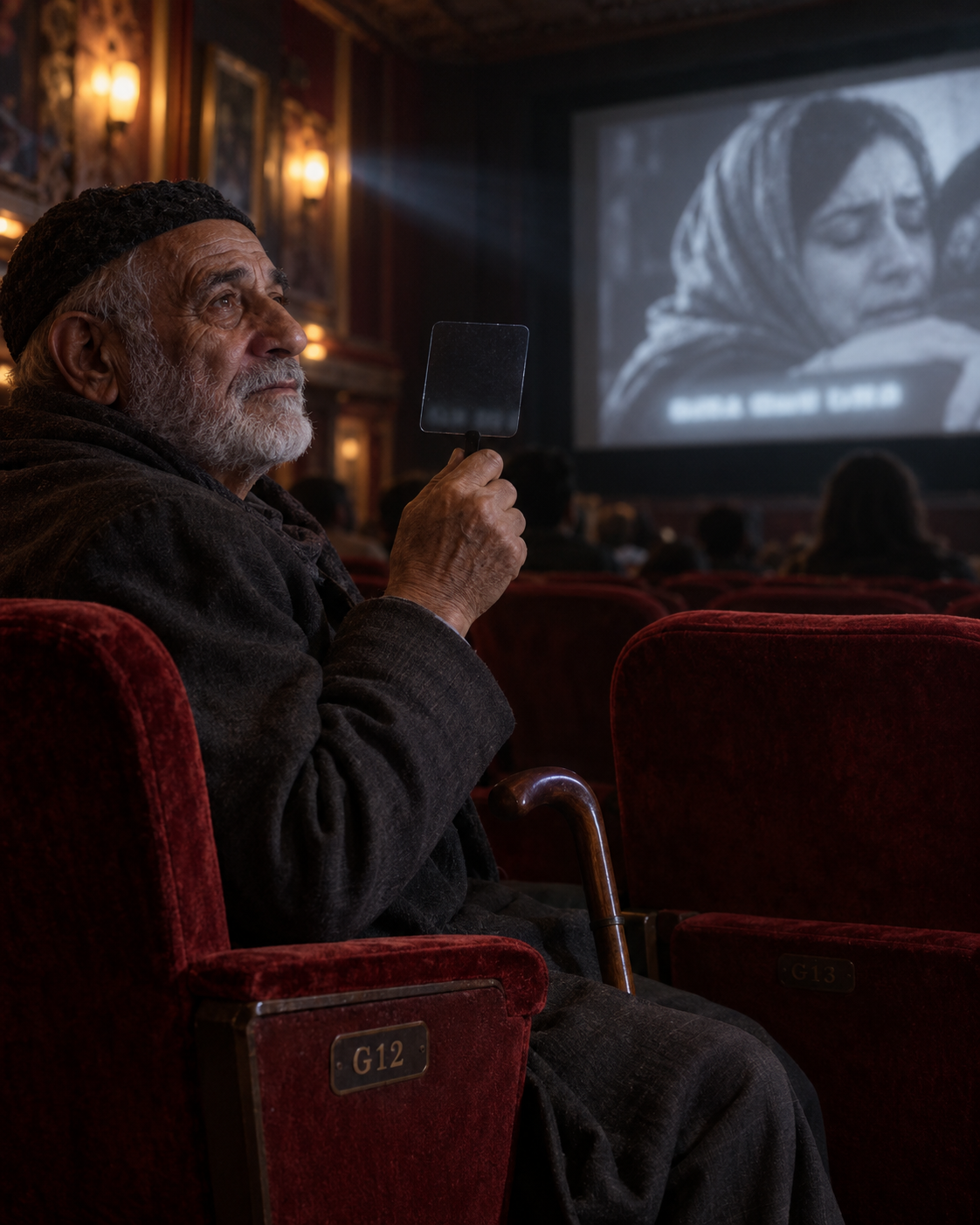
Every first Thursday, someone bought seat G12 for the last film of the night and left it empty.
I managed the Harbor Cinema, a one-screen theater with cracked velvet seats and a projector older than my staff. The reservation began before I worked there. It survived three owners, online ticketing, and a renovation that changed every seat number except G12.
The buyer used the name A. Noor.
When our new owner announced that low-demand screenings would end, I emailed every regular customer. A. Noor replied within a minute: **Please keep the first Thursday. I will cover the empty seat.**
One ticket could not cover a screening.
That Thursday, an elderly man arrived carrying a small metal box. He did not sit in G12. He chose the aisle behind it.
“Are you A. Noor?” I asked.
“My wife was.”
Amal Noor had translated subtitles for independent films. Years earlier, before captions were common at Harbor, she sat in G12 and whispered dialogue to her husband, Farid, who had lost most of his hearing. Other patrons complained. The manager asked them to leave.
Amal returned the next month with a homemade caption box: a dark acrylic screen mounted on a flexible arm, reflecting reversed text from a small display. Farid could read captions without disturbing anyone.
She helped the cinema build six more.
After Amal died, Farid kept buying her seat on the night they once tested each device. He sat behind it to check that open captions and assistive equipment still worked.
The metal box held her first reflector.
“Why never tell us?” I asked.
“Because maintenance should not depend on a sad story.”
He showed me two receivers with dead batteries and a caption unit missing its clamp. Our staff checklist said all equipment was available because the storage drawer contained six devices. Nobody tested them during a film.
I canceled the plan to close that night’s screening, not because an empty seat was romantic, but because our accessibility promise was false.
The owner objected until Farid offered something better than guilt. He connected us with a film-access nonprofit that supplied new receivers if we hosted monthly open-caption screenings and trained staff to test devices with actual audio.
We changed the first Thursday. G12 was no longer blocked automatically. Farid insisted someone should be able to sit there.
On the first open-caption night, every seat sold. Farid sat in G12 for the first time since Amal died. He placed the old reflector on the empty seat beside him.
Halfway through the film, the new caption feed froze.
Our projectionist noticed within seconds because the checklist now required one staff member to monitor it. She restarted the unit and logged the failure.
Farid nodded toward me in the dark. That small nod mattered more than applause.
We kept the late screening. Some months it lost money; other months it filled. The nonprofit helped us schedule films with captions supplied correctly, and local donors covered equipment rather than symbolic seats.
Farid still comes every first Thursday. He buys one ticket.
When I asked what to do with Amal’s old reflector, he donated it to the lobby display with a label he wrote himself:
**A useful object, built because two people were asked to leave.**
Seat G12 is never reserved now.
It is usually occupied.