My sister sold our grandmother’s quilt without telling me.
By the time I learned, the buyer had taken it two counties away. I called Leah furious. Grandma stitched that quilt from scraps of dresses, work shirts, and flour sacks. It covered us during every winter visit.
“The roof was leaking,” Leah said. “I needed the money.”
She had inherited the house and its repairs. I had inherited the belief that memories should cost her nothing to store.
Three days later, the buyer called.
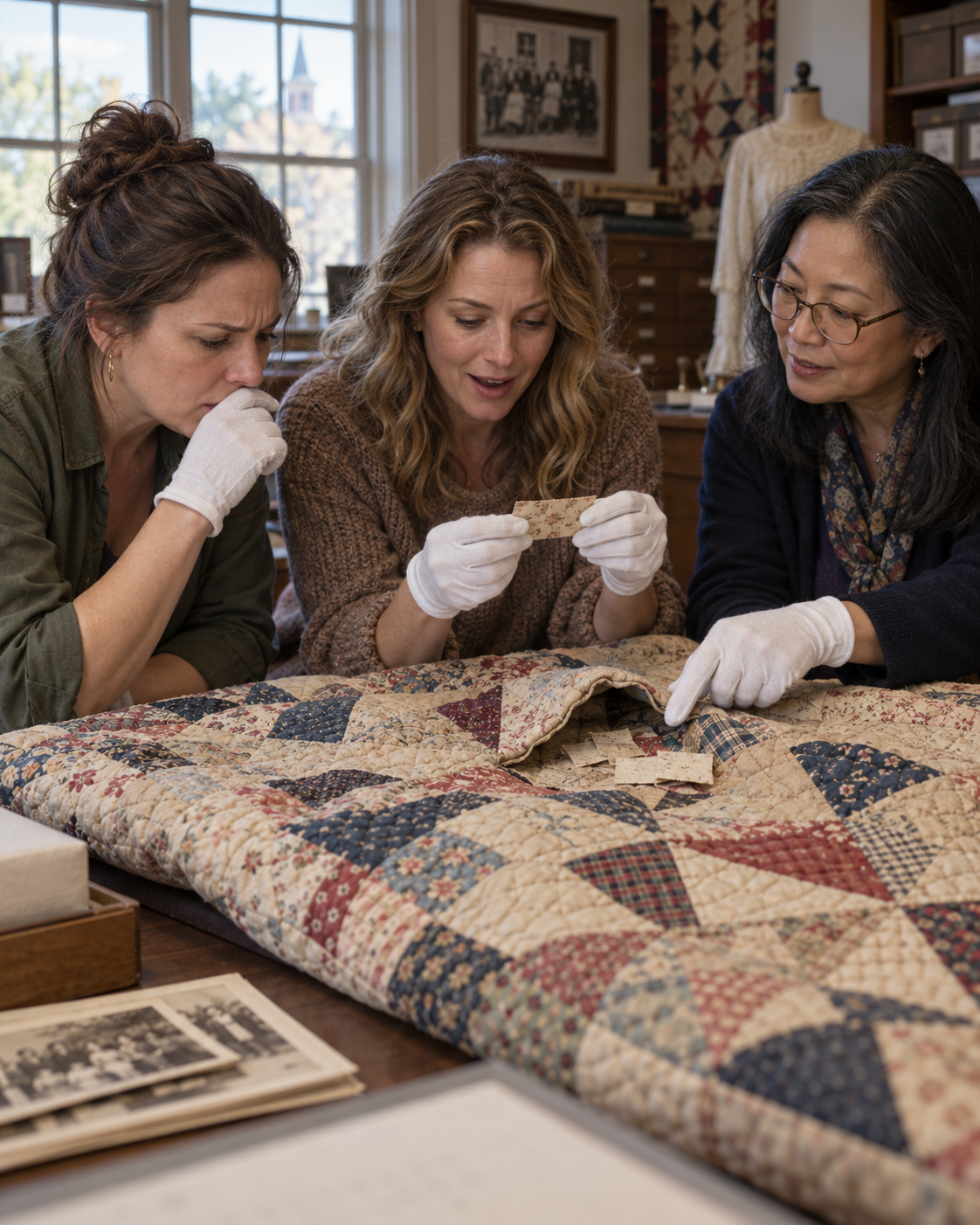
“I found a pocket sewn into the backing,” Dr. Elaine Wu said. “It contains names.”
Inside were thirty-two fabric slips, each marked with a first name, a year, and a small stitched symbol. Elaine was a textile historian. She recognized the quilt as more than a family blanket.
Grandma had run a sewing circle for women working at the old cannery. When a baby was born, someone added a piece of cloth and placed the mother’s name in the hidden pocket. The symbols recorded help: a loaf for meals, a spool for clothing, a crescent for night childcare.
Our family knew none of this.
Leah demanded the quilt back. Elaine refused—not because she wanted to keep it, but because Leah had signed a sale agreement and Elaine had already scheduled conservation work.
I expected to side with my sister. Instead, I asked what she planned to do if it returned.
“Put it in Grandma’s room.”
The room’s ceiling was stained from the leak.
We met Elaine at the county archive. Four former cannery families identified names. One woman, ninety-one-year-old Mrs. Vega, found her mother’s slip and cried at the tiny crescent beside it.
“That meant Ruth watched me during night shift,” she said. Ruth was our grandmother.
The quilt belonged legally to Elaine. Its history belonged to many people.
She proposed a solution: cancel the private sale, pay Leah the same amount through an archive acquisition fund, conserve the quilt, and display it only after families approved how names were used. Leah agreed on one condition—the hidden pocket would remain part of the object, not emptied into a case for easier viewing.
I contributed the money I would have spent hiring a lawyer. Leah used the sale to repair the roof.
The archive scanned every fabric slip. Families could choose public names, initials, or no listing. The display focused on mutual childcare rather than pretending our grandmother had done everything alone.
At the opening, Leah stood beneath the repaired section of the archive roof and whispered, “Grandma would hate the lighting.”
She was right. We laughed for the first time since the sale.
The quilt returned to the house for one night before conservation. We spread it across Grandma’s old bed. Rain struck the new roof, and not one drop reached the cloth.
In the morning, Leah sewed one new slip for the hidden pocket.
It carried both our names, the year, and a small roof.