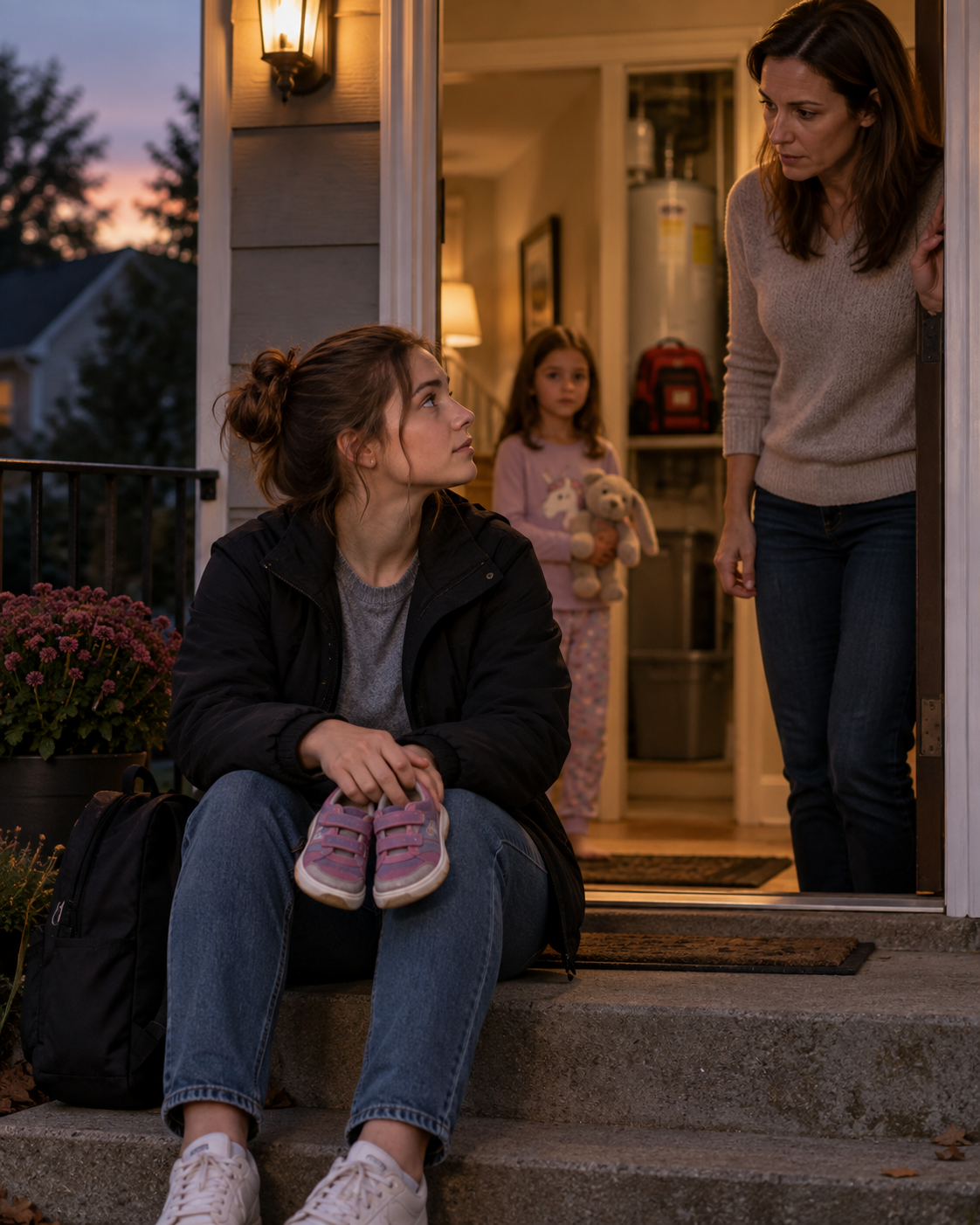
I came home two hours early and found our babysitter sitting on the front steps with my eight-year-old daughter’s shoes in her lap.
“You can go,” I told Maya. “I’ll pay the full night.”
She didn’t move.
“Not until you look behind the water heater.”
My daughter, June, stood just inside the door, staring at the floor. I thought Maya was accusing us of hiding something dangerous. In a way, she was.
Behind the heater was a backpack containing crackers, a flashlight, a bus map, and forty-three dollars in coins. June had assembled it over six weeks.
She finally explained that our upstairs neighbor had been pounding on the floor and shouting whenever she practiced piano. Once, he had cornered her in the stairwell and said he could make families “disappear from buildings.” June heard me arguing with our landlord about the rent increase and decided the threat meant eviction. The backpack was her plan for when we had nowhere to live.
Maya had found her adding a toothbrush. She did not interrogate her or promise secrecy. She asked June what would help her feel safe enough to tell me.
“I wanted you home before dark,” June whispered.
I almost ran upstairs. Maya stopped me. “June needs to know what happens next.”
So we made the next steps together. I photographed the backpack and wrote down June’s exact words. I called the building manager, then the non-emergency police line because the stairwell threat was specific. Maya stayed because June asked her to.
The neighbor denied everything. The manager initially called it a misunderstanding, until another parent reported that he had shouted at her son too. The hallway camera had no sound, but it showed him blocking June’s path.
He received a formal no-contact order from management while the complaint was investigated. The landlord repaired the broken lobby lock and moved the security camera angle. We changed June’s route from school so she entered with another family for a while.
There was no dramatic arrest. We did not move overnight. The rent dispute did not vanish. But June stopped sleeping with her coat on.
The hardest conversation came later. I asked why she had not told me.
“You were already solving the money problem,” she said. “I didn’t want to give you another one.”
I realized how often I had praised her for being “easy.” She had heard that as a job description.
We made a new family rule: children do not protect adults from information adults need. Problems could be written, drawn, or told to Maya if speaking to me felt too hard.
I offered Maya extra pay for the hours she stayed. She accepted the money but refused my apology for coming home suspicious.
“You didn’t know,” she said. “Now you do.”
June unpacked the emergency bag herself. We kept the flashlight and bus map, because preparedness was not the problem. Silence was.
The shoes Maya had held on the steps went back by the door. For the first time in weeks, June left them there overnight.