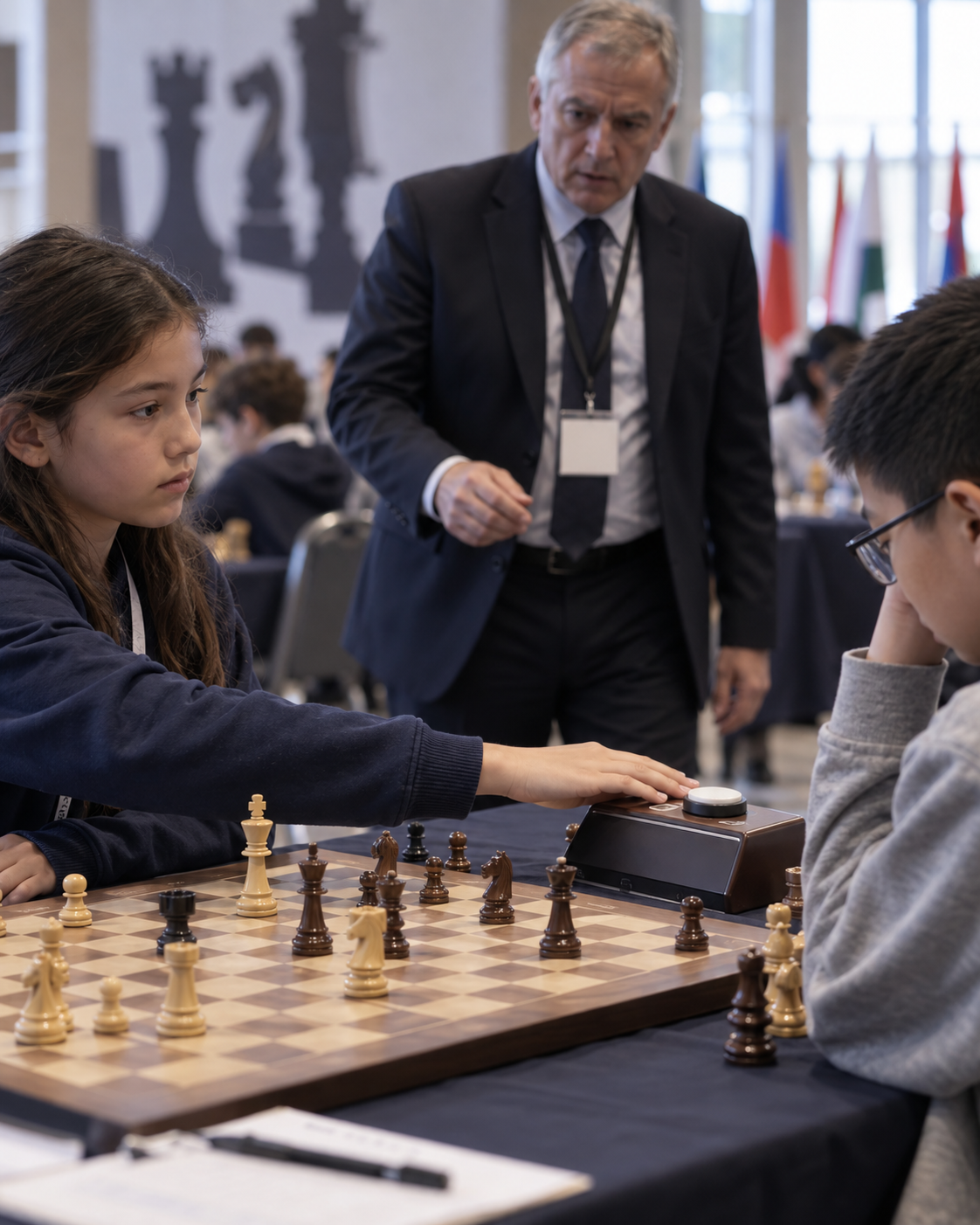
My son had four seconds left when his opponent stopped the chess clock.
One move would have ended the regional final. Instead, twelve-year-old Amara raised her hand and said the clock was not counting both players equally.
Officials thought she was surrendering. She pointed to the paddle on Daniel’s side. Because his cerebral palsy affected his grip, the tournament had approved a larger button. During the final, that attachment shifted and required two presses to register.
Daniel had lost nearly a minute without realizing it.
The chief referee offered to add sixty seconds and continue from the current position. Amara objected again. She could not know exactly when the failures began, and the winning position had been shaped by time pressure.
After reviewing video, the officials declared the game void and scheduled a replay with a tested accessible clock. Some parents said Amara had thrown away a title. Daniel worried people would treat the replay as charity.
Amara answered both complaints at the board.
“I want to beat the player,” she said, “not the button.”
Daniel won the replay after three hours. Amara shook his hand, then asked the organizers to publish an equipment-check rule so future players would not need an opponent to surrender an advantage.
The federation adopted pre-match accessibility tests and spare devices at every table.
Daniel kept the trophy. Amara received no special award—and declined one when it was suggested.
Fair play, she said, was part of the match, not a separate event.