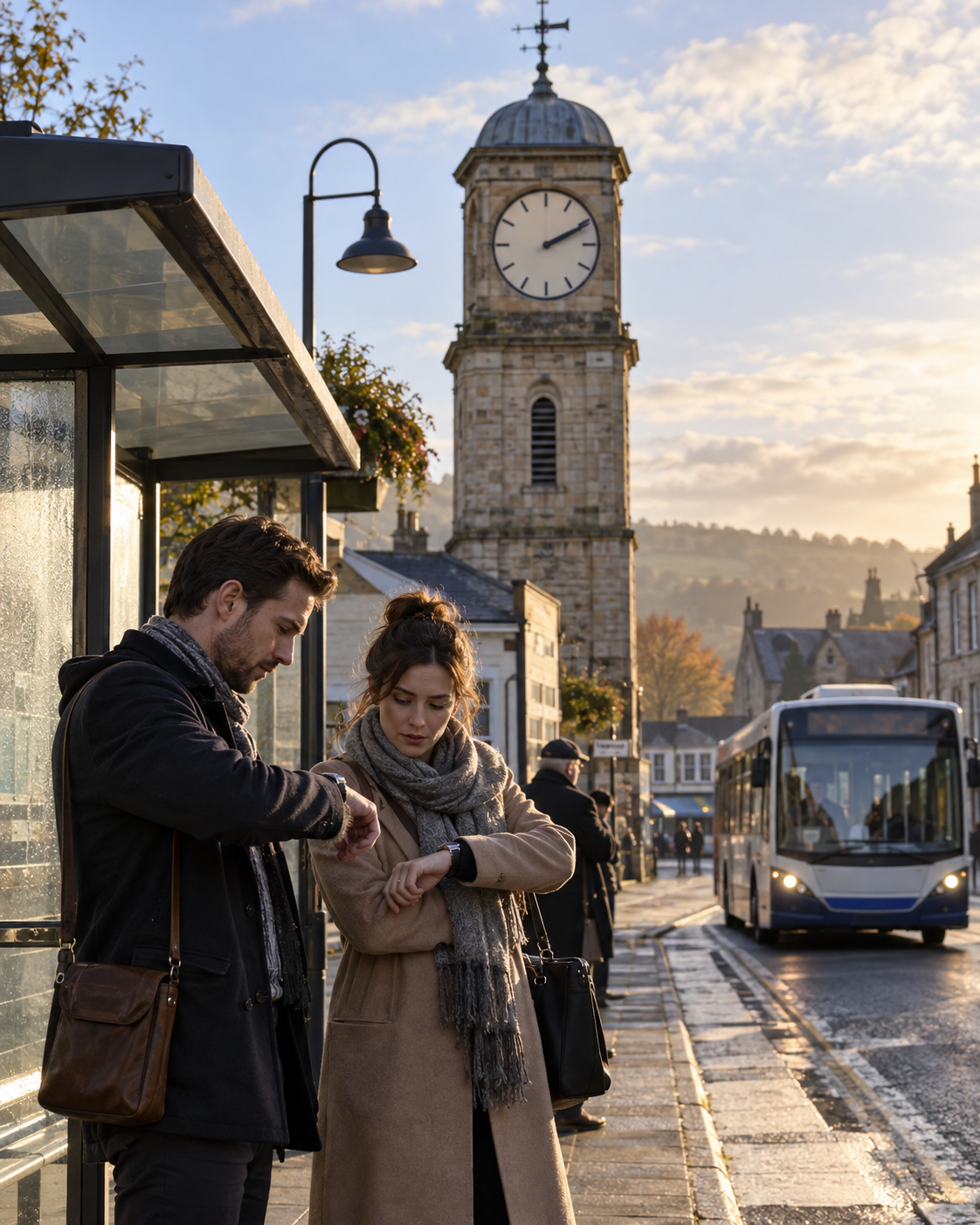
The clock above our town hall had run eleven minutes fast for as long as anyone remembered.
People called it tradition. Shopkeepers opened by it, students hurried beneath it, and wedding photographs captured its wrong time.
When a new clockmaker corrected it, the bus company suddenly received dozens of complaints about missed connections.
The clock had been deliberately advanced after a factory changed shifts in 1984. Workers had six minutes to cross the square for the last rural bus. The mayor refused to alter the timetable, so the previous clockkeeper moved the public clock forward eleven minutes. Drivers waited for the visible hour, not the official one.
The unofficial fix survived long after the factory closed. The current bus schedule still assumed an undocumented five-minute hold at the square.
Resetting the clock exposed a hidden dependency.
The council considered making it wrong again. Instead, it published the hold time, synchronized the timetable, and added a real-time departure display. The clock remained accurate.
Former workers asked that the story not be erased. A small exhibit documented the workaround, including why it had been necessary and why secret accommodations eventually become fragile systems.
At noon, the repaired clock chimed exactly on time. The bus waited until 12:05 because the schedule now said it should.
Tradition had not been destroyed.
It had finally been translated into policy.