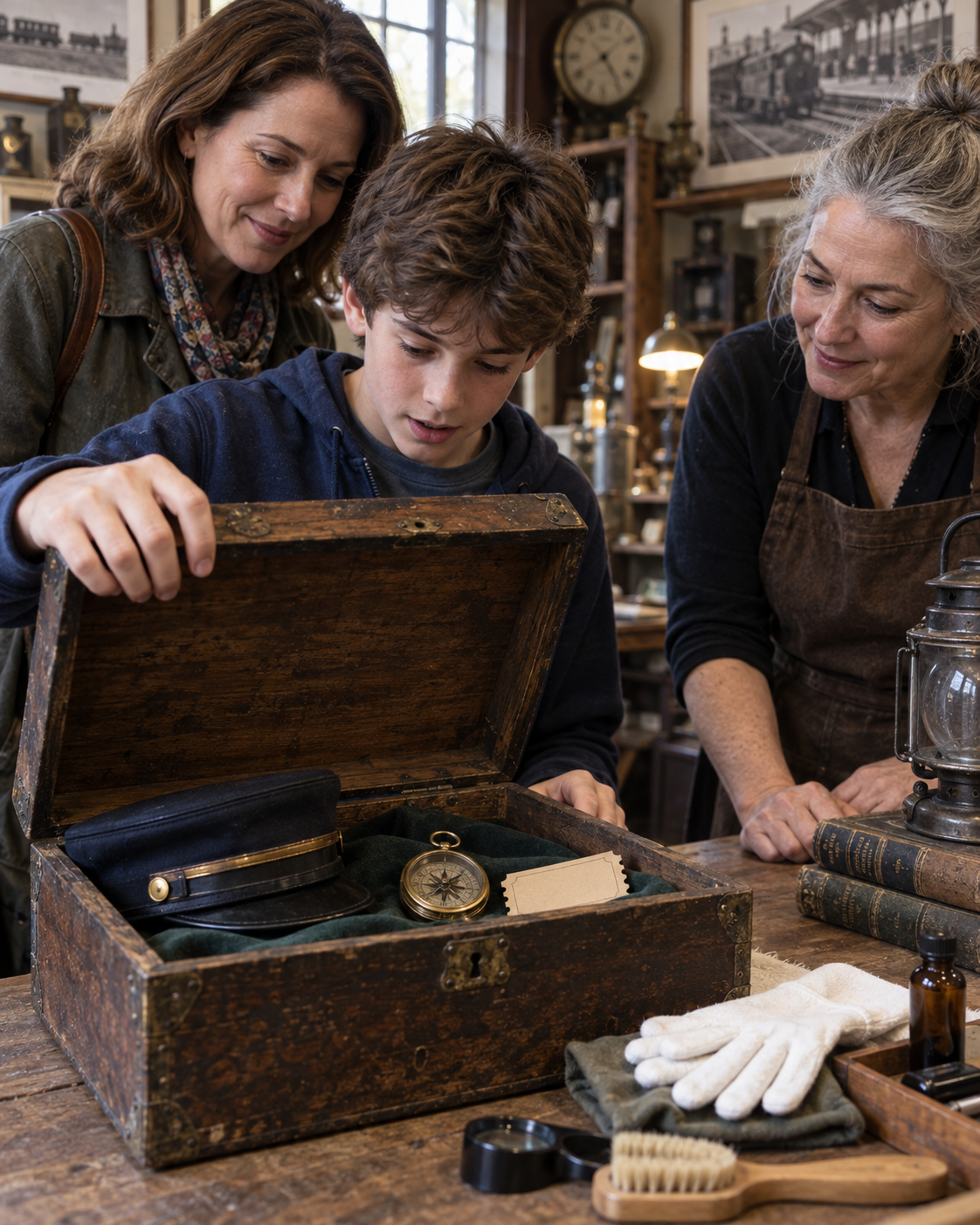
The antique dealer offered twenty dollars for a sealed wooden box my son refused to open.
It came from my late uncle’s workshop. Twelve-year-old Caleb had carried it home and slept with it under his bed. The brass latch had rusted shut.
Dealer Ruth Ames said the box itself was common. She offered twenty dollars because an old railway label on the bottom might interest a collector.
I accepted. Caleb grabbed it back.
“Uncle Theo said it was mine when I was ready.”
I had never heard that promise. I assumed grief had invented it. Ruth did not take the box.
“Ownership is unclear,” she said. “Come back when it isn’t.”
We checked the estate inventory. The box was listed only as workshop debris. Then the executor found a voicemail Theo had left weeks before his death. He said Caleb could choose whether to open, keep, or discard it when he turned thirteen. He specifically asked adults not to decide that curiosity was more important than readiness.
Caleb’s birthday was four months away.
I apologized for agreeing to a sale. Ruth documented the railway label without removing it and withdrew her offer. She also warned that the box could contain chemicals or sharp tools, so “do not open” could not mean “ignore safety.”
A conservator examined it with an X-ray while Caleb watched. Inside were paper, fabric, and one metal object, with no immediate hazard. The box returned to his room in a clear protective case.
On his thirteenth birthday, Caleb carried it to Theo’s old bench. He asked Ruth to open the latch but not lift the lid.
Inside was a child-sized conductor’s cap, a punched railway ticket, and a letter. Theo wrote that he and Caleb’s grandfather used to sneak onto an abandoned platform to imagine journeys. The metal object was a small compass.
Nothing was financially valuable.
Caleb donated the railway label and ticket to a local museum after choosing high-quality copies for himself. He kept the cap, compass, and box.
Ruth later put a card in her shop window:
**An appraisal determines market value. It does not determine whose decision an object contains.**