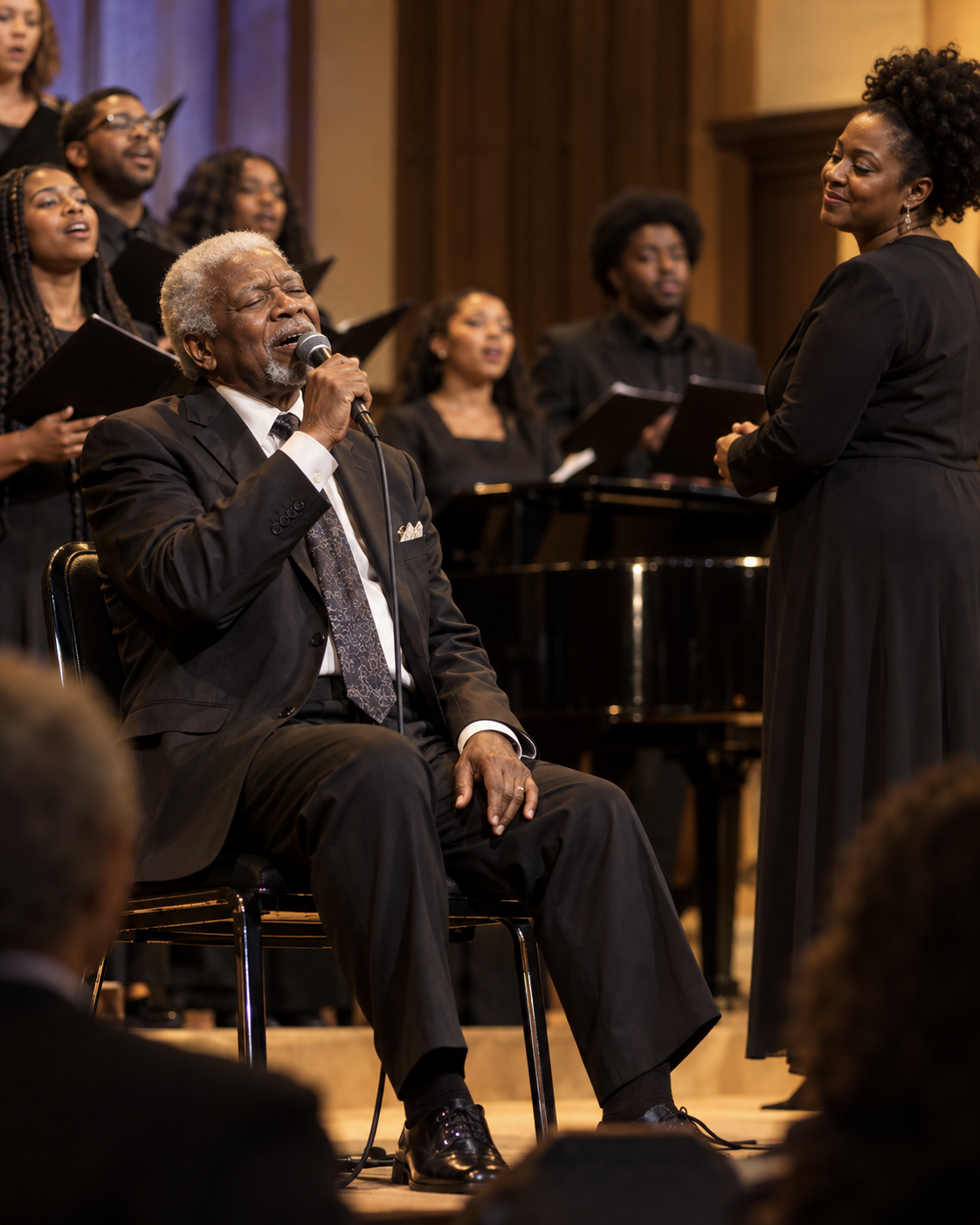
My grandfather sang the opening note of the town concert, but nothing came through the speakers.
He tapped the microphone. The choir director, Lena, signaled for the pianist to continue.
Grandpa finished the song unheard.
I confronted Lena backstage. She did not deny muting him.
“His breathing was unstable at rehearsal,” she said. “I was afraid he would collapse trying to carry the solo.”
Grandpa was eighty-two and recovering from pneumonia. He had founded the choir, chosen the concert program, and refused to surrender the opening verse.
“So you humiliated him?” I asked.
“I made a bad decision quickly.”
Grandpa entered before she could explain more. He was furious, but not for the reason I expected.
“You decided my risk for me,” he said. “Then you let me perform a lie.”
Lena showed us a note from his doctor recommending shorter phrases and seated performance. Grandpa had hidden it in his music folder. He admitted he feared the choir would retire him entirely.
They had each removed the other person’s choice: he concealed the limit; she concealed the sound.
The concert had a second performance the next afternoon. Canceling the solo was safest. Repeating it unchanged was reckless. Grandpa rejected both.
The accompanist suggested dividing the verse. Grandpa would sing one line seated, then four younger singers positioned around the hall would answer. It turned the breath limit into the arrangement rather than disguising it.
Lena agreed on three conditions: Grandpa would use a chair, a monitor would show his oxygen level, and he would stop at the stage manager’s signal. Grandpa added a fourth: the audience would be told the arrangement had changed, not invited to pity him.
Before the next performance, Lena took the microphone herself.
“Yesterday I muted a singer without his consent,” she said. “Concern does not excuse secrecy. Today’s opening was arranged with every singer’s agreement.”
Grandpa sang the first line. His voice was thinner than it had once been, but it was unmistakably his. The replies rose from the balcony and aisles. He stopped after his assigned phrase, though I saw how much it cost him to do it.
The audience stood at the end. Grandpa waved them down.
“Applaud the arrangement,” he said. “It knows when to let another voice enter.”
He did not resume full solos that season. He became the choir’s phrasing coach and recorded rehearsal tracks on strong days. Lena added a written consent and health plan for performers needing accommodations.
The muted recording from the first concert still exists. Grandpa asked us not to erase it.
“Keep the mistake,” he said. “Otherwise people only remember the apology.”