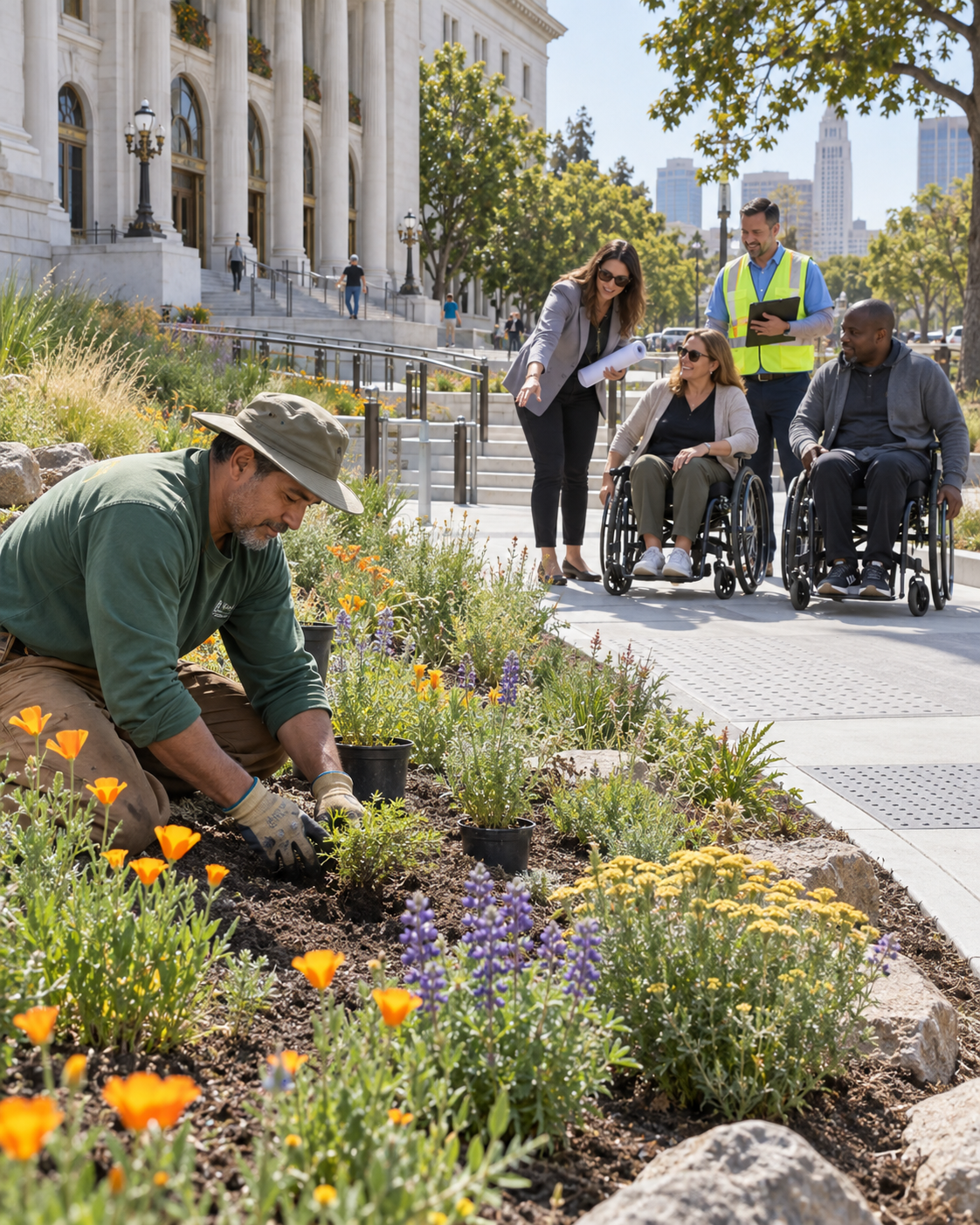
Over one weekend, the city gardener replaced a strip of manicured lawn with what residents called weeds.
The plants were native milkweed, clover, and sedge. Gardener Sofia had proposed a drought garden after irrigation restrictions, but the council delayed the vote while ordering staff to keep the lawn green.
She planted without final approval using nursery stock already purchased for another park.
The strip used less water and attracted pollinators. It also violated procurement and accessibility plans: one tall section narrowed the path for wheelchair users.
The city did not simply celebrate the result. Sofia received formal discipline for bypassing approval. A public design review widened the path, moved tall plants back, and documented the transferred materials.
The council then approved a scaled native-landscape pilot with water-use reporting. Traditional grass remained where events required a durable surface.
By summer, irrigation use fell measurably. The garden succeeded after being redesigned by the people its first version had overlooked.
Sofia kept her job and stopped calling every objection resistance.
Good intentions had started the planting. Accountability made it public space.