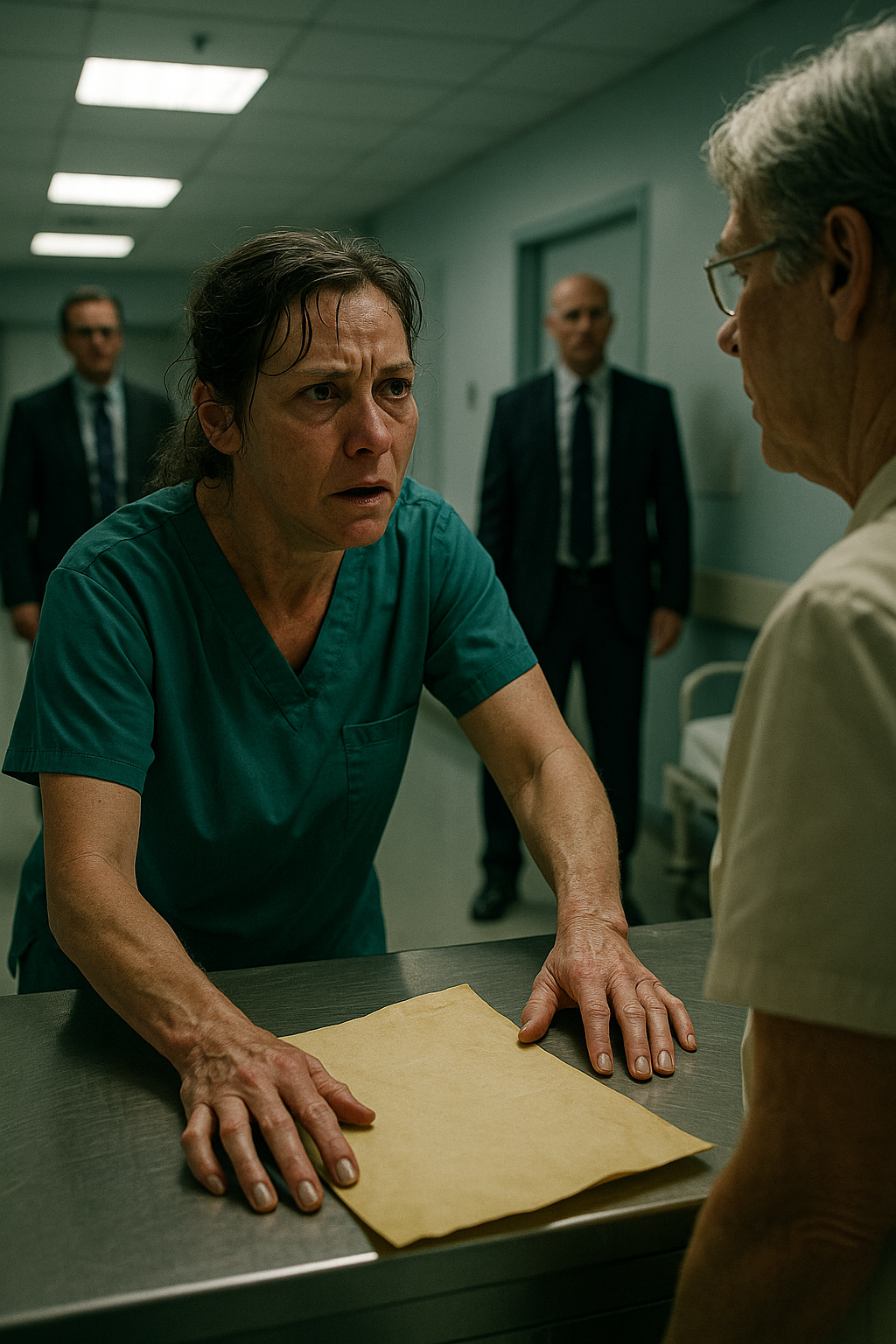
The fluorescent lights in Ward 4 of St. Jude Memorial hummed with an agonizing, sharp pitch at exactly 3:15 AM.
The senior floor nurse slammed the metal intake clipboard onto the stainless steel counter and laughed in my face. She told me my father’s emergency transfer request was permanently denied and that his room had already been reassigned.
I stood in my damp green scrubs with my fingernails digging deep into my palms until the skin turned white. She sneered that a junior nurse with my meager background had no business questioning the hospital’s administrative board.
I did not raise my voice or shed a single tear onto the polished linoleum floor. Instead, I reached into my coat pocket and pulled out a heavy parchment paper embossed with crimson wax.
I slid the state health inspector’s emergency injunction directly across the metal counter toward her immaculate clipboard. The nurse glanced down at the signatures stamped by the commissioner and her condescending smirk instantly vanished.
Her lower lip began to tremble as she realized the patient discharge fraud had just been completely exposed. Two state compliance officers stepped out from the shadows behind the visitors’ lounge with heavy steel binders in their hands.
This moment was not born of sudden impulse, but of weeks spent tracing the quiet disappearance of vulnerable patients from the third-floor west wing. For three months, I had watched beds empty before families could arrive, charted medical histories quietly altered by midnight administrative orders, and witnessed elderly men and women transferred to substandard facilities without consent.
My father, admitted three weeks prior for post-surgical complications, was slated to be the next ghost statistic on their quarterly bed-turnover reports. When the senior nurse tried to dismiss my inquiries during the evening shift, she assumed I was merely a tired staff member susceptible to intimidation.
She did not know I had spent every off-duty hour documenting every forged signature and misplaced chart. The compliance officers moved swiftly down the corridor, securing the nurses’ station logs and locking down the electronic terminal access before any records could be purged.
The senior nurse reached for the wall telephone to alert the night administrator, but one of the officers gently placed his hand over the receiver, his expression devoid of emotion. Within twenty minutes, the entire executive floor was awakened by the low murmur of investigators reviewing audit trails.
My father remained in his bed, safely shielded from the administrative machinery that had sought to sweep him away. The board members who had signed off on the illegal patient reassignments would face an immediate freeze of their federal subsidies and personal investigations into their medical licensing.
As the first pale light of dawn filtered through the wire-reinforced glass of Ward 4, I walked past the empty intake counter where the heavy metal clipboard lay abandoned. The hum of the fluorescent lights seemed to fade into a profound, enduring silence as the reality of accountability took hold.
I did not look back at the nurses’ station as I entered my father’s room to check his IV drip. The administrative board could no longer hide behind institutional walls or closed doors.
The ledger of their negligence was finally laid bare, and the truth could no longer be transferred into the dark.