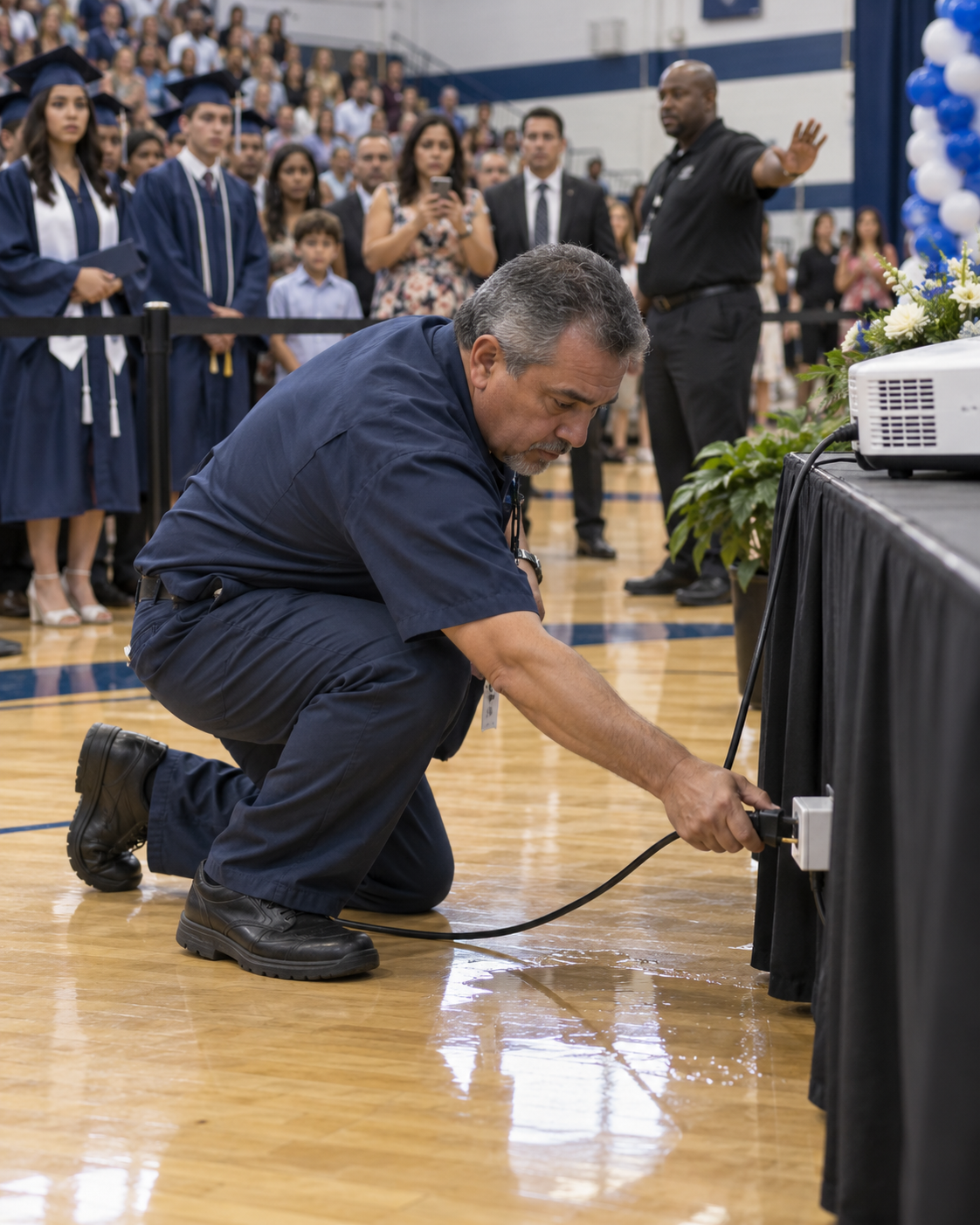
Our valedictorian’s speech disappeared when the school janitor unplugged the graduation projector.
The screen went black in front of six hundred families. Principal Hale demanded that Marcus reconnect it. Marcus refused and pointed to water dripping from a ceiling seam into the extension strip.
The leak was small. The electrical danger was not.
Staff had reported the stain for months, but maintenance requests described it as cosmetic because it appeared only during heavy rain. Graduation decorations hid the bucket normally placed beneath it.
The valedictorian, Priya, had built her speech around photographs. She was angry—and then asked Marcus what was safe.
They moved the podium twelve feet and continued without the projector. Priya described each image from memory. Her classmates held printed copies for relatives who needed visual context.
The district review found that Marcus had followed electrical protocol, though he should have radioed before disconnecting equipment. The principal apologized for ordering him to restore power without inspecting the floor.
Repairs replaced damaged ceiling material, added protected outlets, and created a rule that event décor could not conceal active maintenance controls. Priya recorded an accessible version of her speech afterward, including image descriptions and captions.
People praised her improvisation. She redirected the praise.
“A speech can wait,” she said. “Electricity does not care how important the ceremony feels.”