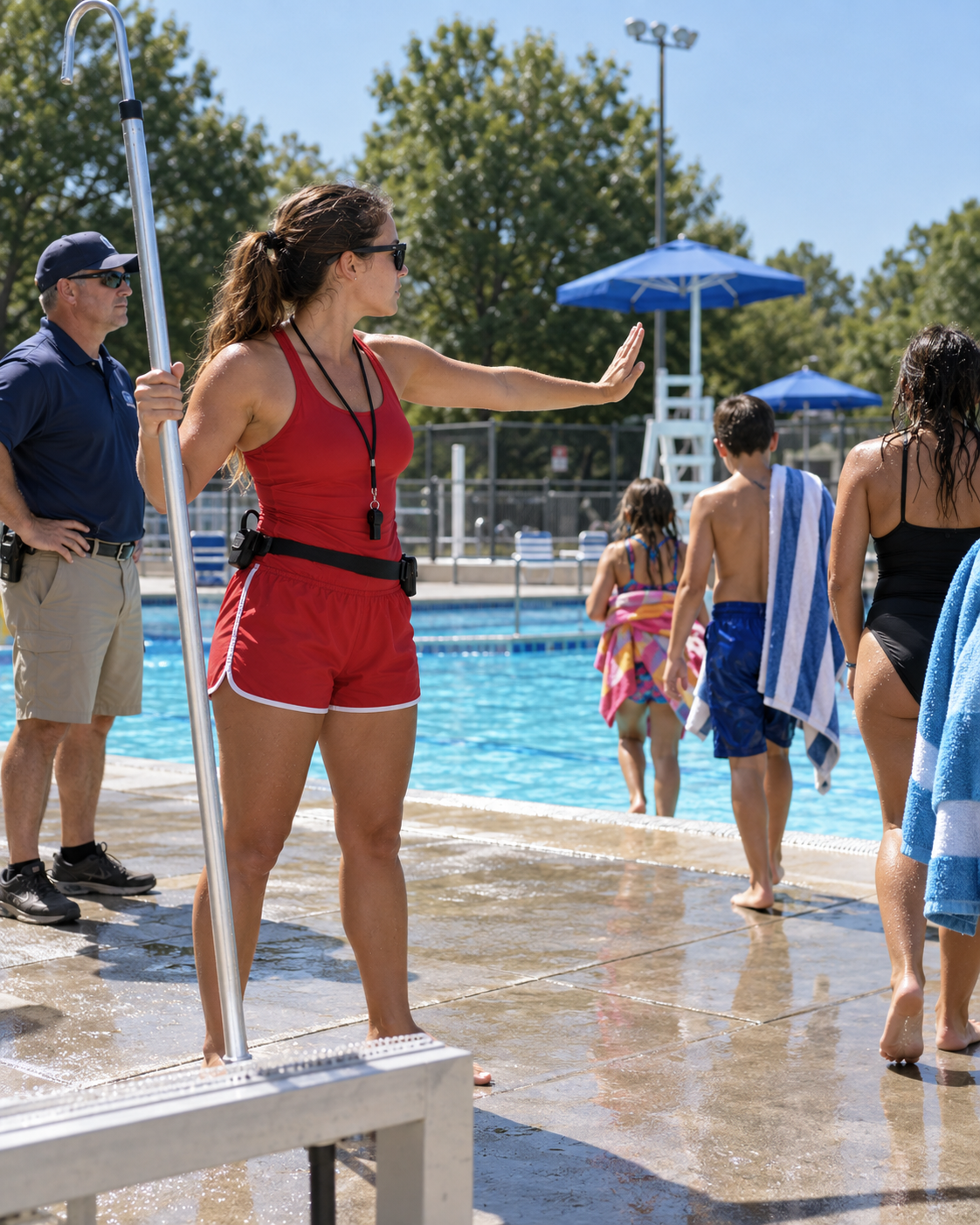
On the hottest afternoon of the year, lifeguard Lena Ortiz ordered everyone out of the public pool.
The water was clear. The chemical readings were normal. A line of families stretched around the building, and the manager told her to reopen.
Lena dropped a metal rescue pole onto the wet deck near the pump-room door. A faint buzzing traveled through its handle.
She had felt the same sensation through the ladder rail while helping a child from the shallow end. It could have been vibration from the pump, but she treated it as possible electrical current.
The manager tested the water with the facility’s handheld meter and found nothing. Lena still refused to clear the pool because that meter was designed for water chemistry, not stray voltage.
An electrician found a damaged bonding wire beneath a recently replaced section of deck. The measured current was low and no swimmer was injured, but the fault could change when equipment cycled.
The pool remained closed for two days. The city refunded lessons and opened cooling rooms at the library and recreation hall. Lena’s decision was upheld, while the manager received additional electrical-safety training rather than being made a public villain.
New procedure required an independent electrical check after structural deck work and gave lifeguards explicit authority to close the water for unexplained tingling or vibration.
When the pool reopened, the first child down the ladder asked Lena if it was safe.
She touched the rail, checked the posted inspection, and said yes.
This time, confidence had evidence beneath it.