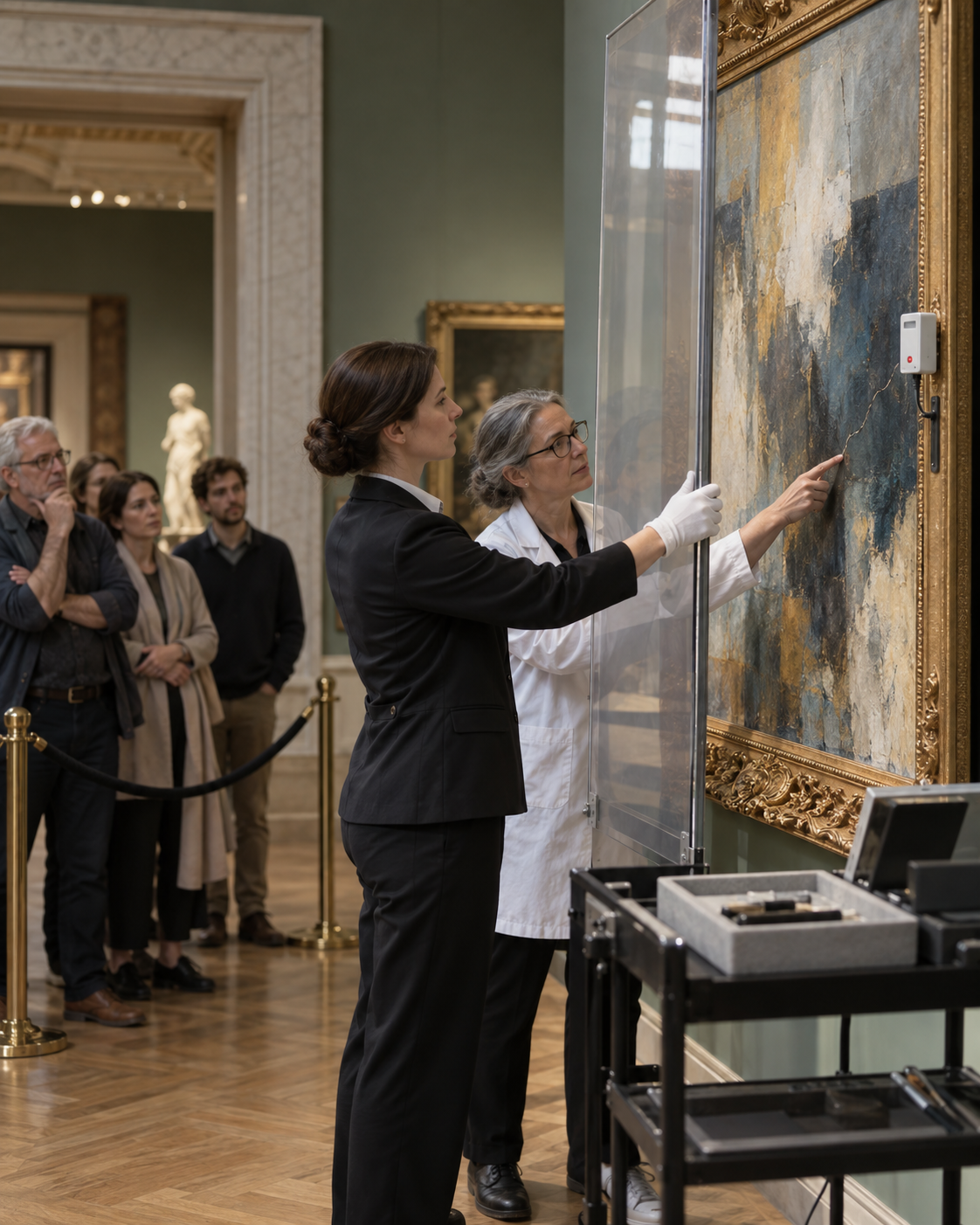
At noon on the museum’s busiest day, a guide draped gray cloth over its most famous painting.
Visitors demanded refunds. The director ordered the cloth removed.
Guide Amara pointed to the painting’s lower corner, where a hairline crack had widened under a new spotlight. The conservation sensor behind the frame had been disabled during renovations because its alerts disrupted the security dashboard.
Covering the work reduced light and kept visitors from photographing it at close range, but Amara had no authority to handle exhibition material. She used a clean emergency barrier cloth without touching the surface and called conservation.
Experts confirmed heat damage to the varnish. The painting was removed for treatment. The museum refunded timed tickets to anyone who came specifically for it and opened the conservation report to the public.
The director apologized for overriding alerts and for initially blaming the guide. Amara received training and formal stop-work authority for visible collection risks.
When the painting returned months later, lighting was cooler and the sensor independent. A reproduction stood nearby showing the repaired crack.
The museum did not hide the damage after preserving the art.