On her first day, our new principal removed the memorial bench from the school courtyard.
Parents were furious. The bench honored Caleb Ross, a popular senior killed in a car crash twelve years earlier. Students placed flowers there every spring.
But no student was allowed to sit on it.
Teachers shooed away anyone who tried. Over time, older students began policing the rule themselves. One freshman, Amir, was filmed being pushed off the bench while classmates said he had not “earned” the space.
Principal Soto watched the video, then moved the bench into storage without announcing why.
Caleb’s parents arrived the next morning. They had donated the bench as a place for students to rest, not as a shrine protected by humiliation. No one had told them the tradition had changed.
Removing it solved the immediate bullying but created another injury: it looked as if Caleb’s memory had been discarded because adults failed to supervise a courtyard.
Soto held a meeting with his parents, Amir’s family, student representatives, and the custodian who had cared for the bench. Amir did not want to participate in a public reconciliation or accept an apology on camera. He submitted one sentence:
**If a seat belongs to everyone, prove it by letting people sit.**
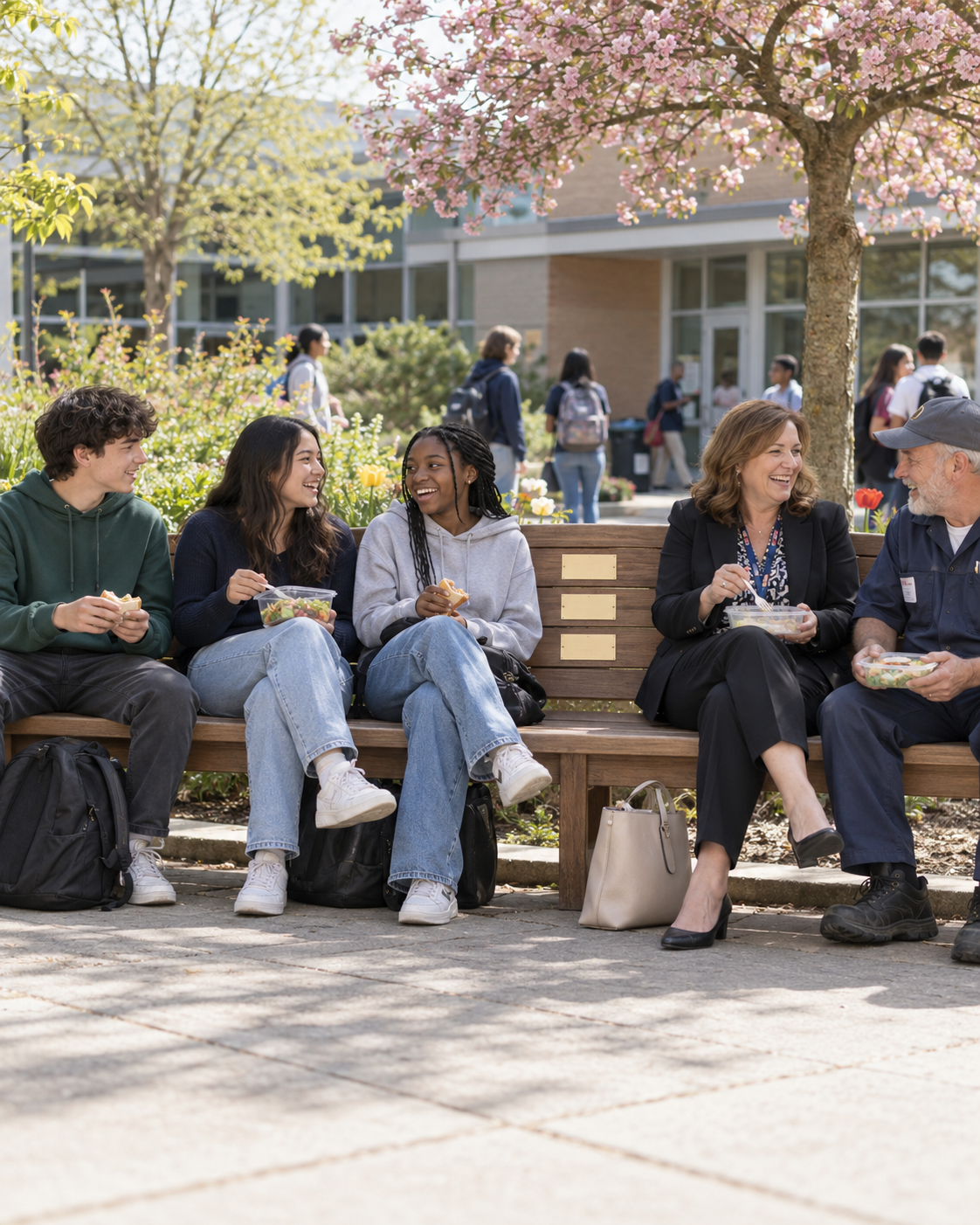
The school refinished the bench and returned it without the rope barrier students had added. Caleb’s plaque remained. A second plaque carried Amir’s sentence without his name, at his request.
Staff were assigned to the courtyard during lunch. The school replaced informal senior “traditions” with written use rules applying to everyone. Students who pushed Amir faced the ordinary discipline process; a memorial assembly did not substitute for consequences.
On the first day back, no one sat down. The bench had accumulated too much meaning.
Principal Soto ate her lunch there alone.
Then the custodian joined her. Later, two students shared one end while a third tied a shoe. Within a week, it was just a bench again—except for the names and words asking people to remember why ordinary use mattered.
Caleb’s mother visited in spring. She placed no flowers.
She sat.