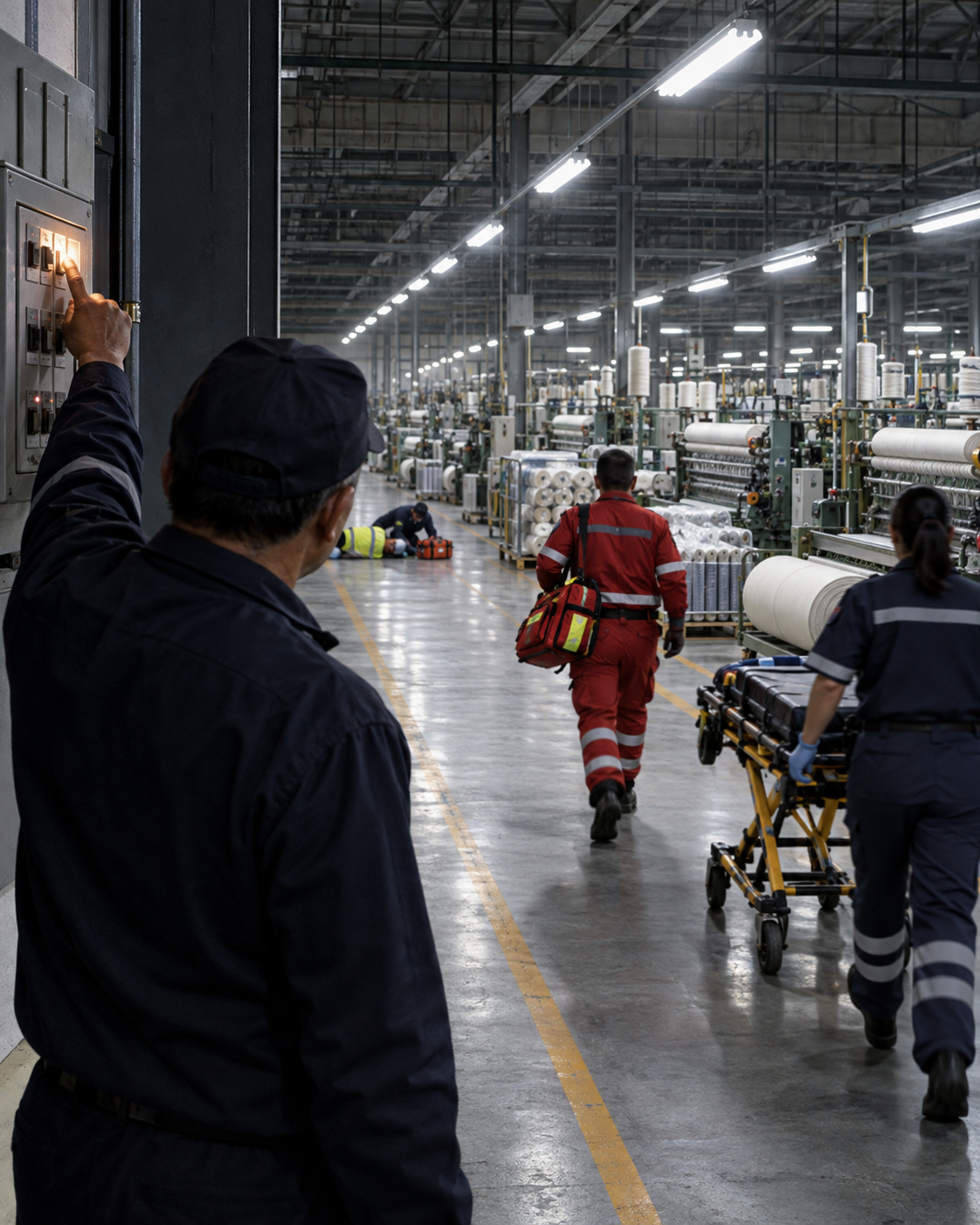
At 2:13 a.m., the night guard switched on every light in our closed textile factory.
Residents thought the building had reopened secretly. The company had announced layoffs two weeks earlier, and social media filled with claims that managers were moving equipment before paying workers.
Guard Samuel Ortiz was not protecting machinery.
He had seen a maintenance contractor enter alone and fail to emerge. The factory’s emergency lighting covered exits but not the maze of inactive production lines. Samuel turned on the full system, called emergency services, and used the illuminated aisles to guide responders.
They found the contractor unconscious near a leaking nitrogen line used in fabric treatment. A valve had been left partially open after shutdown. Because nitrogen displaces oxygen without smell, Samuel had not entered the area himself.
The contractor recovered. The lights also revealed that the shutdown checklist had been signed before every utility was isolated.
Workers were angry that management praised Samuel while withholding the incomplete checklist. The company eventually released the investigation, paid the contractor’s medical costs, and included union representatives in a new shutdown verification process. Two people now had to confirm hazardous lines before a building was declared dormant.
Samuel received overtime for the emergency response, not a ceremonial plaque.
The factory lights went dark again after inspectors cleared the site.
For one night, illumination did not mean production had resumed.
It meant someone had refused to let an empty building hide an unfinished shutdown.