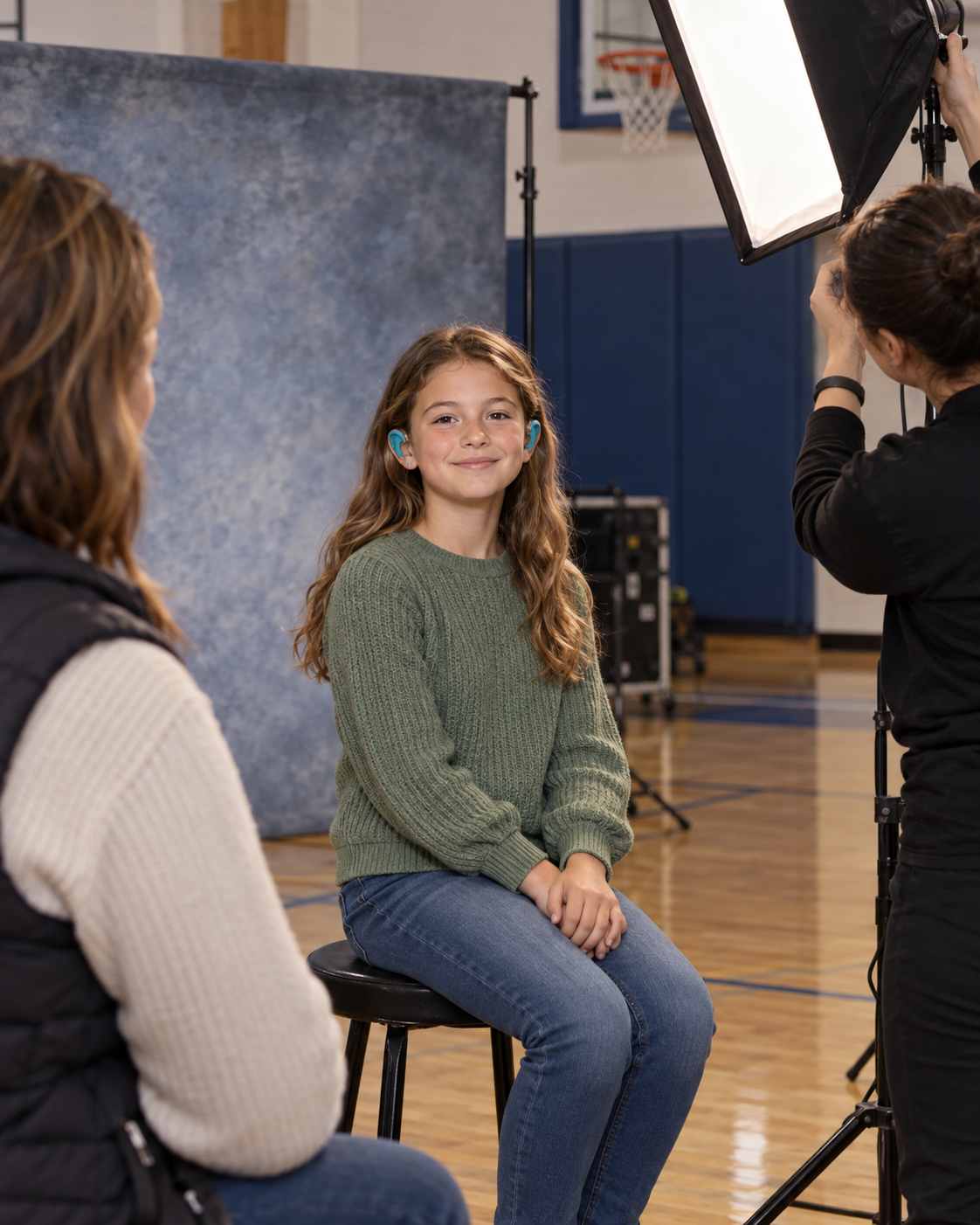
The school photographer told my daughter her hearing aids would create “distracting reflections.”
Nora is eleven. She chose turquoise devices because she wanted people to notice them before asking why she missed a word. On picture day, an assistant handed her a plastic cup and said she could store them safely during the portrait.
Nora refused. The assistant moved her to the end of the line.
By the time I arrived, the photographer had offered a compromise: they would take one photo with the devices and one without, then choose whichever looked “cleaner.”
“You mean you choose?” Nora asked.
The room went quiet.
The photographer explained that glare could obscure the outline of her ears. Nora asked whether he made children remove glasses. He said no; he adjusted the lights.
“Then adjust them.”
I wanted to cancel the contract on the spot. Nora wanted her class photo, not a courtroom scene in the gym.
We asked for a ten-minute pause. The photographer moved one softbox, lowered the flash angle, and took three test shots. The turquoise shells remained visible. The glare disappeared.
The technical problem had a technical solution. The real problem was whose body had been treated as the easiest thing to change.
The company supervisor apologized and offered free prints. Nora declined until every student who had been delayed received the same retake option. Two children with glasses and one with a medical eye patch returned, not because their photos were unusable, but because staff had pressured them to alter how they appeared.
The school rewrote its vendor instructions: mobility aids, hearing devices, glasses, religious items, and medical equipment could not be removed or edited without the student’s informed request. Photographers had to adjust lighting and composition first.
Nora selected her own portrait. In it, one turquoise hearing aid catches a small, deliberate line of light.
The yearbook adviser asked if she wanted it retouched.
“No,” she said. “That reflection is how we know they finally aimed the light correctly.”