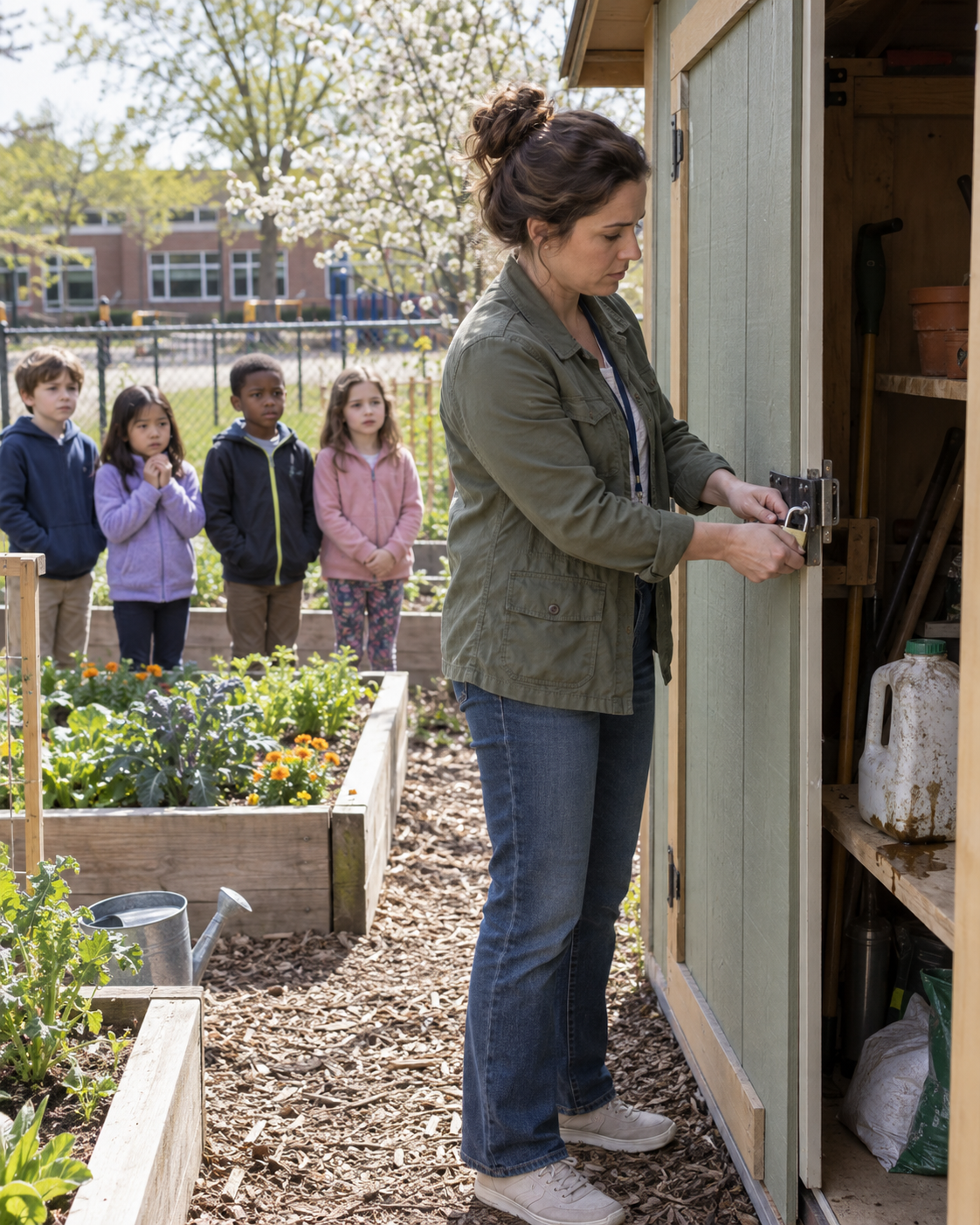
On planting day, Ms. Alvarez locked the school garden shed and hid the key.
Parents had donated tools, seedlings, and soil. Thirty children waited in gloves while the principal demanded she open it.
She showed us a photograph taken the previous afternoon: pesticide bottles stored above the child-sized watering cans, one cap loose.
The grounds contractor had moved chemicals into the shed during a storm. The labels were clear, but the storage violated the school’s own safety plan.
The principal suggested adults remove the bottles quickly and continue. Ms. Alvarez refused until the spill risk was assessed and every tool was checked.
The gardening lesson moved to the classroom. Children mapped sunlight and designed planting rows on paper. A licensed technician cleared the shed that afternoon and found residue on two handles.
No child was exposed.
The contractor paid for decontamination and lost unsupervised access to school storage. The garden committee created separate locked chemical storage, a sign-in log, and a pre-event inspection assigned to someone with authority to stop the activity.
Planting happened the next week. Several seedlings had wilted and were replaced; the delay had a cost.
One parent complained that Ms. Alvarez had ruined a community moment. She answered without drama.
“A photograph of children planting on schedule is not worth more than their hands.”
The shed key now hangs in a clear lockbox beside the garden plan. Everyone can see where it is.
Only trained adults can open it.