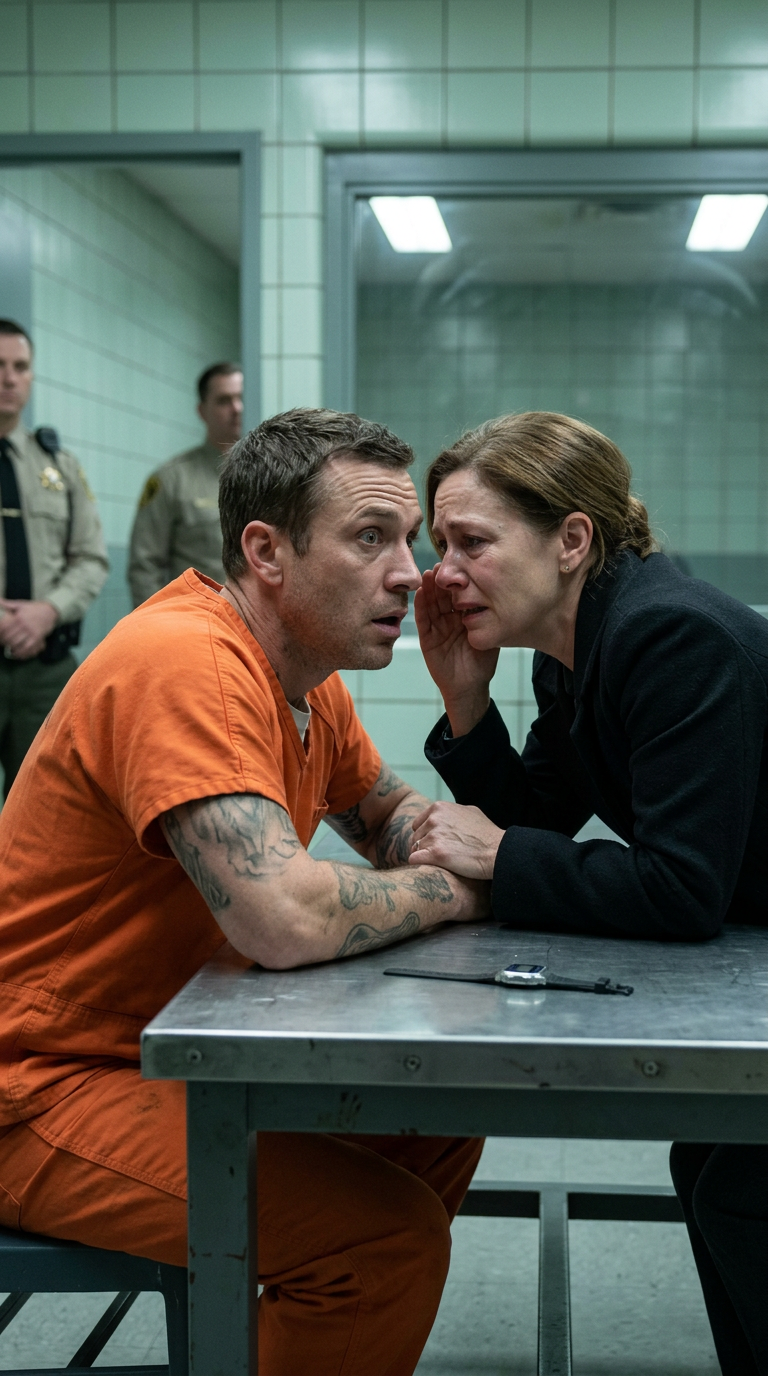
The silence in the holding unit felt heavy enough to crush bone.
Years of appellate courts, sterile briefs, and closed chambers couldn’t unlock the truth behind the frame-up, each legal motion just another shovel digging a deeper grave.
But in the freezing hum of the pre-dawn hours, with her brother hours from a lethal injection, Clara finally leaned in across the steel divider and dropped three words that detonated the state’s entire case.
What she revealed didn’t just challenge the verdict; it exposed a web of municipal corruption that went all the way to the prosecutor’s bench.
Investigators who had spent years smugly defending the conviction suddenly moved like people walking on cracked ice, every old assumption shattering under the weight of her discovered evidence.
The ledger she had pulled from an abandoned railway locker wasn’t just a notebook of names—it was a precise record of bribes paid to secure a quiet conviction before a major land deal went through.
The district attorney who built his career on Julian’s head stared silently at his desk, while Warden Vance quietly ordered the execution chamber locked down.
Outside, local reporters scrambled to rewrite morning broadcasts, realizing the man they had branded a monster was entirely innocent.
Inside that stark room, Clara understood that finding the truth meant facing the terrifying reality of just how many people had known Julian was innocent from day one and chosen silence anyway.
In the weeks that followed, the legal battle didn’t instantly erupt into a cinematic vindication.
The appeals crawled through state courts like wounded animals, each hearing peeling back another layer of fabricated testimony, coerced witnesses, and hidden files.
Experts testified not about ballistics or alibis, but about police coercion and the terrifying speed of a justice system desperate for a scapegoat.
The original verdict cracked under the scrutiny: key witness statements were formally discredited, the lead detective’s financial records were subpoenaed, and the jury foreman publicly admitted they had been fed a curated illusion.
When the federal judge finally issued the ruling vacating the conviction, the legal language was clinical and cold, but to Clara and Julian, it sounded like the first breath of clean air in years.
Yet those three whispered words in the pre-dawn chill—“The ledger exists”—echoed with a darker reality: that the men who engineered the nightmare were still walking free, and the state had never intended to look for them.
Freedom, however, did not feel like a safe harbor.
Julian stepped out into the blinding morning sunlight with shoulders permanently curved from years of expecting a sudden end.
They rented a small, nondescript house far from the city, where quiet evenings and lingering paranoia shared the same floorboards.
Therapy sessions became their new courtroom, though this time the goal was simply learning how to sleep through the night without flinching at sirens.
The miracle wasn’t that the trauma vanished—it never truly did—but that it transformed into something they could finally speak about without breaking.
The politicians and investigators responsible were never indicted, and the media spotlight eventually faded away into the noise of newer scandals, but Clara never left.
She stayed close, reminding her brother of who he was before the state tried to erase him, not for justice, not for the headlines, but because some bonds refuse to break under the weight of fabricated lies.