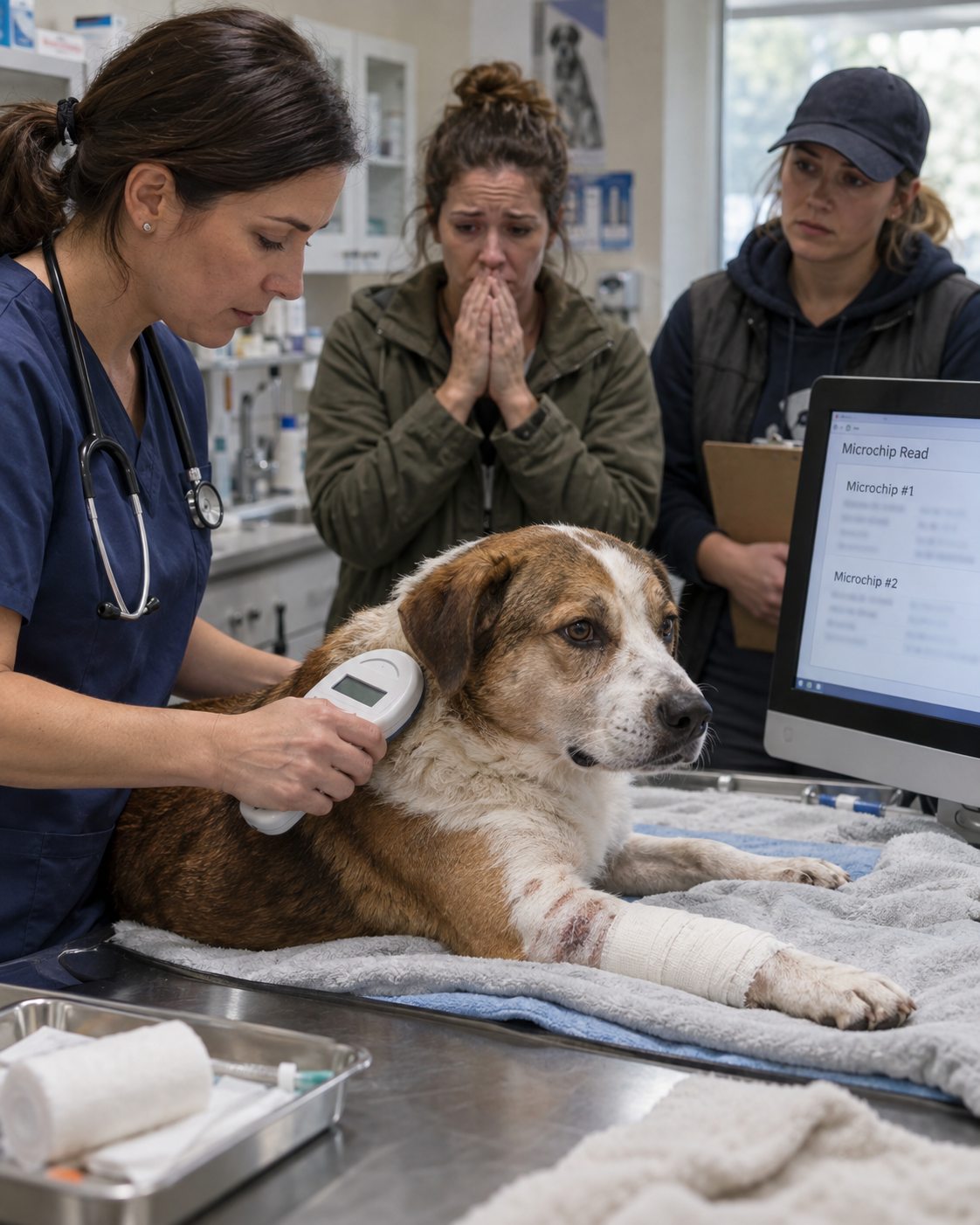
After treating my injured dog, the veterinarian refused to release him to me.
Milo had slipped his collar near a busy road. His microchip listed my name, and I showed photographs covering six years. Still, Dr. Ruiz asked animal control to place a temporary hold.
The clinic had scanned a second chip.
It was older, registered to a rescue group in another state, and marked “do not transfer” after Milo disappeared from foster care seven years earlier. The rescue believed he had been stolen. I had adopted him from a man who showed me a convincing private-sale receipt.
I felt accused of theft. The rescue director felt she had found a missing dog.
Animal control investigated both records. The seller had used false information and could not be located. The rescue’s original contract proved ownership, but its files also showed Milo had been in an overcrowded foster home and no search notice reached our county.
The rescue could have demanded his return. After reviewing veterinary records and visiting our home, it transferred ownership to me for a nominal fee while preserving the fraud report against the seller. The two chip registrations were merged, not simply deleted.
Dr. Ruiz apologized for explaining the hold too abruptly but not for pausing the release. The clinic adopted a written process for conflicting chips, including safe temporary care and rapid review.
Milo came home two days later wearing a clinic collar with no name on it.
Identity had protected him.
It had also needed context before deciding where he belonged.