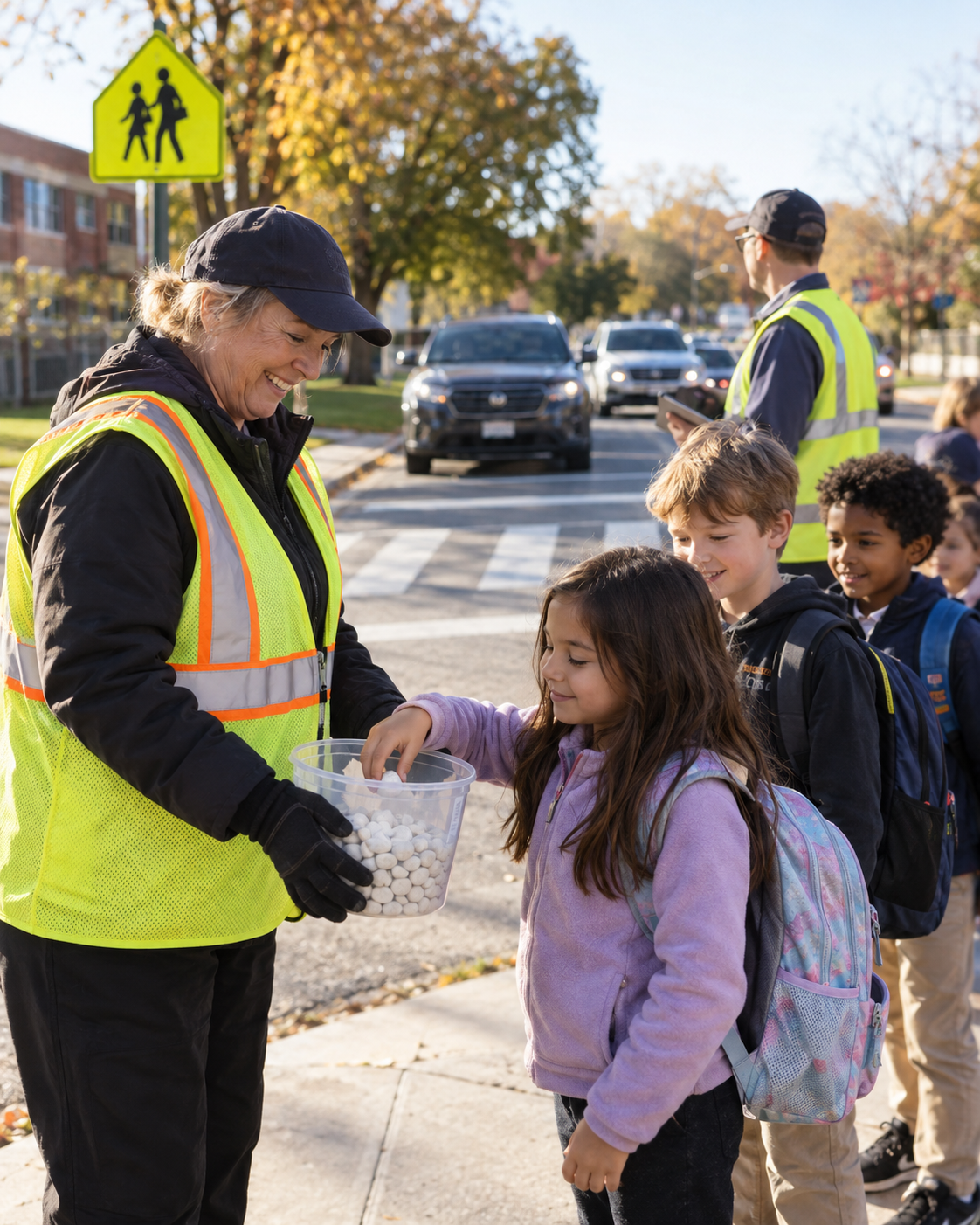
Every morning, crossing guard Bea Morgan handed each child a small white stone.
Parents complained that students were carrying choking hazards and throwing them on the playground. The principal ordered Bea to stop.
She asked him to count the stones first.
Children dropped one into a clear bucket whenever a car crossed the painted line while they were in the crosswalk. Bea had reported near misses for months, but official traffic counts recorded only crashes and citations. The stones made daily violations visible without asking children to photograph license plates.
The method was clever and flawed. Younger children sometimes forgot the rules, the bucket was public, and involving them could make road danger feel like their responsibility.
The school ended the stone system and installed an adult-operated counter for two weeks under a traffic engineer’s supervision. Cameras captured vehicle position without retaining faces or plates after analysis. The results confirmed an average of seventeen line violations each morning.
The city moved the stop line, added a raised crossing, and adjusted signal timing. Bea received training on formal hazard reporting, while administrators apologized for ignoring reports that lacked dramatic evidence.
On the last day before construction, the children returned the remaining stones. They used them to border a small garden inside the school fence.
Bea never wanted children to police the street.
She wanted adults to see what children were already surviving on it.