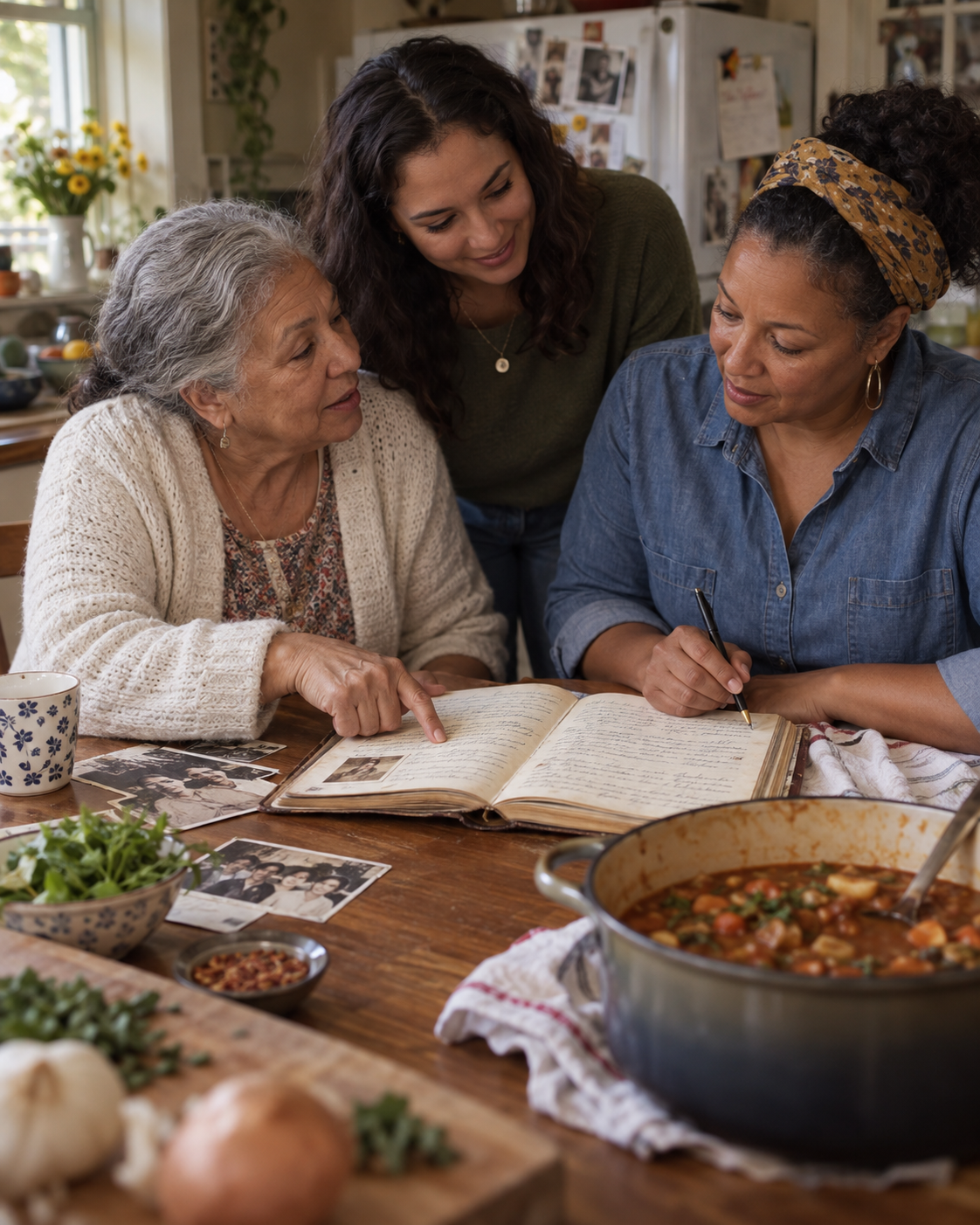
When our family cookbook went to print, my mother removed her name from its most famous recipe.
Everyone called the card “Nora’s Sunday Stew.” Mom had cooked it at weddings, funerals, and school fundraisers for thirty years.
The recipe was not hers.
She learned it from Celeste Baptiste, a domestic worker employed by my grandparents after immigrating from Saint Lucia. Celeste adjusted the dish to ingredients available locally and taught Mom how to judge it by smell. The family kept the card after Celeste left, changed two spices, and slowly attached Mom’s name.
Mom wanted the book to credit Celeste. We found her daughter, Alina, who was glad to see her mother named but objected to publishing the complete method without permission. Cooking lessons had been part of Celeste’s paid work, yet the recipe also belonged to her family tradition.
The publisher paused the page. Alina chose to share the ingredient list and story but withheld one preparation step used by her family. She also requested a contributor fee and approval of the biography.
Mom’s name remained in the book—as the person who carried the recipe forward, not invented it. Profits from that chapter were split under a written agreement rather than donated theatrically in Celeste’s memory.
At the launch, Mom served the stew. It tasted exactly as I remembered.
The label beside it had changed.
Correcting the credit did not erase her thirty years of cooking.
It stopped those years from erasing the woman who taught her.