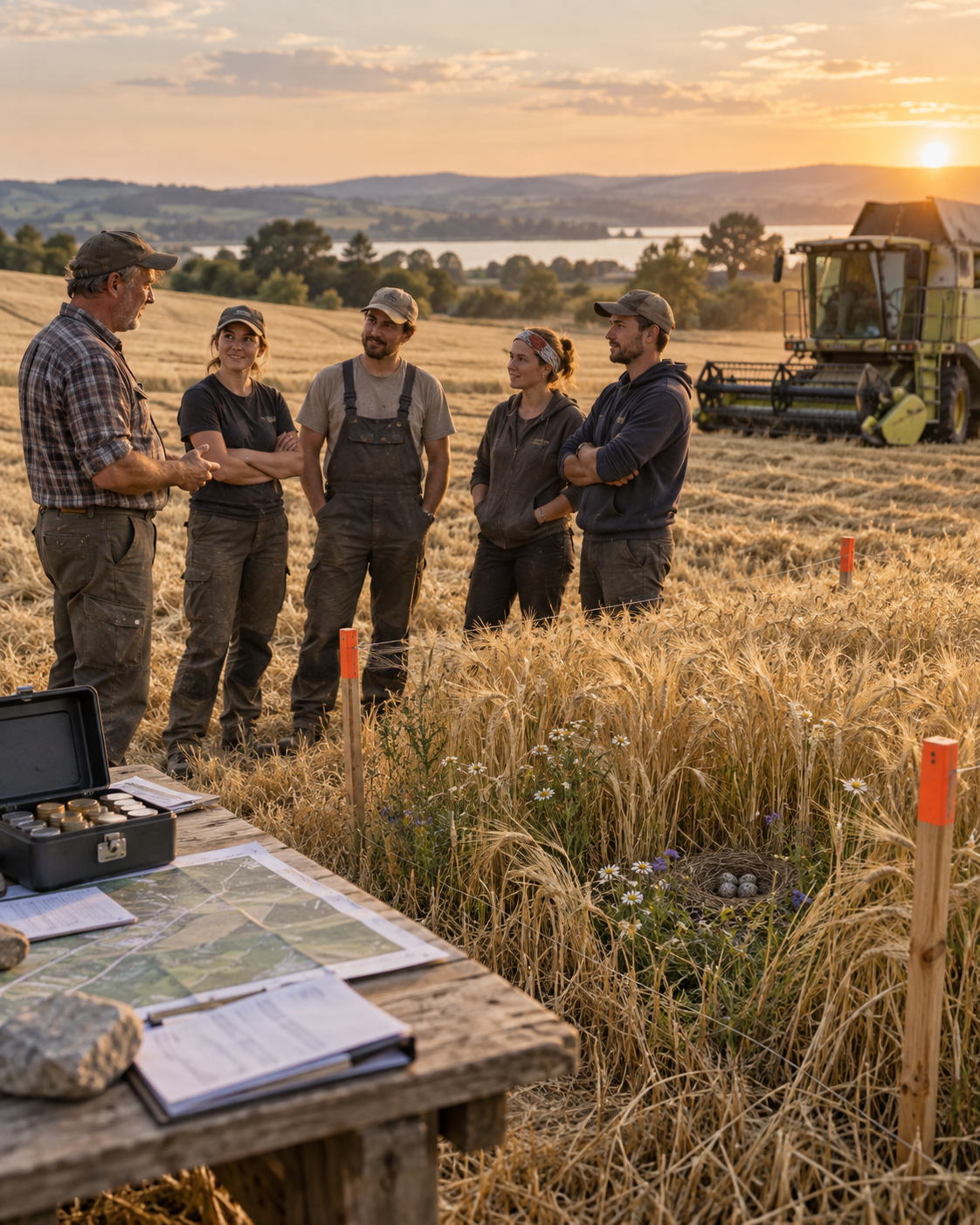
At the end of harvest, Mr. Adeyemi left half his barley standing.
Workers thought the farm was out of money. Neighbors said he wanted an insurance payment. The uncut section held the best grain on the property.
A wildlife survey had found nests of a threatened ground-nesting bird hidden between the rows. Harvest could legally continue outside marked buffers, but the chicks had spread beyond the original boundaries after heavy rain flattened their cover.
Mr. Adeyemi stopped the machines until biologists remapped the area.
His seasonal workers were paid by the acre. Saving the birds by canceling work would shift the cost onto people with the least control over the decision. He guaranteed the remaining contracted wages and offered maintenance work at the same hourly rate. Several workers preferred to finish their contracts elsewhere, so the farm paid transport to neighboring fields.
The conservation agency provided partial compensation for the crop, but not enough to cover every loss. Mr. Adeyemi accepted that gap and published the actual figures when a sponsor tried to advertise the farm as fully reimbursed.
After the birds fledged, some barley was salvaged for animal feed. The farm changed planting patterns and created permanent habitat strips so future nesting would not require an emergency choice across half the field.
The standing grain looked wasteful from the road.
It was not free generosity. Workers, farmer, and public funds all carried part of the cost.
That was what made the protection real rather than decorative.