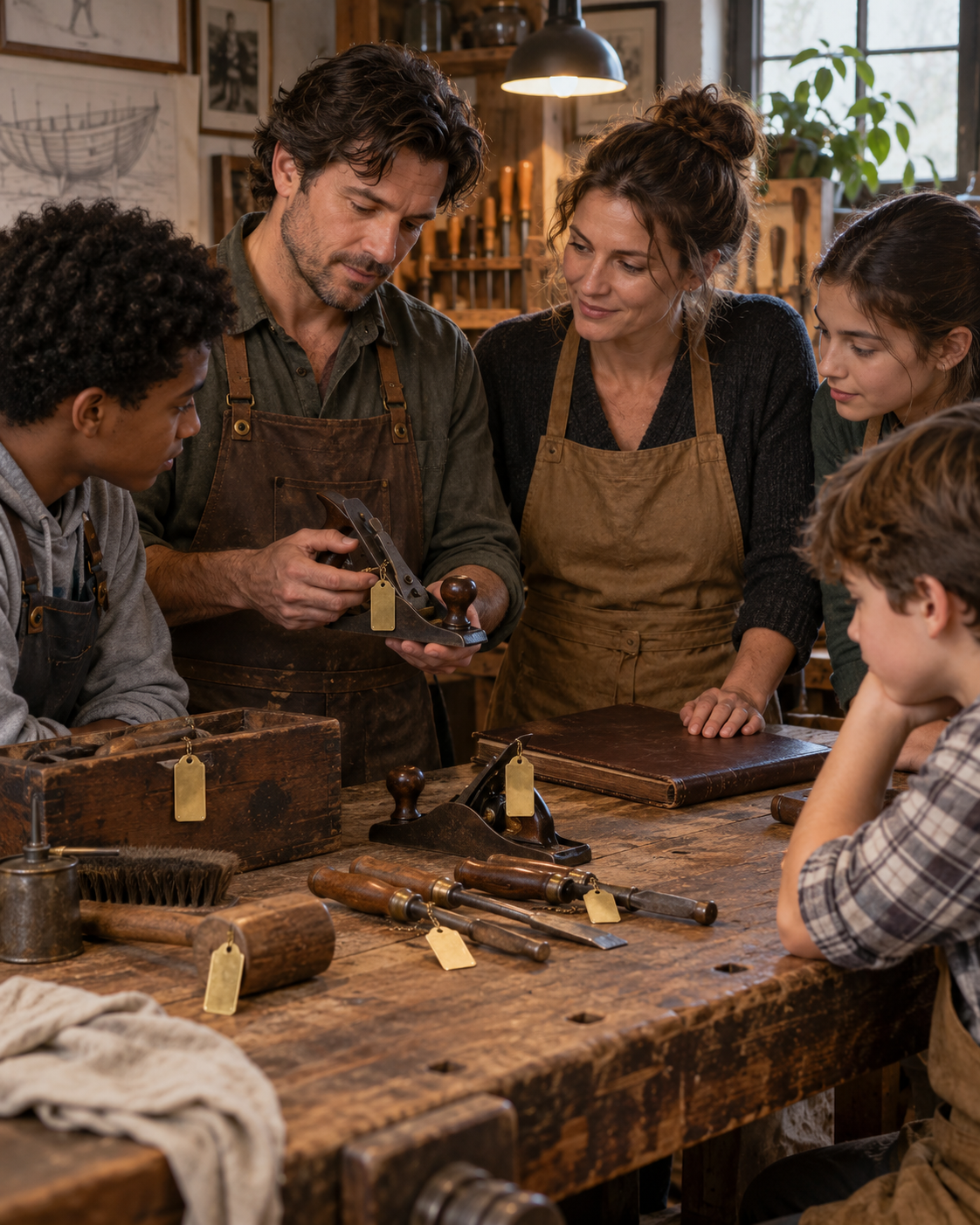
Three days after Dad’s funeral, my brother placed auction tags on every tool in the workshop.
I tore them off. Dad had promised the shop would stay in the family. Luis said the mortgage was behind and sentiment would not pay it.
Then I noticed some tags carried names instead of prices.
Dad had been teaching neighborhood apprentices. Certain tools were bought jointly through their project fees; others had been promised to students who completed certifications. The workshop was not entirely ours to inherit.
Luis had found a ledger showing the mortgage arrears and the tool commitments. He scheduled an auction only for unassigned equipment, but he had told no one because he expected me to block any sale.
I had expected him to steal the past. He had expected me to freeze it.
We paused the auction and invited the apprentices to verify the ledger. Two claims lacked receipts, so a neutral mechanic appraised contributions. The students received the tools Dad had designated. We sold duplicate machinery, paid the arrears, and placed the building in a small trust with a one-year operating plan.
The workshop reopened two evenings a week under a licensed instructor. Luis handled accounts; I coordinated classes. Neither of us owned it alone, and continuation depended on annual finances, not a promise made beside a hospital bed.
One brass auction tag remains on Dad’s workbench. It has no price. On the back, Luis wrote the first rule of the new shop: memory does not excuse bad accounting, and accounting does not own every memory.