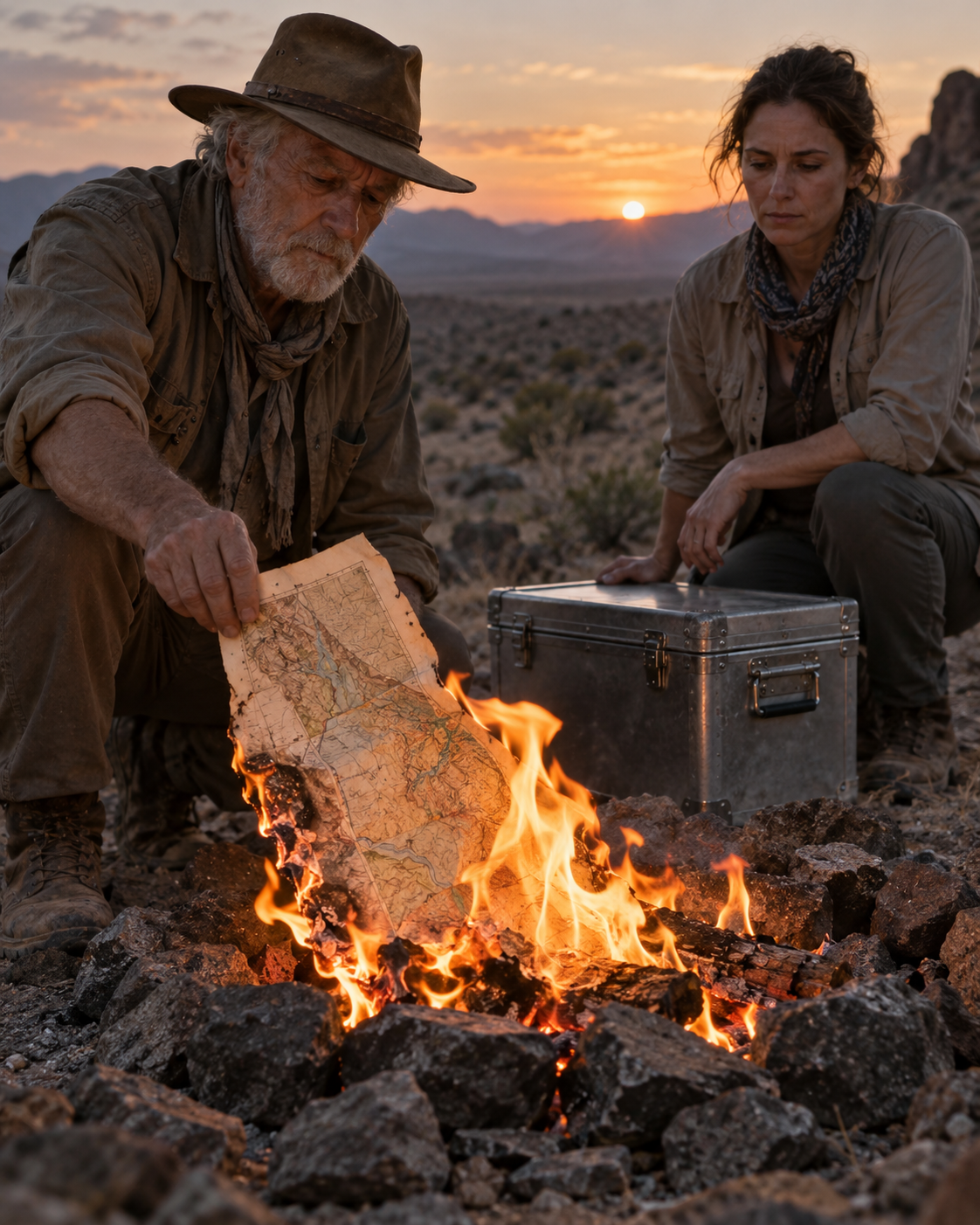
My uncle spent forty years mapping ancient stone shelters across the desert.
The week a university agreed to archive his work, he burned the most detailed map.
I thought dementia or jealousy had destroyed his legacy. Uncle Farid handed me a sealed metal box and said the map inside it was the only copy that should survive.
The burned version marked exact locations. Several shelters contained burial objects and rock art sacred to a local Indigenous community. A documentary crew had recently offered money for coordinates, and looting had already damaged one site mentioned in an old article.
Farid had mapped places he was welcomed to visit but never owned the right to reveal.
The community council did not simply praise him. Elders said he should have involved them decades earlier and questioned whether some field notes were collected with meaningful consent.
Together they separated the archive into three levels: public ecological observations, restricted research available by permission, and cultural records controlled by the community. Exact coordinates were encrypted and held by two designated custodians for conservation emergencies.
Farid donated his photographs only after people shown in them—or their families—could decide how they were described. Some images were withheld.
The university exhibit included an empty map frame with no dramatic flame story. Its label explained that absence could be an ethical record, not a gap waiting to be filled.
Farid died the following spring.
His life’s work survived.
The public simply did not receive every key to it.