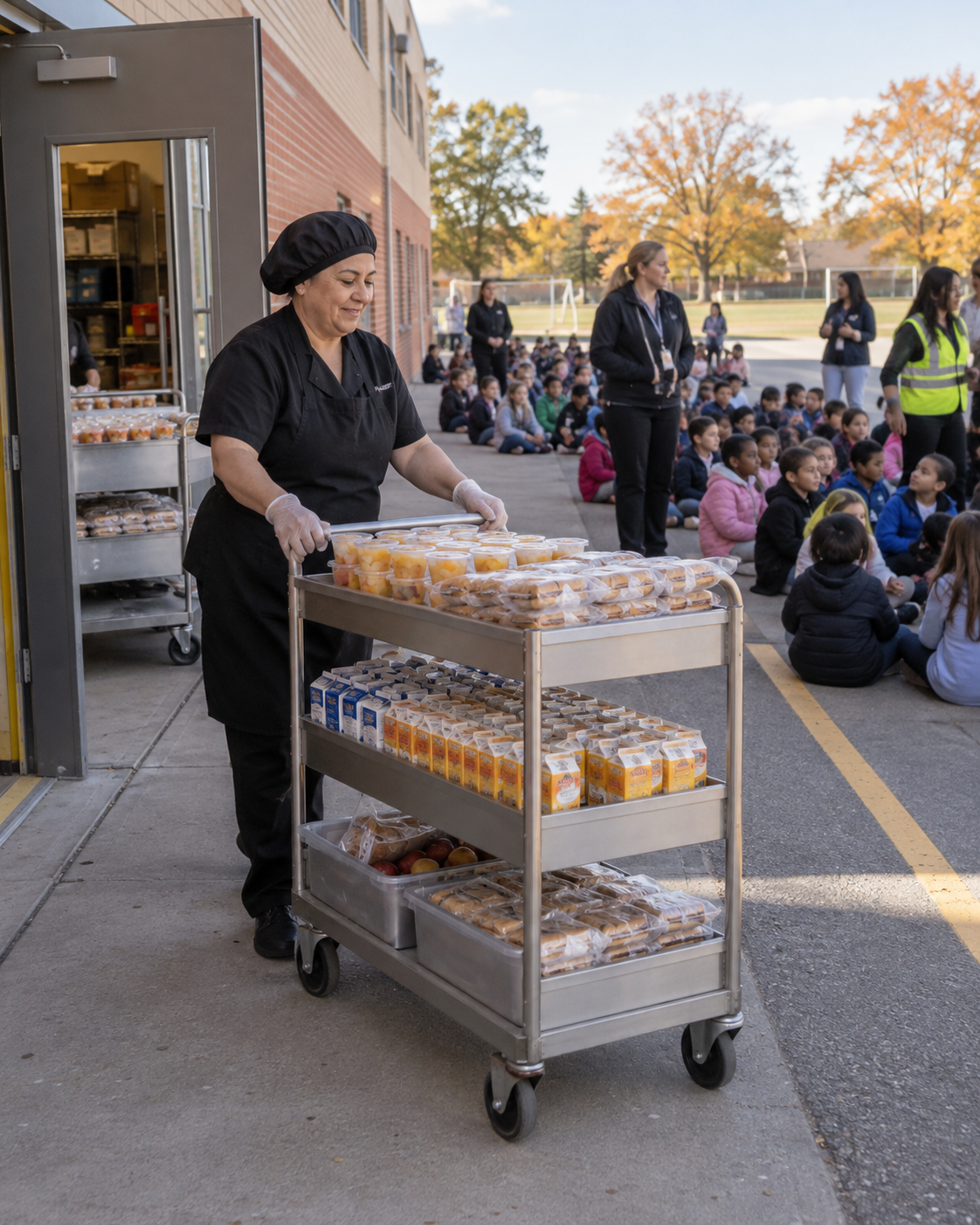
Our school cook served breakfast twenty minutes after the bell, even though smoke had just emptied the building.
Parents watching the drill accused Mrs. Greene of ignoring an emergency. While everyone assembled outside, she had returned to the kitchen and packed fruit, sealed cereal, and shelf-stable milk into rolling carts.
She did not enter a dangerous building. The alarm panel showed the kitchen zone clear, and the fire marshal had authorized one trained employee to retrieve the emergency food carts from an exterior-access storeroom.
The drill was scheduled before breakfast. Nearly half the pupils received their first meal of the day at school. In previous drills, evacuation delays had quietly meant those children ate nothing until lunch.
Mrs. Greene had raised the problem for a year. Administrators kept saying safety came first, as though feeding children afterward opposed safety rather than belonging to recovery.
Her solution still had a flaw: families and several staff members did not know the plan, so seeing her near the building looked reckless. The school revised the procedure, marked the exterior safe-access route, assigned a backup worker, and included meal continuity in emergency communications.
It also moved routine drills to avoid meal service when possible, while keeping carts ready for real evacuations.
The next drill happened after lunch. The carts stayed locked.
Mrs. Greene checked them anyway.
An emergency plan, she said, should account for what children need after they reach the safe place—not only how they get there.