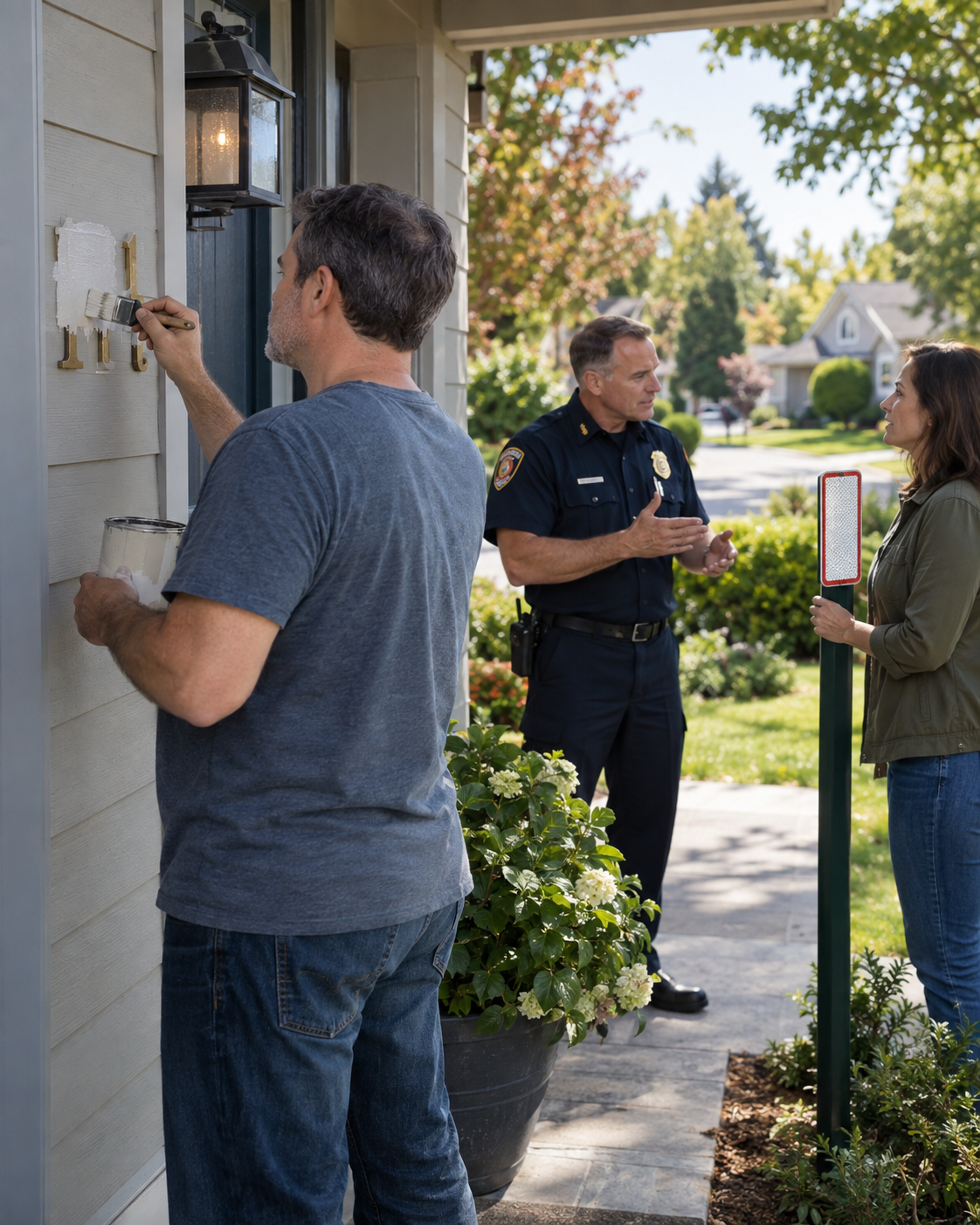
Mr. Ellis painted over the large brass number on his house the week an ambulance moved onto our street.
Neighbors called it dangerous. Emergency crews needed visible addresses, and his new gray-on-gray number disappeared after sunset.
He finally told the fire captain why he had done it. An abusive former partner kept finding him through photographs posted by delivery drivers and neighborhood groups. The distinctive number beside a blue door made the house searchable even when posts did not name the street.
Hiding it reduced one risk and increased another.
The captain did not order him to restore the old sign immediately. A safety officer, domestic-violence advocate, and address coordinator created a temporary plan: a reflective marker visible from the road but placed away from the recognizable doorway, confidential dispatch notes, and a delivery instruction that prohibited exterior photographs.
The city then offered privacy-conscious address reviews for residents with documented safety concerns. Numbers still had to meet emergency visibility rules; applicants could choose placement, color contrast, and parcel-locker options that revealed less about the home online.
Mr. Ellis repainted his door green. The old brass numbers stayed in a drawer.
Some neighbors wanted to know which houses received confidential notes. The fire captain refused to release a list, explaining that emergency readiness did not require public identification of people escaping abuse.
At night, the new marker shone clearly in headlights.
It helped responders find the property without helping strangers recognize the front step.