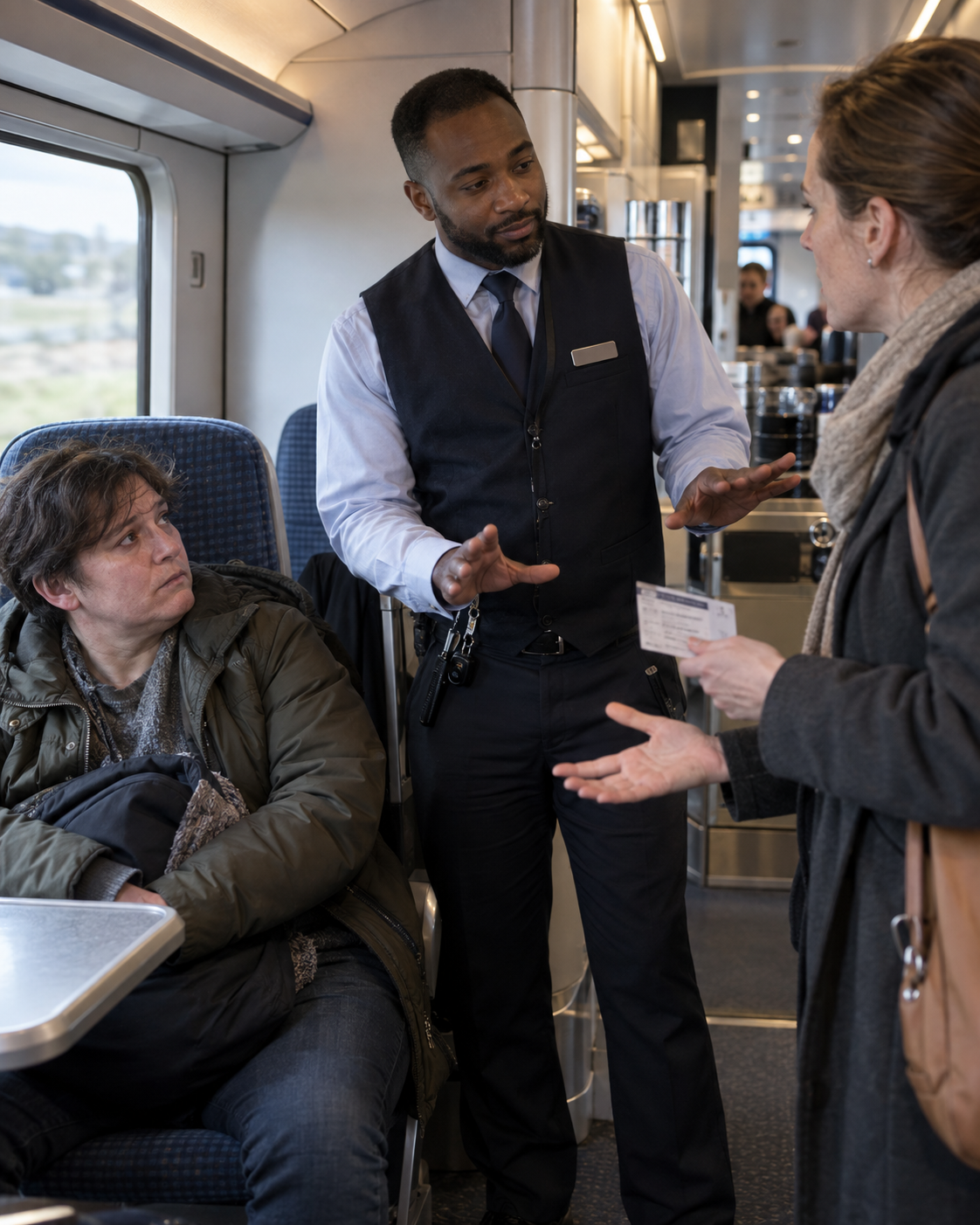
I boarded the evening train and found a stranger sitting in the seat I had paid to reserve.
The conductor asked me to use an empty seat two rows back. The stranger had no ticket and did not speak.
I complained loudly enough for the carriage to hear.
Then the conductor showed me a small card, with the passenger’s permission. The man had an intellectual disability and had boarded the wrong train after his support worker collapsed on the platform. Staff were arranging for his family to meet the train at the next station. My reserved seat was beside the conductor’s service area, where he could be supervised without being isolated.
That explained the decision. It did not justify revealing his disability to silence me, and I regretted forcing the moment into public view.
At the next station, the conductor refunded my reservation fee and moved me to first class when a seat opened. The railway reviewed the incident and found that staff lacked a discreet emergency-seating protocol. Future conductors could temporarily reassign seats but had to give the displaced passenger a private explanation that protected the other traveler’s information, plus automatic compensation.
The man’s sister arrived on the platform before departure. He waved through the glass but chose not to get off until the conductor explained where they were.
My reservation had mattered.
So had his safety.
The failure was making either passenger prove that in front of a carriage full of strangers.