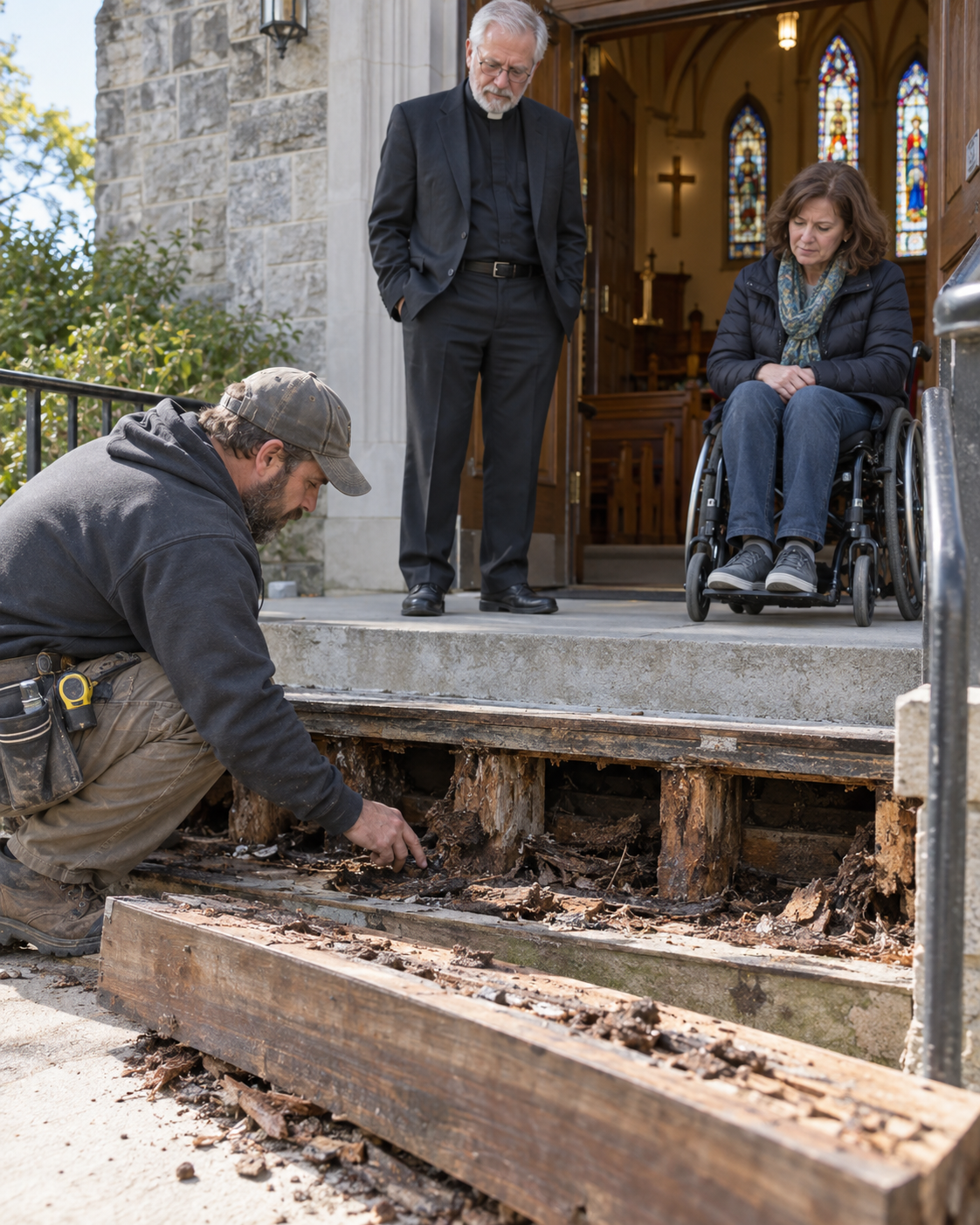
Our church hired a carpenter to replace one broken front step before Easter.
He removed the board, looked beneath it, and refused the job.
Mr. Webb said the visible crack was not the problem. Water had entered behind the stone facing and rotted the wooden supports across the entire landing. Replacing one tread would make the entrance look safe while leaving the platform unstable.
The pastor worried that closing the main doors would cancel services and embarrass the fundraising committee that had delayed a full repair. He asked Mr. Webb to brace the step for one weekend.
Mr. Webb would install a temporary accessible ramp only if an engineer approved the remaining structure. The engineer did not. The congregation moved Easter service to the community center and arranged transport for members who had planned around the church location.
The repair cost six times the original quote. Meeting minutes showed that trustees had received drainage warnings two years earlier but budgeted for cosmetic stone cleaning instead.
The church published the inspection and postponed a decorative lighting project. It also formed a facilities group that included a wheelchair user who had complained for years that the side ramp treated accessibility as a separate entrance.
The rebuilt landing placed stairs and a permanent ramp at the same front doors.
Mr. Webb did not donate his labor. The church paid the full invoice, including the hours he spent documenting why the small repair was unsafe.
Sometimes refusing a simple job is the work that prevents a simple lie.