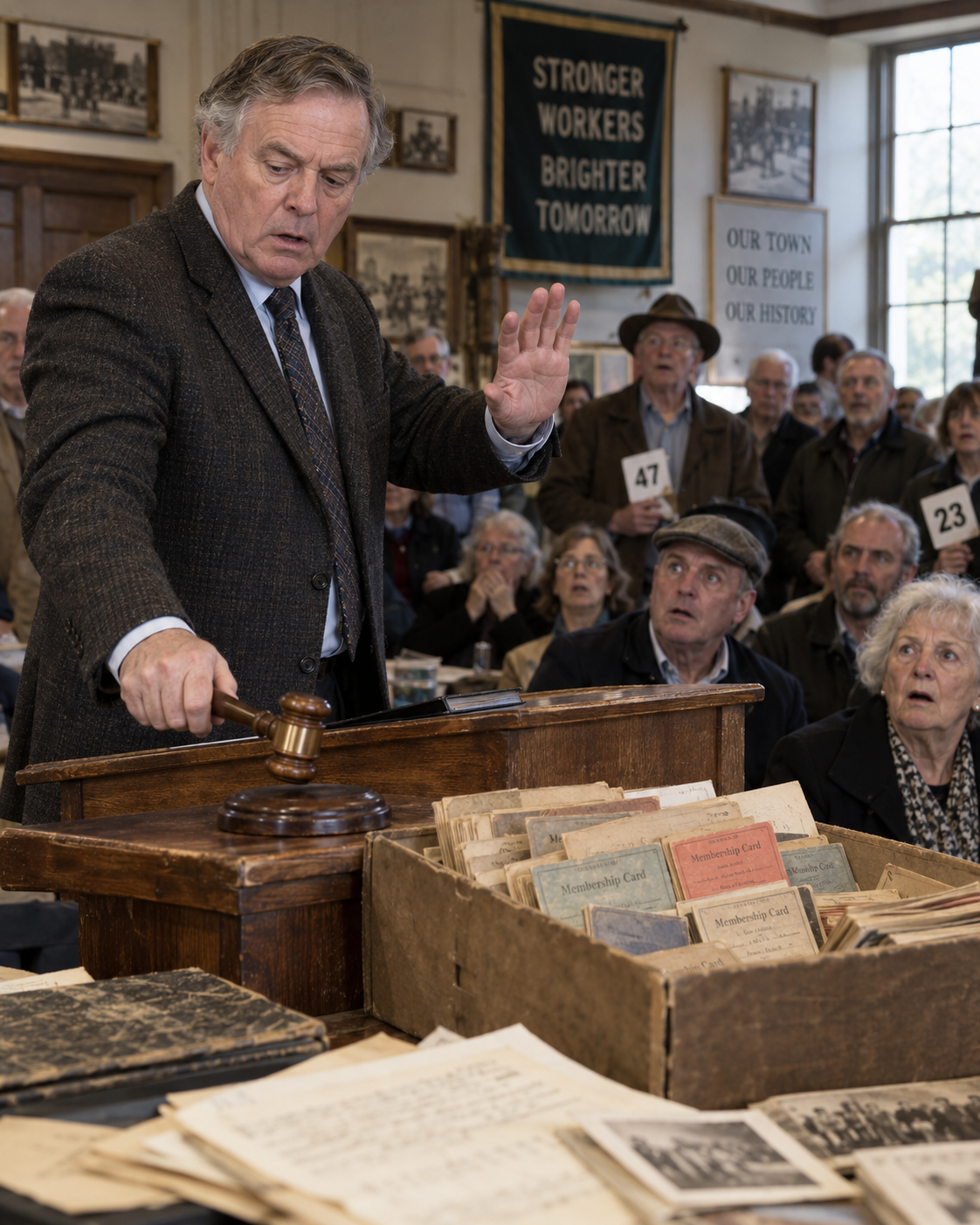
The auctioneer’s hammer was already raised when she stopped the sale of my grandfather’s desk.
The highest bid came from a collector. My family needed the money to settle medical debts.
Auctioneer Dana noticed a shallow drawer stuck beneath the writing surface. The catalogue called it decorative. A conservator loosened it and found forty signed union membership cards inside.
The cards belonged to dockworkers blacklisted during a strike. Some families had spent decades searching for proof of membership needed for a pension appeal.
The desk was ours. The records were not automatically ours to sell.
We postponed the lot, scanned the cards with an archive, and contacted the union and families. Personal addresses were restricted. The originals went to the labor archive under an agreement preserving access for claims.
The desk returned to auction without the drawer contents and sold for less than the first bid. The archive paid a fair conservation fee, but it did not erase our debt.
Dana waived part of her commission because her catalogue error had missed the drawer. We created a payment plan for the remaining bills.
Stopping the hammer did not create a treasure windfall. It prevented evidence of other people’s work from becoming part of a furniture sale.