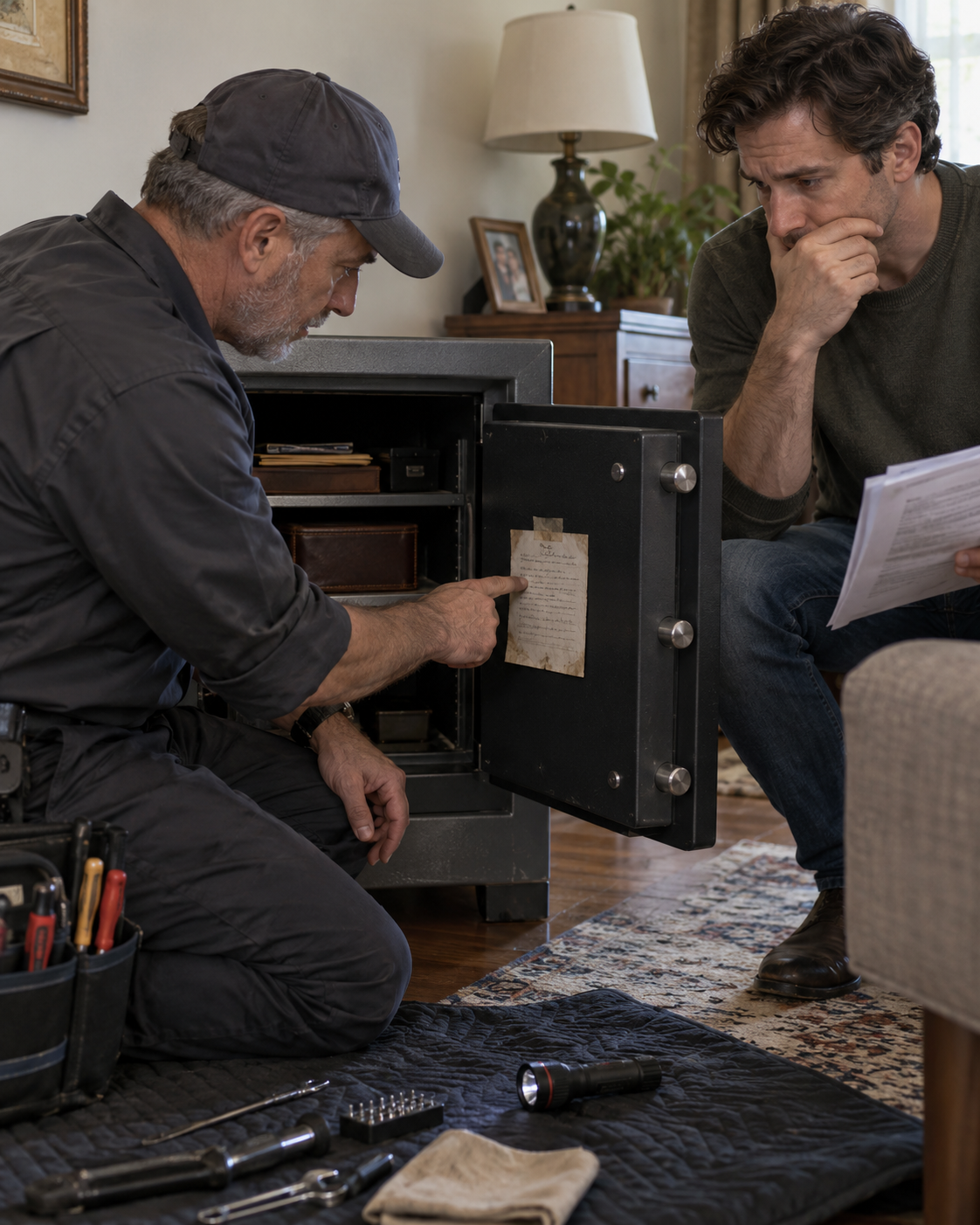
Three days after Dad’s stroke, a locksmith refused to open the safe in his study.
I had power of attorney and the hospital needed his insurance documents. The combination was gone, and Dad could not yet speak clearly.
The locksmith, June Park, examined my paperwork and still said no.
Taped beneath the safe was a dated service note from six weeks earlier: “Do not open for family without confirming with client or attorney.” Dad had requested it after receiving calls from someone pretending to be my brother.
I accused June of trapping essential papers behind a private note. She called the attorney listed in the instruction while I contacted the hospital’s records office. The attorney confirmed that my power covered medical and financial access but asked for a witnessed inventory because Dad had also stored property belonging to his sister.
We opened the safe that afternoon with a nurse on video and the attorney present remotely. The insurance folder was removed. Aunt Rosa’s jewelry remained sealed and was later returned to her.
Dad recovered enough speech to explain that the scam calls had frightened him. He had not distrusted me; he had distrusted urgency used as a weapon.
June updated her policy so emergency refusals came with a written escalation path instead of a bare no. I apologized for threatening to report her.
She handed me the drilled lock cylinder in a small envelope.
“A lock should delay the wrong person,” she said. “Sometimes it must also slow down the right person long enough to prove they are right.”