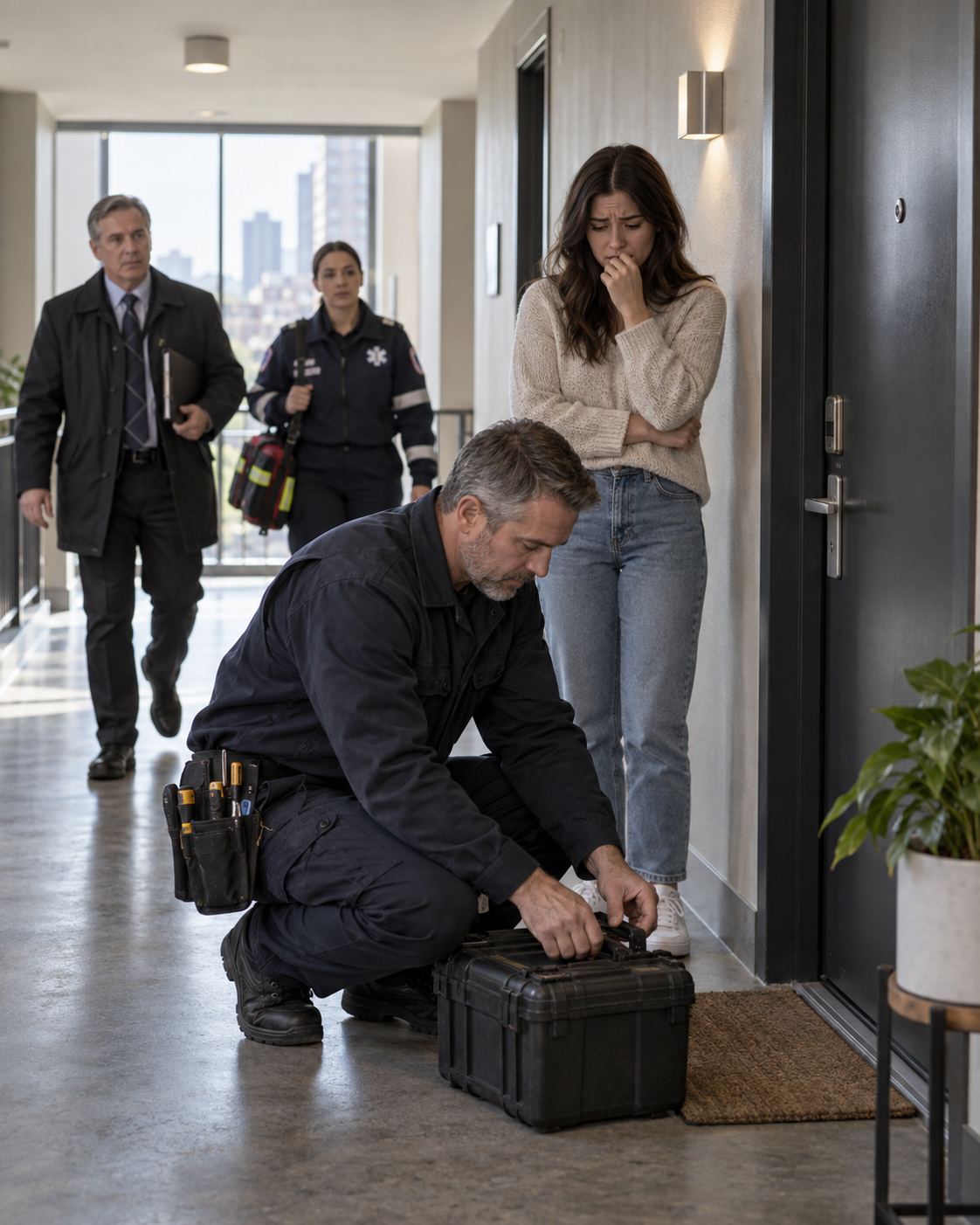
The locksmith studied my power-of-attorney papers and put his drill back in the van.
My mother had missed two medical appointments. She was not answering her phone, and I had flown six hundred miles after a neighbor said newspapers were piling up.
“Open the door,” I said.
He pointed to the document. It covered finances, not entry or medical decisions. My name was on the lease only as an emergency contact.
I accused him of hiding behind paperwork while my mother might be hurt.
“If you believe there’s an emergency, call emergency services,” he said. “If there isn’t, I need her permission.”
That distinction made me furious because I did not know which situation I was in.
We called for a welfare check. A paramedic entered with the building manager. Mom was not inside.
Her bed was made. The refrigerator held fresh food. On the table was a note addressed to me: **I am safe. Please do not turn concern into control. Call Nila.**
Nila was a friend from Mom’s pottery class. Mom had gone to a short-stay mental health program after weeks of panic attacks. She had silenced her phone because every conversation with me became an argument about moving into assisted living. She had authorized Nila, not me, to share one fact: she was safe.
I felt betrayed. Then Nila showed me the messages I had sent—sixteen in one morning, each more commanding than the last. I had mistaken access for care.
Mom called that evening with her counselor present. She acknowledged that missing appointments without telling anyone had frightened us. I acknowledged that I had treated a financial document like ownership of her life.
We wrote a plan. If she missed two planned check-ins, Nila would contact the program or building manager. If there were specific danger signs, anyone could call emergency services. Mom gave me a separate, limited authorization for her doctors to confirm attendance, but not disclose treatment details. We stopped debating housing for thirty days.
The locksmith never opened the lock. I later went to his shop to apologize.
He shrugged. “People remember us when we open doors. Sometimes the job is knowing which ones aren’t ours.”
Mom returned home the next week. She changed the lock anyway and gave one spare key to Nila.
Not to me.
It hurt. It also told me exactly what trust required next.