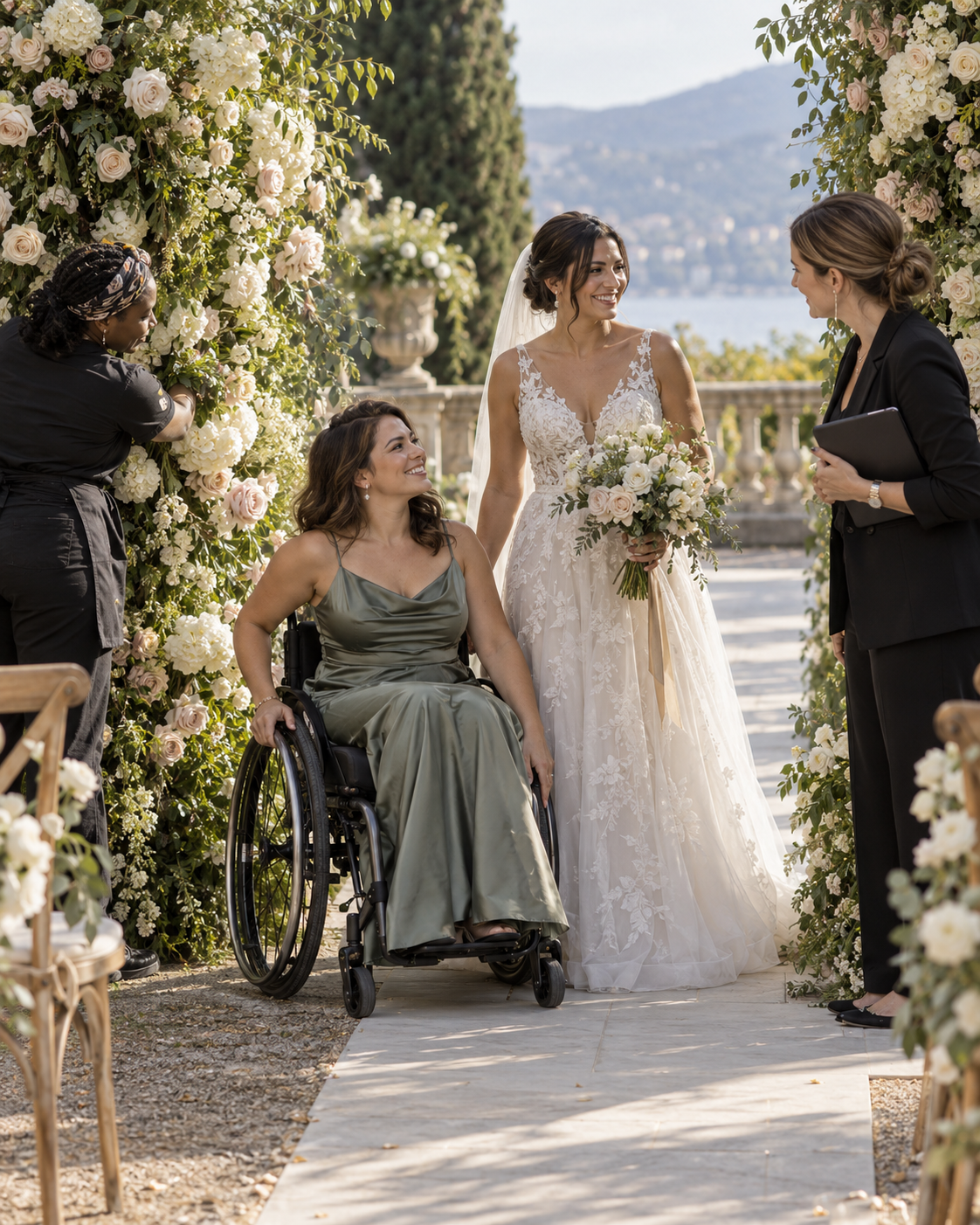
Twenty minutes before my sister’s ceremony, the wedding planner rolled my wheelchair behind a wall of flowers.
I was the maid of honor. The aisle was narrow, and she said hiding my chair would make the photographs “balanced.” She had arranged for two ushers to carry me to a decorative seat.
No one had asked me.
My sister saw the empty space beside her and stopped the rehearsal. The planner called the change a harmless visual adjustment. I asked her to sit in the decorative chair while four strangers lifted it. She declined.
The florist found the practical answer. We split the flower wall into two smaller arrangements, widened the aisle, and placed the wedding party in a curve instead of a straight line. It took twelve minutes.
The planner apologized privately. I asked her to repeat it to the vendors, because they had been instructed to move me without consent. She did. My sister then added a rule: no person or mobility device would be repositioned unless that person agreed.
The ceremony began eight minutes late. I rolled down the widened aisle beside the best man. In the formal portrait, the composition was not symmetrical. It was accurate.
Afterward, the venue changed its event checklist to include accessible routes, seating choices, and consent before assistance. The planner completed disability-access training and sent us the revised form—not as proof that the mistake disappeared, but as evidence that the next client would not have to improvise dignity beside a flower wall.