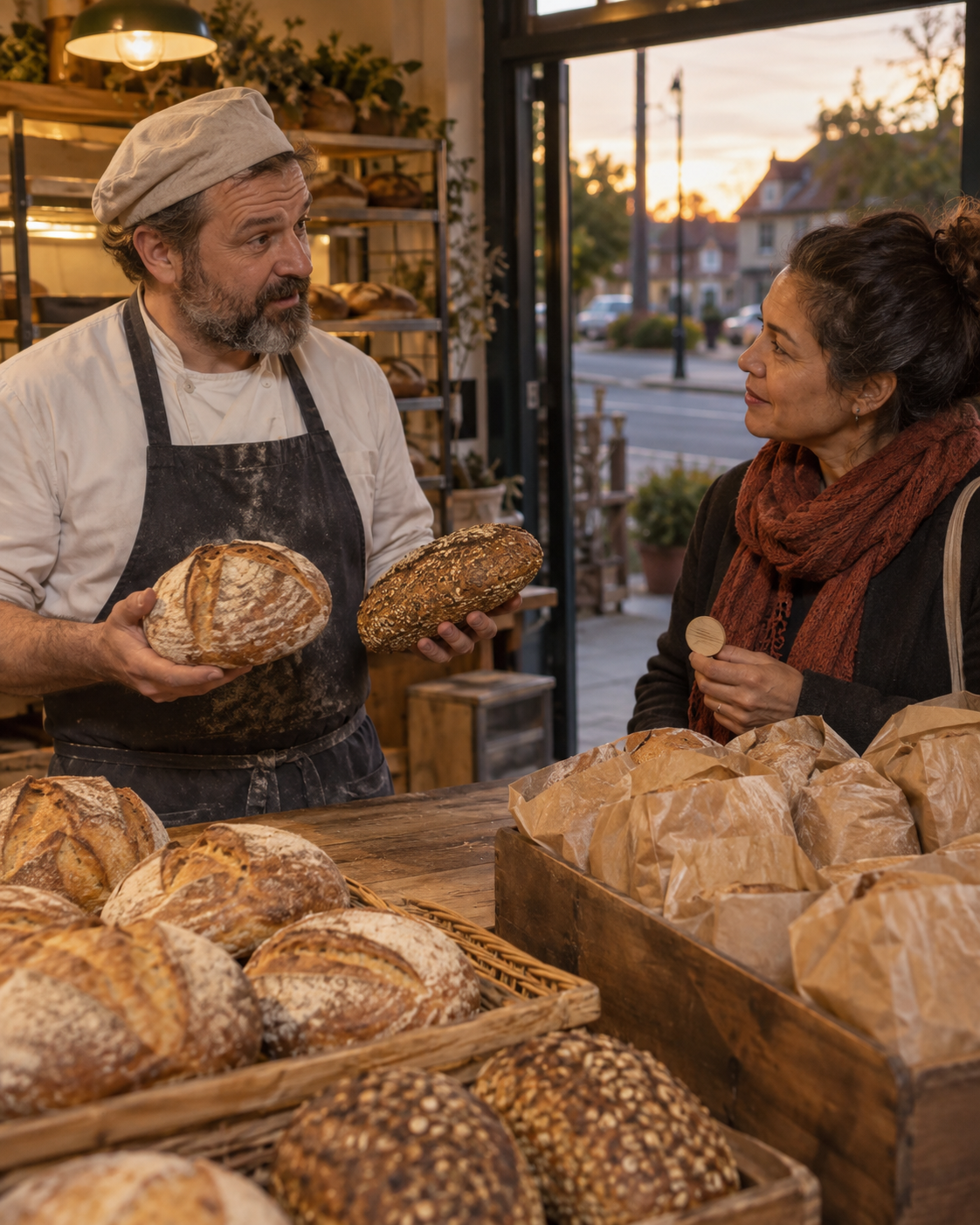
At closing time, our neighborhood baker doubled the price of every loaf left from the previous day.
Customers accused Mr. Bello of exploiting people who came after work. Fresh bread cost three dollars; the paper-wrapped day-old loaves were marked six.
He would not explain until a woman at the counter asked for the “six-dollar loaf” and paid with a wooden token.
The higher price was not meant for her. It was a contribution option created by the evening customers themselves. Anyone could buy a fresh loaf at the normal price. Paying six funded two tokens: one for a day-old loaf and one for soup at the café next door.
The handwritten sign explaining this had been removed during a health inspection because it was taped over an allergen notice. Mr. Bello kept using the system without replacing the explanation.
That made a voluntary program look like a secret penalty.
The bakery refunded three customers who had misunderstood and moved the contribution option to the register with clear wording. Tokens became identical to ordinary loyalty cards so recipients were not announced across the room. The café published a monthly count of funded meals without naming anyone.
Mr. Bello also stopped calling the bread “charity loaves.”
“Yesterday’s bread is still bread,” the woman with the token told him. “The person eating it is still a customer.”
The next evening, the shelf showed two prices again.
This time, both had an explanation—and both were choices.