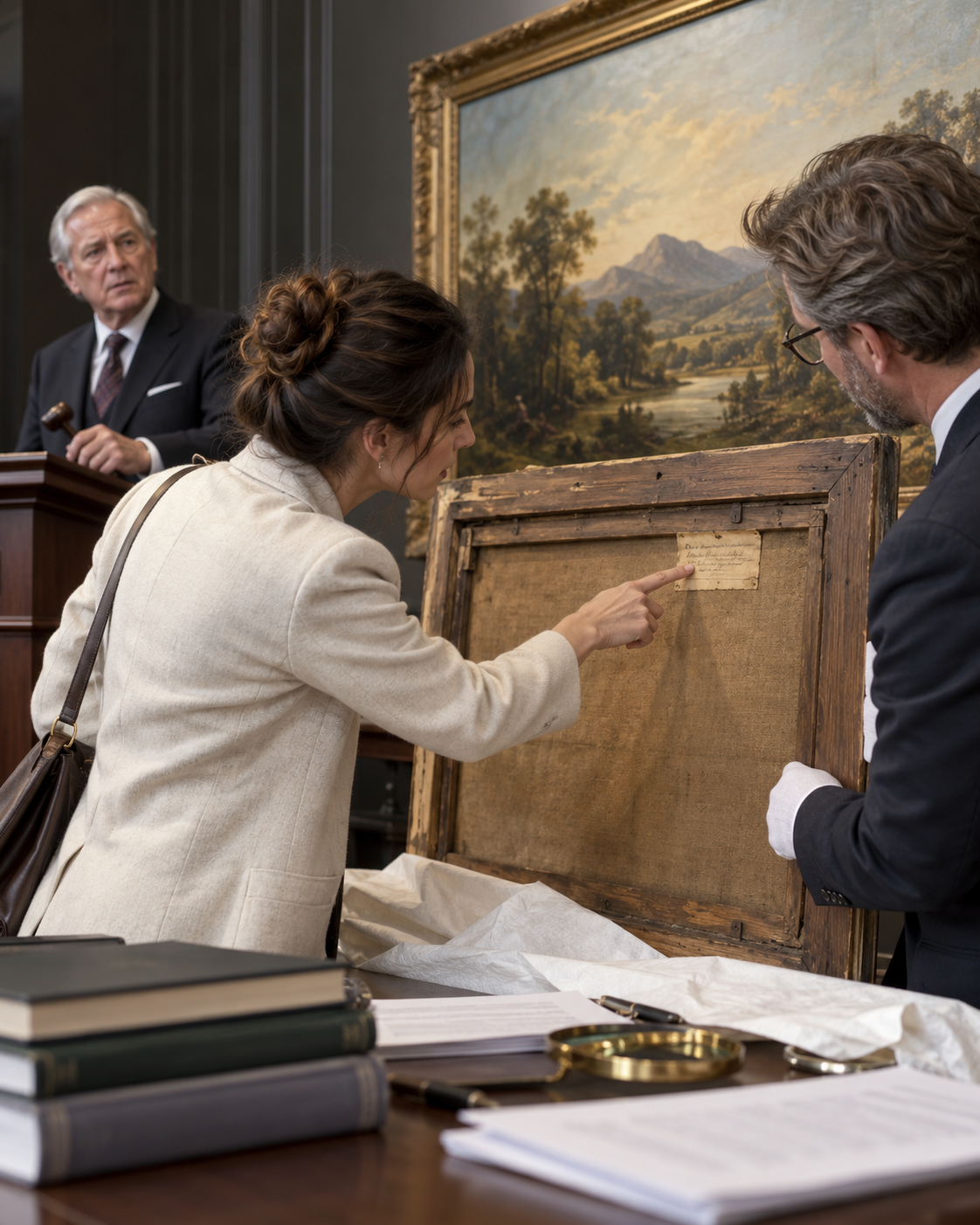
After paying eighteen thousand dollars for a landscape painting, the winning bidder left it on the auction-house wall.
Dr. Lena Brooks had noticed a pale rectangle beneath the modern backing paper. Under angled light, it revealed part of an old inventory label from a family collection seized during wartime.
The auctioneer said the visible signature and recent ownership records were clean. Lena refused delivery until the earlier provenance was investigated.
The sale contract gave her forty-eight hours to pay, not a right to hold the object indefinitely. She placed the funds in escrow and asked the auction house to notify the family named on the damaged label.
Research confirmed that the painting had been sold under coercion in 1941, but the current consignor had inherited it without knowing that history. The family’s heirs disagreed among themselves: some wanted restitution; one wanted the painting sold publicly with the record attached.
A mediated agreement returned title to the heirs, who chose to lend the painting to a museum before a later sale. The consignor received no proceeds but was reimbursed for documented conservation expenses. The auction house waived its fees and published the provenance gap it had missed.
Lena did not receive the painting or a finder’s payment. Her escrow was returned.
At the museum opening, the landscape hung with both ownership histories visible.
The empty space on Lena’s wall remained.
She said it was less important than the empty line that had been restored to the label.