My brother brought three demolition excavators to our grandfather’s 140-year-old orchard twenty minutes after the burial, smirked in front of twenty-eight workers, and said, “Pack your pruning shears, little sister, this dirt is worth $14 million in luxury townhomes.”
I stood in the gravel driveway of Vance Heritage Orchards in Red Hook, New York, with mud on my work boots and grease on my hands from fixing the 1954 cider press.
My name is Hannah Vance, I’m 31 years old, and for nine years I ran every single harvest, payroll cycle, and bottling run while my older brother Julian lived in Mayfair, London, trading distressed debt and returning only for Thanksgiving photos.
Grandfather Thomas raised us both after our parents died in a car crash on Route 9 when I was six.
Julian hated the soil, hated the dawn alarms, and called the farm an embarrassing tax sinkhole.
When Grandfather Thomas suffered a stroke four years ago, Julian sent a floral arrangement and didn’t visit once.
I slept on a cot in the farmhouse downstairs bedroom so I could monitor Grandfather’s oxygen tanks while waking at 4:30 a.m. to spray the heirloom Honeycrisp and Northern Spy rows.
When Grandfather passed quietly last Tuesday at 86, Julian flew into JFK on a first-class ticket, attended the church service in a $4,000 charcoal suit, and didn’t even wait for the wake sandwiches to be cleared before introducing two commercial developers to the local press.
By Thursday morning at 8:00 a.m., flatbed trucks arrived carrying heavy machinery, blocking the gravel access road and trapping our distribution vans.
Julian handed me a formal eviction notice drawn up by a Manhattan corporate firm, giving me four hours to vacate the stone farmhouse.
“You were an employee, Hannah,” he said loudly, making sure the orchard crew heard every syllable.
“Grandfather left the operating entity to me in the original 2004 testament, and I’ve already signed an unconditional purchase contract with Ridgeview Luxury Estates.”
The farm hands, men and women who had worked those 180 acres since before I was born, stood with heads lowered in utter defeat.
Julian popped a bottle of Dom Pérignon right on the front porch and handed flutes to the surveyors.
I didn’t yell, I didn’t cry, and I didn’t pack a single box.
Instead, I told Julian I would meet him and his developers at 2:00 p.m. at the Dutchess County Planning Board hearing where they were rushing through the fast-track demolition permit.
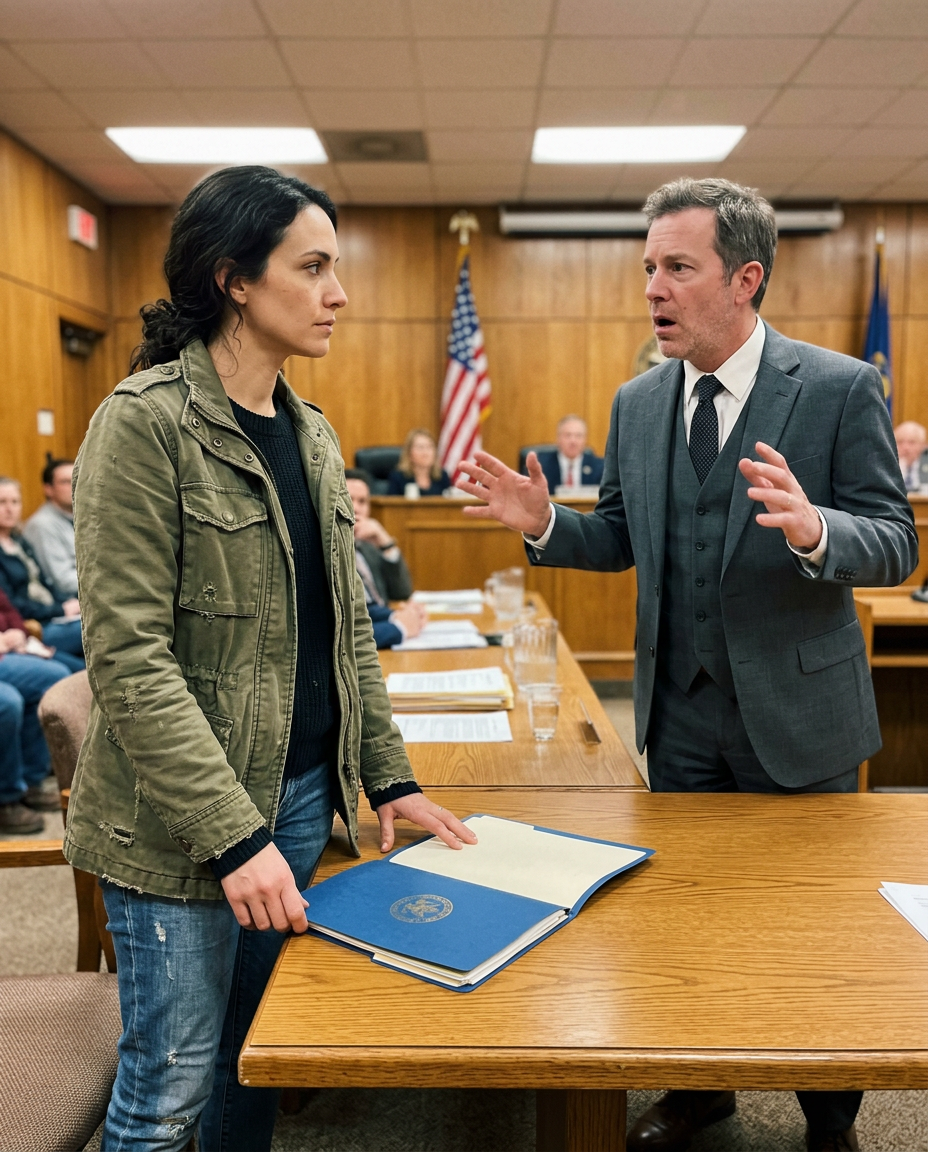
When I walked into the crowded municipal room in my work jacket, Julian laughed into the podium microphone and told the commissioners I was there to cause an emotional scene.
Then I reached into my canvas tote, pulled out a certified blue folder stamped by the New York Department of Environmental Conservation, and slid it directly across the table to the county surveyor.
Julian rolled his eyes and told the board that whatever sentimental papers I had were irrelevant to his ownership title.
The head county attorney opened the folder, adjusted his glasses, and went completely pale.
In July 2012, Grandfather Thomas had realized Julian would one day attempt to pave over the historic valley.
Working with the state agricultural land trust, Grandfather legally separated the subterranean aquifer and irrigation water rights from the surface operating deed, placing the entire water network into an irrevocable agricultural conservation servitude.
I was named the sole lifetime trustee of that servitude.
More importantly, the recorded deed contained a binding statutory clause: any non-agricultural subdivision or commercial ground disturbance instantly triggered an automatic, non-negotiable transfer of the entire 180-acre surface estate to the conservation trust for zero dollars.
The county attorney looked up and addressed the developers on the record: “Gentlemen, if your machines turn one square foot of topsoil for residential construction, Mr. Vance forfeits title in full, and you cannot legally draw a single gallon of water on this property.”
The lead developer’s face turned scarlet as he snatched his blueprints, turned to Julian, and screamed that Julian had lied about clean development encumbrances.
By Friday afternoon, the developers had formally canceled the $14 million contract and sued Julian for $450,000 in liquidated due-diligence penalties.
Julian showed up at the orchard gate with his luggage, begging me to release the covenant so he wouldn’t face personal bankruptcy from the legal damages.
I stood by the 1954 cider press, looked him in the eye, and handed him a pair of pruning shears.
“The harvest starts at 5:00 a.m., Julian,” I said quietly. “Or you can walk back to the train station.”
He got in a taxi and left without saying another word, and Vance Heritage Orchards will remain green for generations to come.