The morning before a housing inspection, our tenant painted every wall in apartment 4C white.
Six years of murals vanished: blue cranes, orange gardens, a ceiling full of constellations. The artist, Ren, had painted them with our written permission in exchange for restoring damaged plaster.
I thought Ren was hiding deterioration. Then the inspector found small pencil marks beneath the fresh paint showing dates and water levels.
The murals had concealed a leak that worsened during every storm. Ren had reported it repeatedly. Our former property manager patched the surface and asked them to repaint the damaged sections for photographs. Before the city inspection, Ren covered the art so the spreading stains and measurements could be seen without anyone dismissing the complaint as “decorative damage.”
I owned the building with my sister. We had trusted monthly summaries and rarely visited. That was not fraud, but it was neglect dressed as delegation.
The inspector opened the wall and found rotted studs. Apartment 4C was temporarily unsafe.
We paid for Ren’s hotel and storage, hired an independent contractor, and gave every tenant the same moisture inspection. Two more leaks appeared. The former manager’s records were referred to the city licensing office.
Ren’s murals could not be recovered. They had chosen to erase them, but under pressure created by our failure.
We offered to pay for new artwork after repairs. Ren declined at first. They wanted a rent credit for the restoration labor already performed and written ownership of any future mural images. We agreed after reviewing the hours and materials.
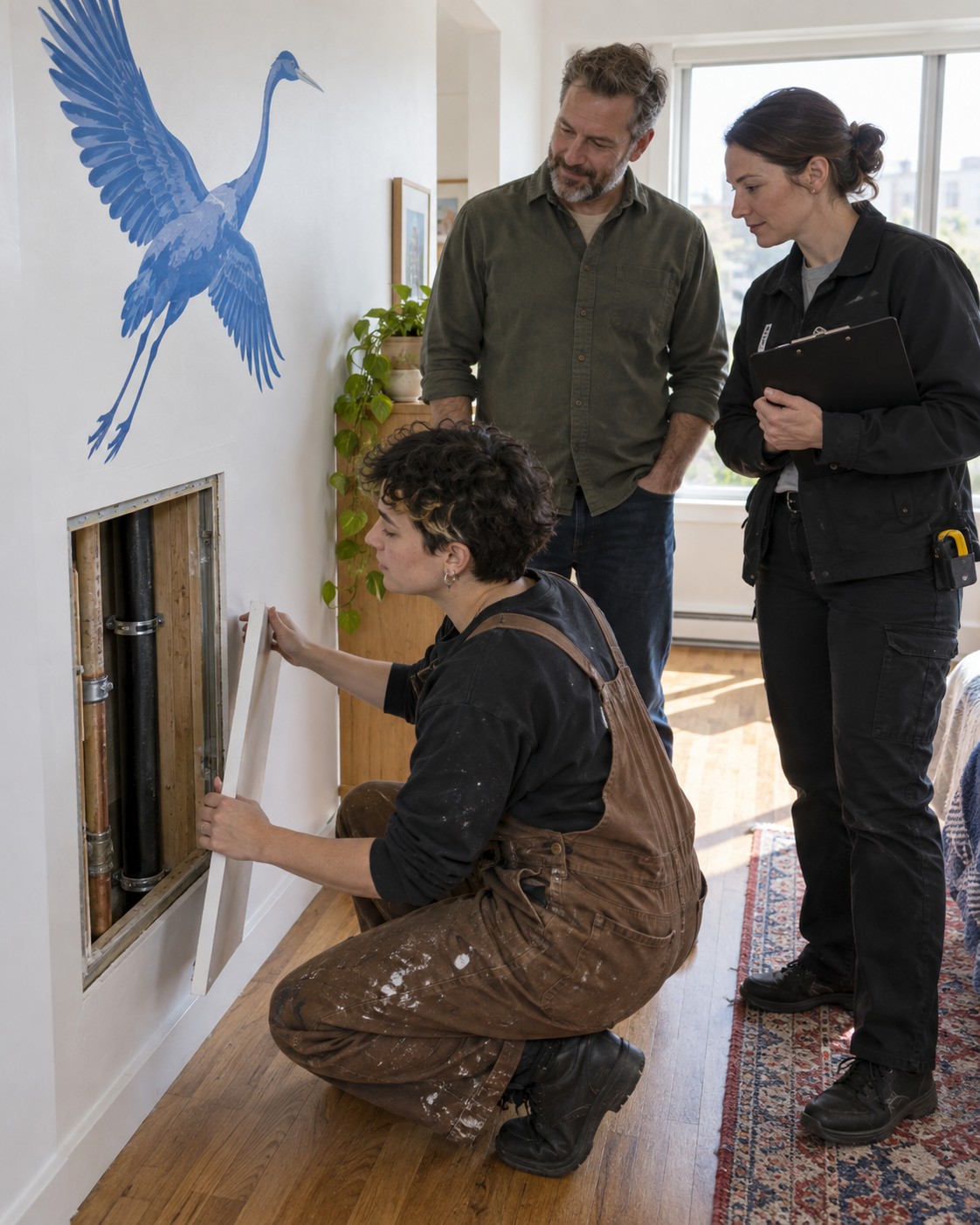
Four months later, Ren returned. The new walls stayed white for a week. Then a single blue crane appeared beside an access panel that could now be opened without cutting drywall.
They painted no garden and no stars. Loss did not require exact replacement.
During the follow-up inspection, the official asked whether the crane covered anything important.
Ren opened the panel.
“Nothing is hidden now,” they said.