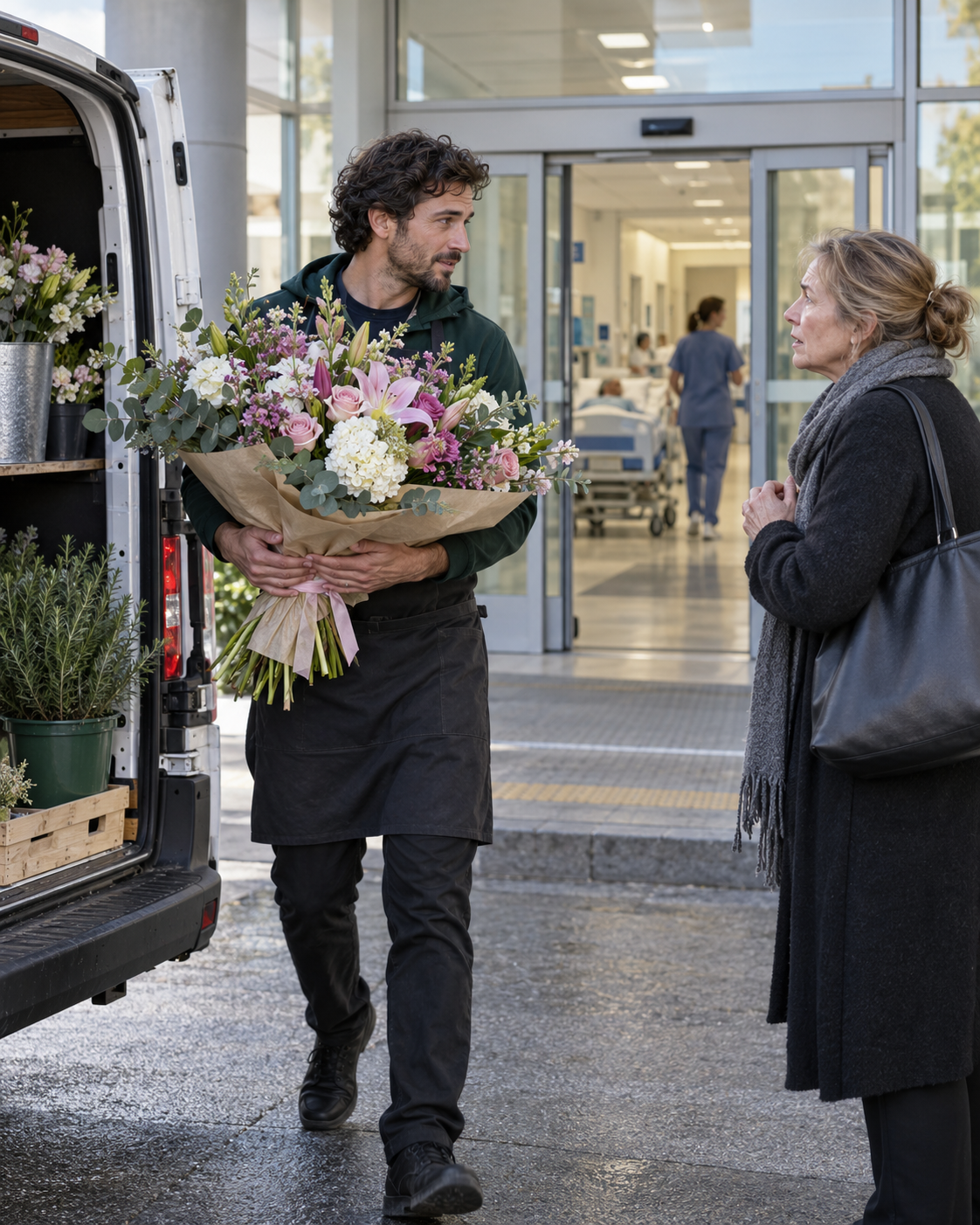
When my aunt finished chemotherapy, I ordered the largest bouquet the florist could make.
He carried it to the hospital entrance, read the ward number, and took it back to his van.
I accused him of ruining our surprise. The ward treated patients with severely weakened immune systems and did not allow fresh flowers, soil, or standing water. The online order form had accepted the address without warning.
The florist, Andre, had learned the rule after a previous arrangement was discarded at reception. This time he refused before charging the delivery fee.
He offered silk flowers. I said my aunt hated fake bouquets.
Andre asked what she actually liked. I told him she grew herbs on her balcony and missed the smell of rosemary.
He called the hospital’s patient-services desk and received approval for a sealed card printed with photographs of her garden, plus a small audio player containing voice messages from family. No plant material entered the ward. The living rosemary remained at his shop until she went home.
The hospital added delivery restrictions to its public visitor page and sent them to local florists. Andre updated his checkout system so restricted wards triggered alternatives before payment.
My aunt received the plant six weeks later. It was smaller than the bouquet I had imagined and alive in a way the original gift could not have been on treatment day.
Andre had not refused to deliver care.
He had refused to confuse care with the object I chose.